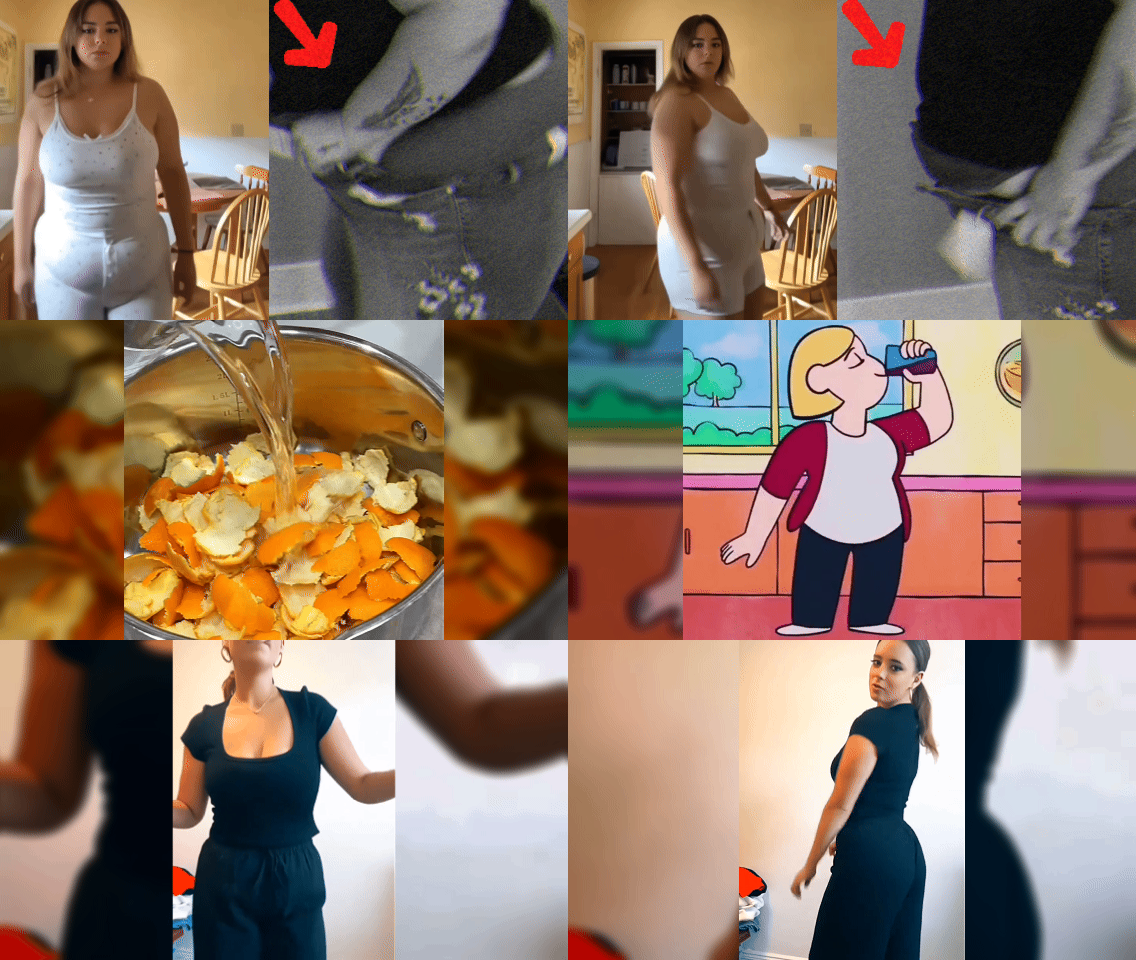
My Experiment With Natural Fat Burning Methods

If you’ve ever felt overwhelmed by the endless stream of weight loss advice—fat burners, detox teas, extreme diets—you’re not alone. I reached a point where I was tired of shortcuts that didn’t work and frustrated by quick fixes that led to quick rebounds.

So I decided to try something different.

Instead of chasing trends, I committed to a personal experiment: using only natural fat burning methods to lose weight, boost my metabolism, and improve my overall health.

No pills. No gimmicks. No extremes.

What happened next completely changed how I view weight loss—and it might change how you approach it too.

Why I Chose Natural Fat Burning Methods

After years of trying different diets and workout programs, I realized something important:

Most weight loss strategies fail because they are not sustainable.

They rely on restriction, intensity, or artificial stimulation rather than working with your body. Natural fat burning, on the other hand, focuses on optimizing your body’s existing systems—your metabolism, hormones, and energy balance.

I wanted something that I could maintain for life, not just a few weeks.

So I began my experiment.

What Does “Natural Fat Burning” Really Mean?

Natural fat burning isn’t about magic foods or overnight transformations. It’s about creating the right internal environment for your body to efficiently use stored fat as energy.

This includes:

  • Eating whole, nutrient-dense foods
  • Supporting metabolism through movement
  • Balancing hormones
  • Improving sleep and recovery
  • Reducing chronic stress

It’s simple—but not always easy.

Week 1–2: Resetting My Foundation

I didn’t jump into anything extreme. Instead, I focused on the basics.

Cleaning Up My Diet

I eliminated ultra-processed foods and focused on:

  • Lean proteins
  • Healthy fats
  • Whole carbohydrates like fruits and vegetables

I didn’t count every calorie obsessively. Instead, I paid attention to portion sizes and how my body felt.

The biggest change? I felt fuller, longer.

Hydration Became a Priority

I started drinking more water than ever before. This alone helped reduce cravings and improved my energy levels.

Light Movement Every Day

Instead of intense workouts, I committed to daily walking—around 8,000 to 10,000 steps.

It felt almost too easy.

But that was the point.

Week 3–4: Turning Up the Fat Burning Engine

Once my body adjusted, I began layering in more targeted strategies.

Increasing Protein Intake

Protein became a cornerstone of my meals. It helped preserve muscle mass and kept me satisfied.

I noticed fewer cravings and more stable energy throughout the day.

Introducing Strength Training

This was a major shift.

I started lifting weights 3 times per week, focusing on compound movements like squats, deadlifts, and presses.

The goal wasn’t just to burn calories—but to build muscle.

Because muscle increases your resting metabolic rate, meaning you burn more calories even at rest.

Timing My Meals Smarter

I experimented with simple meal timing strategies:

  • Eating within a consistent window
  • Avoiding late-night snacking

This helped regulate my hunger signals and improved digestion.

Week 5–6: Optimizing Hormones and Recovery

This phase surprised me the most.

I realized that fat loss isn’t just about food and exercise—it’s about what happens when you’re not working out.

Prioritizing Sleep

I made sleep non-negotiable.

7–8 hours per night became my standard. Almost immediately, I noticed:

  • Reduced hunger
  • Better mood
  • More effective workouts
Managing Stress

Chronic stress can sabotage fat loss by increasing cortisol levels.

I introduced simple habits:

  • Deep breathing
  • Short breaks during the day
  • Less screen time before bed

It wasn’t perfect, but it made a difference.

Natural Metabolism Boosters

Instead of supplements, I used natural methods like:

  • Drinking green tea
  • Adding spices like chili and ginger to meals
  • Staying active throughout the day

These small changes added up.

The Results: What Actually Happened

After several weeks, something interesting happened.

The scale didn’t drop dramatically overnight—but it started moving consistently.

More importantly:

  • My body felt leaner
  • My energy levels improved
  • My cravings decreased
  • My clothes fit better

This wasn’t just weight loss—it was transformation.

And it felt sustainable.

What I Learned From This Experiment
1. Consistency Beats Intensity

You don’t need extreme workouts or drastic diets.

Small, consistent actions over time produce real results.

2. Your Body Is Not the Enemy

When you work with your body instead of against it, fat loss becomes easier and more natural.

3. Muscle Is Your Secret Weapon

Building muscle is one of the most effective natural ways to burn fat long-term.

4. Lifestyle Matters More Than Short-Term Fixes

Sleep, stress, and daily habits play a bigger role than most people realize.

5. Natural Doesn’t Mean Slow—It Means Sustainable

While results may not be instant, they last.

And that’s what truly matters.

Simple Natural Fat Burning Tips You Can Start Today

If you want to try this approach, here’s where to begin:

Start your day with a protein-rich meal
Walk more—aim for at least 8,000 steps daily
Drink more water than you think you need
Lift weights 2–4 times per week
Get at least 7 hours of sleep every night
Reduce processed foods and added sugars
Manage stress with simple daily habits

You don’t need to do everything at once.

Start small. Build momentum.

Common Mistakes to Avoid

Even natural approaches can go wrong if you’re not careful.

Avoid these pitfalls:

Trying to do too much too quickly
Expecting instant results
Ignoring recovery and sleep
Undereating for long periods
Comparing your progress to others

Your journey is unique.

Respect that.

Final Thoughts: A Better Way to Burn Fat

My experiment with natural fat burning methods didn’t just help me lose weight—it changed my mindset.

I stopped chasing shortcuts and started building a lifestyle.

And that made all the difference.

If you’re tired of starting over, of quick fixes that don’t last, consider this approach.

It may not be flashy.

But it works.

And more importantly—it lasts.

I didn’t expect this to make such a difference, but it actually explains a lot…

If you feel like you’ve tried everything but nothing works,
this short video might be exactly what you’ve been missing.

How I Finally Broke Through My Weight Loss Plateau

If you’ve ever felt stuck in your weight loss journey—doing everything “right” but seeing no change on the scale—you are not alone. I’ve been there. Weeks turned into months where my weight refused to budge, my motivation dipped, and frustration took over. This is the story of how I finally broke through my weight loss plateau—and more importantly, how you can too.

This isn’t about gimmicks, extreme diets, or punishing workout routines. It’s about understanding what your body is really doing and making smart, sustainable adjustments that actually work.

What Is a Weight Loss Plateau?

A weight loss plateau happens when your body stops losing weight despite maintaining the same diet and exercise routine that previously worked. At first, weight loss tends to be faster due to water loss and initial calorie deficits. But over time, your body adapts.

Your metabolism slows. Your body becomes more efficient. And suddenly, what once worked stops working.

This is not failure. This is biology.

Understanding this changed everything for me.

The Moment I Realized Something Had to Change

I remember stepping on the scale after weeks of discipline—clean eating, consistent workouts—and seeing the same number staring back at me.

At first, I blamed myself.

“Maybe I’m not trying hard enough.”

But the truth was, I was doing too much of the wrong things and not enough of what actually mattered.

That realization became the turning point.

The Biggest Mistakes That Kept Me Stuck

Before I share what worked, let me be honest about what didn’t.

1. Eating Too Little

I thought cutting calories aggressively would speed things up. Instead, it backfired. My energy dropped, my workouts suffered, and my metabolism slowed down.

Your body is smart. When you under-eat for too long, it holds onto fat as a survival mechanism.

2. Doing Too Much Cardio

Endless cardio sessions left me exhausted but didn’t produce results anymore. While cardio is useful, relying on it alone can lead to muscle loss—and less muscle means a slower metabolism.

3. Ignoring Strength Training

I underestimated the power of building muscle. This was a huge mistake. Muscle burns more calories, even at rest.

4. Not Tracking Progress Properly

I relied only on the scale. But weight fluctuates due to water, hormones, and other factors. I wasn’t seeing the full picture.

The Breakthrough: What Actually Worked

Everything changed when I shifted my approach from “doing more” to “doing smarter.”

1. I Increased My Calories (Strategically)

Yes, you read that right.

Instead of eating less, I slowly increased my calorie intake to support my metabolism. This is often called “reverse dieting.”

Within weeks, my energy improved, my workouts got stronger, and eventually, the weight started moving again.

2. I Prioritized Protein

Protein became the foundation of my diet.

It helped me:

  • Stay full longer
  • Preserve muscle mass
  • Boost metabolism through digestion

I made sure every meal included a solid protein source.

3. I Focused on Strength Training

This was the game-changer.

Instead of spending hours on cardio, I shifted to lifting weights 3–4 times per week. Building muscle transformed my body composition and increased my resting calorie burn.

4. I Reduced Stress and Improved Sleep

This part is often overlooked.

High stress and poor sleep increase cortisol levels, which can lead to fat retention—especially around the belly.

Once I started prioritizing 7–8 hours of quality sleep and managing stress, my body responded much better.

5. I Added Strategic Cardio (Not Excessive)

I didn’t eliminate cardio—I used it wisely.

Short, effective sessions like:

  • Walking daily
  • Occasional HIIT workouts

This supported fat loss without burning me out.

6. I Tracked More Than Just Weight

I started paying attention to:

  • Measurements
  • Progress photos
  • Strength levels
  • How my clothes fit

Even when the scale didn’t move, my body was changing.

The Mental Shift That Made the Difference

Breaking through my plateau wasn’t just physical—it was mental.

I stopped chasing quick results and started focusing on consistency.

I accepted that progress is not linear.

Some weeks you lose weight. Some weeks you don’t. But if you stay consistent, the trend will move in the right direction.

Practical Tips to Break Your Weight Loss Plateau

If you’re currently stuck, here’s what I recommend:

Reassess Your Calories

You might need to:

  • Eat slightly more to reset your metabolism
  • Or create a small, sustainable deficit

Avoid extremes.

Increase Protein Intake

Aim for a high-protein diet to support fat loss and muscle retention.

Lift Weights

Strength training is essential. Focus on progressive overload—gradually increasing weights or reps.

Move More Daily

Simple activities like walking can make a big difference without stressing your body.

Improve Sleep and Reduce Stress

Don’t underestimate their impact on fat loss.

Be Patient

Your body needs time to adapt. Give it that time.

Why Plateaus Are Actually a Good Sign

Here’s something most people don’t realize:

A plateau often means your body has successfully adapted to your previous routine.

That’s not failure—that’s progress.

It means you’re ready for the next level.

Final Thoughts: You’re Closer Than You Think

Breaking through a weight loss plateau is not about working harder—it’s about working smarter and listening to your body.

The moment I stopped fighting my body and started understanding it, everything changed.

If you’re stuck right now, don’t give up.

Adjust your strategy. Stay consistent. Trust the process.

Your breakthrough is coming.

I didn’t expect this to make such a difference, but it actually explains a lot…

There’s a simple reason why most people struggle to burn fat…
Watch this short video to discover what’s really going on.

Relationship Advice for Women

Relationships can be one of the most beautiful and fulfilling parts of life—but they can also be confusing, emotionally intense, and sometimes even painful. If you’ve ever found yourself overthinking texts, questioning your worth, or wondering why love feels so complicated, you’re not alone.

The truth is, healthy relationships are not built on luck. They are built on self-awareness, emotional maturity, communication, and the ability to choose wisely.

This guide is designed to give you honest, practical relationship advice as a woman—not based on manipulation or games, but on building real, meaningful, and lasting love.

Start With Yourself: The Foundation of Every Relationship

Before focusing on how to improve a relationship, it’s important to look inward.

The relationship you have with yourself sets the tone for every connection in your life.

Why Self-Worth Matters

When you truly value yourself:

  • You don’t settle for less than you deserve
  • You recognize red flags early
  • You communicate your needs clearly
  • You don’t rely on someone else to complete you

On the other hand, low self-worth often leads to:

  • Accepting poor treatment
  • Fear of being alone
  • Over-giving and under-receiving

The key is to build a strong internal foundation so that your relationship enhances your life—not defines it.

Choose the Right Partner, Not Just Any Partner

One of the biggest mistakes many women make is focusing on making a relationship work—rather than choosing the right person to begin with.

Signs of a Healthy Partner

A man who is right for you will:

  • Be consistent in his actions
  • Respect your boundaries
  • Communicate openly
  • Make you feel emotionally safe
  • Support your growth
Red Flags to Watch Out For

Pay attention to early warning signs such as:

  • Inconsistency
  • Lack of communication
  • Disrespect or manipulation
  • Avoidance of commitment
  • Making you feel insecure or confused

Trust what you observe—not just what you hope.

Communication Is Everything

No relationship can survive without clear and honest communication.

But communication is not just about talking—it’s about understanding.

How to Communicate Effectively
  • Express your feelings without blame
  • Use “I” statements instead of accusations
  • Listen actively, without interrupting
  • Be open, but also respectful

For example, instead of saying:
“You never care about me”

Try:
“I feel unimportant when I don’t hear from you”

This small shift can prevent unnecessary conflict.

Don’t Lose Yourself in the Relationship

It’s easy to become emotionally invested and start prioritizing your partner over yourself.

But losing your identity is one of the fastest ways to create imbalance.

Maintain Your Independence
  • Keep your own hobbies and interests
  • Spend time with friends and family
  • Continue pursuing your goals

A healthy relationship consists of two whole individuals—not two halves trying to complete each other.

Understand Emotional Needs (Yours and His)

Every person has emotional needs.

Understanding them can help you build deeper connection and avoid misunderstandings.

Your Emotional Needs Might Include:
  • Feeling valued and appreciated
  • Emotional security
  • Communication and attention
His Emotional Needs Might Include:
  • Respect
  • Appreciation
  • Feeling trusted

When both partners feel seen and understood, the relationship becomes stronger.

Set Boundaries and Stick to Them

Boundaries are not about controlling someone else—they are about protecting your well-being.

Examples of Healthy Boundaries
  • Saying no without guilt
  • Not tolerating disrespect
  • Taking space when needed
  • Being clear about your expectations

If someone consistently crosses your boundaries, it’s a sign to reevaluate the relationship.

Stop Overgiving to Earn Love

Love is not something you have to earn by sacrificing yourself.

Many women fall into the trap of:

  • Doing too much
  • Giving more than they receive
  • Trying to “prove” their worth

But healthy love is balanced.

What Healthy Effort Looks Like
  • Both people invest time and energy
  • Both show care and appreciation
  • Both are willing to grow

If you’re the only one trying, it’s not a partnership.

Learn to Recognize Your Patterns

Sometimes the problem is not just the partner—it’s the pattern.

You might notice:

  • Attracting emotionally unavailable men
  • Staying too long in unhealthy relationships
  • Ignoring red flags

Self-awareness is key.

Ask yourself:

  • “Why do I keep choosing this type of person?”
  • “What am I afraid of?”

Understanding your patterns helps you break them.

Handle Conflict in a Healthy Way

Conflict is normal in any relationship.

What matters is how you handle it.

Healthy Conflict Looks Like:
  • Staying calm and respectful
  • Focusing on the issue, not attacking the person
  • Being willing to listen and compromise
Unhealthy Conflict Looks Like:
  • Yelling or blaming
  • Bringing up past issues repeatedly
  • Avoiding the problem altogether

Conflict, when handled well, can actually strengthen a relationship.

Don’t Ignore Your Intuition

Your intuition is powerful.

If something feels off, don’t ignore it.

Too often, women:

  • Make excuses for bad behavior
  • Hope things will change
  • Doubt their own feelings

But your intuition is there to guide you—not confuse you.

Listen to it.

Be Willing to Walk Away

This is one of the hardest but most important lessons.

Not every relationship is meant to last.

If a relationship:

  • Drains your energy
  • Makes you feel insecure
  • Lacks respect or effort

You have the right to leave.

Walking away is not failure—it’s self-respect.

Focus on Growth, Not Perfection

No relationship is perfect.

There will be challenges, misunderstandings, and moments of doubt.

But a healthy relationship is one where:

  • Both people are willing to grow
  • Mistakes are acknowledged and improved
  • Love is supported by effort and respect

Focus on progress—not perfection.

Final Thoughts: You Deserve Healthy Love

At the end of the day, the most important relationship you will ever have is the one with yourself.

When you:

  • Know your worth
  • Set clear boundaries
  • Choose wisely
  • Communicate openly

You create space for a relationship that is:

  • Supportive
  • Respectful
  • Fulfilling

Remember, you don’t have to chase love or force it.

The right relationship will feel like peace—not confusion.

And you deserve nothing less than that.

What if you’ve been doing everything right… but missing the one thing that truly matters?

Inside these 3 FREE reports, you’ll discover powerful psychological insights that most people never learn – yet they change everything in love and attraction.

✨ Don’t just hope for better results. Create them.

👉 Get instant access now.

Discover How To Attract A Man

If you’ve ever wondered why some women naturally attract the kind of man they want—while others keep ending up in confusing, one-sided, or unfulfilling relationships—you’re not alone.

Attraction can feel mysterious. It can seem like some people just “have it,” while others are left trying to figure out what they’re doing wrong.

But here’s the truth:

Attraction is not about luck. It’s about energy, mindset, and how you show up.

In this guide, you’ll discover how to attract a man in a way that feels authentic, empowering, and sustainable—not by pretending to be someone you’re not, but by becoming the best version of yourself.

What Does It Really Mean to Attract a Man?

Before diving into strategies, let’s redefine attraction.

Attracting a man is not about:

  • Chasing him
  • Changing yourself to fit his expectations
  • Playing games or pretending to be someone else

Instead, it’s about:

  • Creating genuine connection
  • Inspiring interest naturally
  • Building emotional and psychological attraction

True attraction is not forced—it’s felt.

Step 1: Build Confidence From Within

Confidence is one of the most attractive qualities you can have.

But real confidence doesn’t come from external validation. It comes from how you see yourself.

How to Build Authentic Confidence
  • Keep promises to yourself
  • Take care of your physical and mental health
  • Set boundaries and respect them
  • Speak kindly to yourself

When you feel good about who you are, you don’t need to seek constant approval—and that energy is magnetic.

Men are naturally drawn to women who:

  • Know their worth
  • Don’t settle for less
  • Feel comfortable in their own skin
Step 2: Stop Chasing—Start Attracting

One of the biggest mistakes people make in dating is chasing.

Chasing looks like:

  • Always texting first
  • Over-giving attention
  • Trying to “win” someone’s interest

The problem? It creates imbalance.

Attraction grows best when there is space for curiosity and effort from both sides.

What to Do Instead
  • Focus on your own life and passions
  • Allow him to invest in you
  • Respond instead of always initiating

This doesn’t mean playing hard to get—it means having a life that doesn’t revolve around him.

Step 3: Cultivate Emotional Intelligence

Emotional intelligence is incredibly attractive—and often overlooked.

It includes:

  • Understanding your emotions
  • Communicating clearly
  • Being empathetic
  • Handling conflict calmly

A man is more likely to be drawn to you when he feels:

  • Understood
  • Comfortable being himself
  • Emotionally safe around you
Simple Ways to Improve Emotional Connection
  • Listen without interrupting
  • Ask meaningful questions
  • Avoid overreacting to small issues
  • Express your feelings honestly

Connection is built through understanding, not perfection.

Step 4: Take Care of Your Appearance (But Don’t Obsess)

Let’s be honest—physical attraction matters.

But it’s not about being perfect.

It’s about:

  • Taking care of yourself
  • Presenting yourself with confidence
  • Feeling comfortable in your own style

When you feel good about how you look, it shows in your posture, your energy, and your presence.

Focus on:
  • Personal hygiene
  • Dressing in a way that reflects your personality
  • Body language (eye contact, posture, smile)

Attraction is as much about energy as it is about appearance.

Step 5: Be Playful and Light

Not every interaction needs to be deep or serious.

Playfulness creates:

  • Excitement
  • Curiosity
  • Positive emotional experiences

If every conversation feels heavy or intense, it can push people away.

How to Bring More Playfulness
  • Tease lightly (in a kind way)
  • Laugh and enjoy the moment
  • Don’t take everything too seriously

Attraction thrives in a space where both people feel good.

Step 6: Maintain Your Independence

One of the most attractive traits is independence.

When your happiness doesn’t depend on him, it creates:

  • Respect
  • Admiration
  • Healthy attraction
Keep Your Own Life
  • Maintain friendships
  • Pursue your goals
  • Have hobbies and interests

This not only makes you more attractive—it also protects your emotional well-being.

Step 7: Set Standards and Boundaries

Attracting the right man is not just about getting attention—it’s about attracting the right kind of attention.

That requires standards.

What Healthy Boundaries Look Like
  • Not tolerating disrespect
  • Saying no when something doesn’t feel right
  • Walking away from inconsistency

When you value yourself, others are more likely to value you too.

Remember:
You don’t attract what you want—you attract what you tolerate.

Step 8: Understand Masculine and Feminine Energy

While every person is different, many relationships naturally involve a balance of energies.

In general:

  • Masculine energy is associated with action, direction, and leadership
  • Feminine energy is associated with openness, warmth, and receptivity

Attraction often grows when there is a natural polarity between these energies.

How to Embrace Your Feminine Energy
  • Be open to receiving
  • Express emotions authentically
  • Allow yourself to relax and enjoy

This doesn’t mean being passive—it means being present and connected.

Step 9: Don’t Be Afraid to Walk Away

This is one of the most powerful (and difficult) parts of attraction.

Sometimes, the key to attracting the right man is being willing to let go of the wrong one.

If a man:

  • Is inconsistent
  • Doesn’t respect you
  • Makes you feel unsure or anxious

Walking away is not a loss—it’s a decision to protect your value.

And ironically, this strength often increases attraction as well.

Step 10: Focus on Becoming, Not Just Attracting

Here’s the ultimate truth:

The more you focus on becoming the best version of yourself, the less you need to worry about attracting someone.

Because:

  • Confidence grows
  • Standards rise
  • Energy shifts

And naturally, you begin to attract people who align with that version of you.

Common Mistakes to Avoid

To truly attract a man in a healthy way, avoid these common pitfalls:

  • Trying too hard to impress
  • Ignoring red flags
  • Losing yourself in the process
  • Seeking validation instead of connection
  • Settling for less than you deserve

Attraction should feel natural—not forced.

Final Thoughts: Attraction Starts With You

Attracting a man is not about manipulation or strategy.

It’s about:

  • Knowing your worth
  • Showing up authentically
  • Creating space for real connection

When you focus on your growth, your happiness, and your self-respect, you naturally become more attractive.

And the right man won’t just be attracted to you—he’ll appreciate you, respect you, and want to build something meaningful with you.

So instead of asking:
“How do I attract a man?”

Start asking:
“How can I become someone who naturally attracts the right kind of love?”

That’s where everything changes.

What if you’ve been doing everything right… but missing the one thing that truly matters?

Inside these 3 FREE reports, you’ll discover powerful psychological insights that most people never learn – yet they change everything in love and attraction.

✨ Don’t just hope for better results. Create them.

👉 Get instant access now.

Why Small Daily Habits Matter More Than Big Goals

If you’ve ever set a big goal—losing weight, building a business, becoming more confident, or completely transforming your life—you probably started with excitement, motivation, and a vision of a better future.

But then something happened.

Life got busy. Motivation faded. Progress slowed. And eventually, that big goal you once felt so passionate about became distant… or even abandoned.

If this sounds familiar, you’re not alone.

For years, I believed that success came from setting bigger goals, pushing harder, and staying motivated at all costs. But the truth I eventually discovered changed everything:

Small daily habits matter far more than big goals.

In this article, we’ll explore why habits are the real foundation of personal development, how they shape your identity and results, and how you can start building powerful habits that transform your life—one small step at a time.

The Problem With Big Goals

Let’s be clear—goals are not bad. In fact, they are important.

Goals give you:

  • Direction
  • Purpose
  • A vision of what’s possible

But here’s the problem: goals don’t guarantee progress.

You can have the clearest goal in the world and still fail to achieve it.

Why?

Because goals focus on outcomes, not the process.

For example:

  • You set a goal to lose 10 kg
  • You set a goal to read 50 books a year
  • You set a goal to earn more money

But without daily actions supporting those goals, they remain just ideas.

That’s where habits come in.

What Are Small Daily Habits?

Small daily habits are simple, repeatable actions you perform consistently.

They are:

  • Easy to start
  • Manageable even on busy days
  • Sustainable over the long term

Examples include:

  • Drinking a glass of water every morning
  • Reading 5 pages a day
  • Writing for 10 minutes
  • Walking for 20 minutes
  • Practicing gratitude before bed

Individually, these actions seem insignificant.

But over time, they create massive change.

Why Small Habits Are So Powerful
1. Habits Compound Over Time

Think of habits like compound interest.

One small action today may not seem like much. But when repeated daily, it grows exponentially.

Reading 5 pages a day:

  • 5 pages × 365 days = 1,825 pages
  • That’s around 15–20 books a year

Writing 200 words a day:

  • 200 words × 365 days = 73,000 words
  • That’s a full book

Small actions, repeated consistently, lead to extraordinary results.

2. Habits Reduce the Need for Motivation

Motivation is unreliable.

Some days you feel inspired. Other days, you don’t.

If you rely only on motivation, you’ll struggle to stay consistent.

Habits, on the other hand:

  • Become automatic
  • Require less mental effort
  • Keep you moving forward even when you don’t feel like it

The goal is not to feel motivated every day—the goal is to build systems that work regardless of how you feel.

3. Habits Shape Your Identity

This is one of the most powerful but overlooked aspects of personal development.

Every time you perform a habit, you reinforce a part of your identity.

  • When you write daily, you become a writer
  • When you exercise regularly, you become someone who values health
  • When you read consistently, you become a learner

Instead of focusing on what you want to achieve, habits help you become the person who naturally achieves it.

4. Habits Make Change Less Overwhelming

Big goals can feel intimidating.

They often create pressure:

  • “I need to change everything at once”
  • “I need to be perfect”

This leads to burnout.

Small habits remove that pressure.

Instead of thinking:

  • “I need to transform my life”

You focus on:

  • “I’ll just do this one small thing today”

And that’s manageable.

The Hidden Reason Big Goals Often Fail

Big goals often fail because they rely on short bursts of intense effort.

People tend to:

  • Start strong
  • Push hard for a few days or weeks
  • Burn out
  • Quit

This cycle is exhausting.

Small habits break this cycle by focusing on consistency instead of intensity.

It’s better to:

  • Walk 20 minutes every day
    than
  • Do a 2-hour workout once a week

Consistency always wins.

How Small Habits Create Big Life Changes

Let’s look at how small habits can transform different areas of your life.

1. Health and Fitness

Instead of:

  • Extreme dieting
  • Intense workout programs

Focus on:

  • Drinking more water
  • Walking daily
  • Eating one healthy meal a day

These small changes build a foundation for long-term health.

2. Mental Health

Small habits can improve your emotional well-being:

  • Journaling for 5 minutes
  • Practicing gratitude
  • Taking short breaks

Over time, these habits reduce stress and increase clarity.

3. Productivity and Focus

Instead of trying to work harder, build habits like:

  • Starting your day with a clear plan
  • Working in focused time blocks
  • Limiting distractions

These small adjustments can dramatically improve your output.

4. Personal Growth

Growth doesn’t come from one big moment.

It comes from:

  • Learning daily
  • Reflecting regularly
  • Taking small steps outside your comfort zone
How to Build Small Daily Habits That Stick

Knowing the importance of habits is one thing. Building them is another.

Here’s how to make it work.

Start Extremely Small

One of the biggest mistakes is starting too big.

Instead of:

  • “I will exercise for 1 hour every day”

Start with:

  • “I will exercise for 5 minutes”

Make it so easy that you can’t fail.

Focus on Consistency, Not Perfection

Missing one day doesn’t ruin your progress.

What matters is:

  • Showing up again the next day

Consistency beats perfection every time.

Attach Habits to Existing Routines

This is called habit stacking.

For example:

  • After brushing your teeth → drink water
  • After breakfast → read 5 pages

This makes habits easier to remember.

Track Your Progress

Seeing your progress builds momentum.

You can:

  • Use a habit tracker
  • Mark a calendar
  • Keep a simple journal

Progress, even small, is motivating.

Be Patient With Yourself

Habits take time to build.

You won’t see results overnight—but you will see them if you stay consistent.

The Mindset Shift That Changes Everything

The biggest shift you need to make is this:

Stop focusing only on goals. Start focusing on systems.

Goals set direction.

Systems (your daily habits) create progress.

When you fall in love with the process, results take care of themselves.

Real-Life Example: The Power of 1%

Imagine improving just 1% every day.

It sounds insignificant—but over time, it adds up.

Small improvements:

  • Build confidence
  • Create momentum
  • Lead to bigger opportunities

Success is rarely about massive leaps.

It’s about small steps taken consistently over time.

Final Thoughts: Small Habits, Big Impact

If you feel stuck, overwhelmed, or frustrated with your progress, take a step back.

You don’t need to change everything at once.

You don’t need a perfect plan.

You don’t need to wait for motivation.

You just need to start small.

Because in the end:

  • Big goals inspire you
  • But small daily habits transform you

Your future is not built on what you do occasionally.

It’s built on what you do every single day.

So start today.

Pick one small habit.

Stay consistent.

And trust that those small actions will lead you exactly where you want to go.

[Free Gift] Life-Changing Self Hypnosis Audio Track