
5 Signs You’re Not Living True To Yourself

In a world that constantly tells you who to be, how to act, and what success should look like, it’s easy to lose touch with your true self. You may find yourself checking all the “right” boxes—career, relationships, social life—yet still feel a quiet sense of disconnection inside.

If something feels off but you can’t quite explain why, you’re not alone. Many people spend years living according to expectations rather than authenticity. The good news is that awareness is the first step toward change.

In this article, we’ll explore 5 powerful signs you’re not living true to yourself, why it happens, and how to begin reconnecting with who you really are.

Why Living Authentically Matters

Before diving into the signs, it’s important to understand why authenticity is so crucial for personal development.

When you live in alignment with your true self, you experience:

  • Greater emotional clarity
  • Stronger self-confidence
  • More meaningful relationships
  • A deeper sense of fulfillment

On the other hand, when you’re disconnected from yourself, even success can feel empty. You may achieve things that look good on the outside but feel unfulfilling on the inside.

Living authentically isn’t about being perfect—it’s about being honest.

Sign #1: You’re Constantly Aware of Others’ Opinions

Do you often find yourself overthinking what others think about you?

  • Replaying conversations in your head
  • Worrying about how you’re perceived
  • Changing your behavior to fit in

This constant awareness can be exhausting. It creates a version of you that is shaped by external validation rather than internal truth.

While it’s natural to care about others’ opinions to some extent, living for them is a different story. When your decisions are driven by fear of judgment, you slowly drift away from your authentic self.

How to Shift

Start by asking yourself: “What would I do if no one was watching?”

This question can help you reconnect with your true desires and values.

Sign #2: You Feel Like You’re “Performing” Most of the Time

One of the clearest signs you’re not being yourself is the feeling that you’re always “on.”

  • You adjust your personality depending on who you’re with
  • You say things you don’t fully mean
  • You feel like you’re acting rather than being

This performance may have started as a way to fit in or avoid conflict. Over time, it becomes a habit.

But constantly performing comes at a cost: it disconnects you from your genuine emotions and identity.

How to Shift

Practice showing small pieces of your real self in safe environments. Authenticity doesn’t have to be all-or-nothing—it can start with honest moments.

Sign #3: You Feel Drained Around People

Social interaction shouldn’t always feel exhausting.

If you regularly feel drained after being around others, it might not be because you’re “too introverted.” It could be because you’re not being yourself.

When you’re constantly filtering your words, managing impressions, or suppressing your thoughts, your energy gets depleted quickly.

How to Shift

Pay attention to who energizes you versus who drains you. The right people will allow you to relax into your true self, not perform for approval.

Sign #4: You Say “Yes” When You Really Mean “No”

This is one of the most common signs of inauthentic living.

You might:

  • Agree to things you don’t want to do
  • Avoid setting boundaries
  • Feel guilty for prioritizing yourself

Saying “yes” when you mean “no” often comes from a desire to avoid disappointing others. But over time, it leads to resentment, burnout, and loss of self-respect.

How to Shift

Start practicing gentle honesty. You don’t need to be harsh or confrontational—just clear.

For example:
“I appreciate the invitation, but I won’t be able to join.”

Every time you honor your truth, you rebuild trust with yourself.

Sign #5: You’re Afraid of Being Disliked

At the root of many inauthentic behaviors is one core fear: rejection.

You may:

  • Avoid expressing your real opinions
  • Hide parts of your personality
  • Try to be “liked” by everyone

But here’s the reality: trying to be liked by everyone often leads to being truly known by no one.

Authenticity requires accepting that not everyone will resonate with you—and that’s okay.

How to Shift

Redefine what it means to be liked. Instead of asking, “Do they like me?” ask, “Am I being true to myself?”

The right people will appreciate you for who you are, not for who you pretend to be.

How to Start Living True to Yourself

Recognizing the signs is powerful, but transformation comes from action. Here are some practical steps to help you reconnect with your authentic self.

1. Reconnect With Your Values

What truly matters to you?

Not what your family expects. Not what society rewards. But what feels deeply important to you.

Write down your top 5 values and use them as a guide for your decisions.

2. Spend Time Alone

In a noisy world, solitude is where clarity lives.

Spending time alone helps you hear your own thoughts without external influence. It allows you to rediscover who you are beneath the noise.

3. Practice Self-Honesty

Authenticity begins with honesty.

Be honest about:

  • What you want
  • What you don’t want
  • What feels right and wrong

Even if you’re not ready to express it outwardly, acknowledging it internally is a powerful first step.

4. Take Small Courageous Actions

You don’t need to change your entire life overnight.

Start small:

  • Share your real opinion in a conversation
  • Say “no” to something that doesn’t align
  • Express a preference you would normally hide

These small acts build confidence and reinforce your authentic identity.

5. Let Go of Perfection

You don’t need to be perfectly authentic all the time.

There will be moments when you fall back into old patterns—and that’s okay. Growth is not linear.

What matters is your willingness to return to yourself.

The Freedom of Being Yourself

When you begin to live true to yourself, something shifts.

You stop chasing approval.
You stop second-guessing your worth.
You stop living a life that doesn’t feel like yours.

Instead, you start to feel:

  • Lighter
  • More grounded
  • More confident in your decisions
  • More connected to others in a genuine way

Yes, some people may misunderstand you. Some may even walk away.

But the ones who stay will see you clearly—and that kind of connection is far more valuable than being liked by everyone.

Final Thoughts

If you recognize yourself in these signs, don’t take it as a failure—see it as an invitation.

An invitation to pause.
To reflect.
To return to who you truly are.

Living authentically is not about rejecting others—it’s about honoring yourself.

And when you do that, you create a life that doesn’t just look good on the outside—but feels right on the inside.

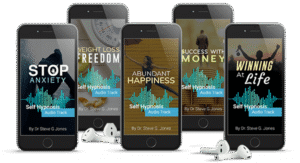
[Free Gift] Life-Changing Self Hypnosis Audio Track
Becoming Better Without Losing Yourself

In a world obsessed with constant improvement, it’s easy to feel like who you are right now is never enough. Social media tells you to be more productive, more confident, more disciplined, more successful. Personal development content encourages transformation, growth, and reinvention.

But somewhere along the way, many people start to wonder:
What if becoming better means losing who I truly am?

This is one of the most important yet overlooked questions in personal development. Growth should not come at the cost of your identity, your values, or your inner peace. True self-improvement is not about becoming someone else—it’s about becoming more of who you already are.

This article will guide you through how to grow, evolve, and improve your life without disconnecting from your authentic self.

The Hidden Pressure Behind Self-Improvement

Personal development can be empowering—but it can also become overwhelming.

You may find yourself:

  • Comparing your progress to others
  • Feeling like you’re always behind
  • Changing yourself to meet external expectations
  • Chasing goals that don’t truly feel like yours

This kind of pressure often leads to a quiet internal conflict. On the outside, you’re improving. But on the inside, something feels off.

That “off” feeling is a signal. It’s your identity asking not to be abandoned in the process of growth.

What Does It Mean to “Lose Yourself”?

Losing yourself doesn’t happen overnight. It’s a gradual drift.

It can look like:

  • Saying yes when you want to say no
  • Adopting goals that don’t align with your values
  • Suppressing your emotions to appear “strong”
  • Changing your personality to fit in or be accepted

At first, these changes may seem like progress. But over time, they create disconnection—from your intuition, your needs, and your sense of self.

The irony is this:
You can become more “successful” while feeling less like yourself.

The Truth About Growth: It Should Feel Like Alignment, Not Force

Real personal development is not about forcing yourself into a new identity. It’s about aligning your actions with your deeper truth.

Growth should feel like:

  • Expanding, not shrinking
  • Clarifying, not confusing
  • Strengthening, not suppressing

Instead of asking, “Who should I become?”
A better question is:
“What parts of me have I been ignoring, and how can I honor them?”

Step 1: Define Your Core Values Before You Set Goals

Many people start with goals—but skip the foundation.

Without clarity on your values, you risk building a life that looks good on the outside but feels empty on the inside.

Ask yourself:

  • What truly matters to me?
  • What kind of life feels meaningful—not just impressive?
  • What do I want to stand for?

Your values act as a compass. They ensure that as you grow, you stay aligned with who you are.

When your goals are rooted in your values, self-improvement becomes a process of expression—not imitation.

Step 2: Let Go of the “Ideal Version” Trap

You’ve probably imagined a “better version” of yourself:

  • More disciplined
  • More confident
  • More successful
  • More attractive

But sometimes, this ideal becomes unrealistic—or worse, inauthentic.

The danger is not having goals. The danger is creating a version of yourself that requires you to abandon your natural tendencies, personality, or emotional depth.

Instead of chasing perfection:

  • Focus on progress that feels natural
  • Improve your habits without rejecting your personality
  • Grow in a way that feels sustainable

You don’t need to become a completely different person. You need to become a more honest version of yourself.

Step 3: Listen to Your Inner Voice (Even When It’s Inconvenient)

Your intuition often speaks quietly—but clearly.

It tells you:

  • When something feels wrong
  • When a goal doesn’t align
  • When you need rest instead of pushing harder

Ignoring this voice is one of the fastest ways to lose yourself.

In personal development, discipline is important. But blind discipline—without self-awareness—can lead to burnout and disconnection.

Learn to balance:

  • Structure with flexibility
  • Ambition with self-compassion
  • Action with reflection

Your inner voice is not a weakness. It’s your guide.

Step 4: Redefine What “Better” Means

Society often defines “better” in narrow terms:

  • More money
  • Higher status
  • Greater productivity

But personal growth is deeply individual.

For you, becoming better might mean:

  • Setting boundaries without guilt
  • Slowing down and enjoying life more
  • Healing emotional patterns
  • Building deeper relationships

Don’t let external standards define your journey.

A powerful reframe is this:
Better is not about becoming more impressive. It’s about becoming more authentic.

Step 5: Allow Yourself to Evolve Without Judgment

You are allowed to change. You are allowed to outgrow old habits, beliefs, and even identities.

But evolution doesn’t mean rejection.

Instead of saying:
“I need to stop being this person.”

Try:
“I’m growing beyond this version of myself.”

This subtle shift keeps your self-respect intact while allowing transformation.

Growth with self-judgment creates resistance.
Growth with self-acceptance creates momentum.

Step 6: Protect Your Energy and Environment

Your environment has a powerful influence on your identity.

If you surround yourself with:

  • Constant comparison
  • Unrealistic standards
  • Negative or critical voices

You may feel pressured to become someone you’re not.

Be intentional about:

  • The content you consume
  • The people you spend time with
  • The expectations you allow into your life

A supportive environment doesn’t force you to change—it allows you to grow safely and authentically.

Step 7: Measure Progress Internally, Not Just Externally

External achievements are visible. Internal growth is not—but it’s often more important.

Ask yourself:

  • Am I more at peace than I was before?
  • Do I understand myself better?
  • Am I making choices that feel aligned?

These are powerful indicators of real progress.

You don’t need constant validation to know you’re growing.

The Balance Between Growth and Self-Acceptance

One of the biggest misconceptions is that self-acceptance and self-improvement are opposites.

In reality, they work together.

Self-acceptance says:
“I am enough as I am.”

Self-improvement says:
“I am capable of becoming more.”

When combined, they create a healthy mindset:
“I am enough—and I’m still growing.”

This balance allows you to move forward without rejecting your present self.

Final Thoughts

Becoming better should never mean becoming someone you don’t recognize.

The goal of personal development is not to erase your identity—it’s to uncover it, strengthen it, and express it more fully.

As you grow, remember:

  • You don’t need to prove your worth
  • You don’t need to follow someone else’s path
  • You don’t need to sacrifice your authenticity for success

You are not starting from scratch.
You are starting from experience.

And the more you honor who you are, the more powerful your growth becomes.

So improve your habits. Build your discipline. Expand your mindset.

But don’t lose yourself in the process.

Because the most meaningful version of “better” is the one that still feels like you.

[Free Gift] Life-Changing Self Hypnosis Audio Track

The Lifelong Journey to Know Yourself and Seek Self Improvement

In a world full of distractions, responsibilities, and constant change, few pursuits are as meaningful as the decision to know yourself and seek self improvement. This timeless principle has been emphasized by philosophers, psychologists, and spiritual teachers alike. Yet, many people spend their entire lives without truly understanding who they are or what they are capable of. Learning to know yourself and seek self improvement is not just a personal goal — it’s a continuous, transformative journey that can bring peace, confidence, and purpose to your life.

Understanding the Meaning of Knowing Yourself

To know yourself is to become aware of your emotions, values, beliefs, strengths, weaknesses, and desires. It’s about peeling away the layers of conditioning and external influence to understand what truly defines you. Many of us are shaped by family expectations, social norms, and cultural ideals. While these factors are part of life, they can also obscure our true identity.

Knowing yourself means taking a closer look at your thoughts and behaviors. What motivates you? What drains your energy? What brings you joy or makes you feel fulfilled? When you understand your inner world, you gain the power to make choices that align with your authentic self instead of simply reacting to circumstances.

Self-awareness also allows you to set realistic goals, build stronger relationships, and make better decisions. The more you know yourself, the more confident and grounded you become in facing life’s challenges.

Why Seeking Self Improvement Matters

Once you know who you are, the next natural step is to seek self improvement. Human beings are designed for growth. Our minds crave progress and our hearts long for purpose. Seeking self improvement doesn’t mean you are not good enough; it means you recognize that there’s always room to grow.

Self improvement can manifest in many forms — emotional growth, skill development, spiritual awareness, or physical health. It’s about refining your character, expanding your knowledge, and becoming the best version of yourself. When you actively seek self improvement, you are essentially committing to living consciously and intentionally.

The process often requires courage. Growth demands that you step outside your comfort zone, confront your fears, and let go of old habits that no longer serve you. But the reward is immense: a life of fulfillment, clarity, and inner strength.

The Connection Between Self-Knowledge and Self Improvement

You cannot truly improve what you do not understand. That’s why knowing yourself and seeking self improvement are two sides of the same coin. Self-awareness gives you the foundation to recognize where you are, while self improvement gives you the direction to move forward.

When you are aware of your emotional triggers, you can manage stress more effectively. When you know your strengths, you can use them to create meaningful impact. When you acknowledge your weaknesses, you can focus on developing new skills. Every insight gained through self-awareness becomes a stepping stone toward personal transformation.

Moreover, this cycle of reflection and growth never ends. The more you evolve, the deeper your understanding of yourself becomes. It’s a dynamic process that keeps your mind sharp, your spirit humble, and your heart open.

Practical Steps to Know Yourself

  1. Practice Mindfulness
    Spend time observing your thoughts and emotions without judgment. Meditation, journaling, or simply sitting in silence can help you connect with your inner self.
  2. Ask Deep Questions
    Reflect on questions like “What truly matters to me?” or “What kind of life do I want to live?” Honest self-inquiry reveals what’s beneath the surface.
  3. Embrace Solitude
    Alone time allows you to separate your true desires from external influences. It helps you recognize what you genuinely enjoy and what you’ve been doing just to please others.
  4. Seek Feedback
    Sometimes, others can see aspects of us that we overlook. Constructive feedback from trusted people can offer valuable insights into your blind spots.
  5. Observe Your Patterns
    Pay attention to recurring emotions, habits, and choices. Patterns often reveal your deepest beliefs and motivations.

How to Seek Self Improvement

  1. Set Meaningful Goals
    Define what growth looks like for you. It could be learning a new skill, improving emotional control, or developing better relationships. Clear goals guide your journey.
  2. Read and Learn Continuously
    Books, podcasts, and courses expose you to new perspectives. The more you learn, the more tools you have for self-development.
  3. Cultivate Discipline
    Self improvement requires consistency. Small daily actions—like exercising, journaling, or gratitude practice—can lead to lasting transformation over time.
  4. Surround Yourself with Growth-Minded People
    Your environment influences your progress. Connect with those who inspire and challenge you to become better.
  5. Celebrate Progress, Not Perfection
    Growth is not linear. There will be setbacks and breakthroughs. What matters most is your commitment to keep evolving.

The Emotional Rewards of Self Discovery

When you take the time to know yourself and seek self improvement, you begin to experience life with greater clarity. You become more resilient in the face of adversity because you understand your inner world. You stop seeking validation from others and instead find fulfillment within yourself.

This inner peace radiates outward, improving your relationships, your work, and your sense of purpose. You begin to live with authenticity—free from the need to impress others or meet unrealistic expectations.

Common Obstacles to Personal Growth

Even with the best intentions, self-discovery and improvement can be challenging. Fear of change, self-doubt, and lack of patience often hold people back. The key is to recognize these barriers as part of the journey rather than signs of failure.

Growth can be uncomfortable because it requires shedding old identities and habits. But remember that discomfort is a sign of progress. Just as muscles grow stronger through resistance, your character strengthens through challenges.

Living a Life of Purpose Through Self-Knowledge

Ultimately, the goal of knowing yourself and seeking self improvement is to live a life of authenticity and purpose. When your actions reflect your values, you experience harmony and meaning. You no longer drift aimlessly—you move through life with direction and confidence.

Purpose doesn’t have to be something grand. It can be found in daily acts of kindness, in meaningful work, or in personal integrity. What matters is that it aligns with who you truly are.

Conclusion

To know yourself and seek self improvement is a lifelong journey—one that requires courage, honesty, and perseverance. It’s about understanding your inner world, embracing growth, and living intentionally. As you evolve, you’ll discover that the real reward lies not in reaching a final destination, but in the transformation itself.

Every step you take toward self-awareness brings you closer to peace and authenticity. Every effort you make to grow shapes a more purposeful, fulfilling life. The more you commit to knowing yourself, the more you realize how limitless your potential truly is.

[Free Gift] Life-Changing Self Hypnosis Audio Track