
6 Steps to Break Free From Feeling Stuck

Feeling stuck is one of the most common yet frustrating emotional states people experience in modern life. You may feel unmotivated, directionless, emotionally drained, or caught in the same patterns despite wanting change. Whether this feeling comes from your career, relationships, personal growth, or daily routine, being stuck can quietly erode your confidence and sense of purpose over time.

The good news is that feeling stuck does not mean you are broken, lazy, or incapable. It usually means something within you is asking for attention, clarity, or a reset. Breaking free does not require dramatic overnight transformation. It requires intentional, manageable steps that reconnect you with yourself and your sense of control.

Below are six powerful and practical steps to help you break free from feeling stuck and move forward with clarity and confidence.

1. Write Down Your Fears Clearly

Many people stay stuck because their fears remain vague and unspoken. When fear lives only in your mind, it grows larger and more intimidating than it truly is. Writing your fears down forces them to become concrete, specific, and therefore manageable.

Take a notebook or open a document and answer these questions honestly:
What am I afraid of right now?
What do I think will happen if I try and fail?
What am I avoiding because it feels uncomfortable or uncertain?

Once your fears are written, you may notice patterns. Some fears may be unrealistic. Others may be valid but exaggerated. The goal is not to eliminate fear completely, but to understand it. Clarity reduces fear’s power and gives you a stronger emotional foundation to move forward.

2. Call One Trusted Person

Isolation often intensifies the feeling of being stuck. When you keep everything to yourself, your thoughts echo without perspective. Reaching out to one trusted person can immediately shift your emotional state.

Choose someone who listens without judgment. This could be a close friend, a family member, a mentor, or even a therapist. You do not need to have a perfectly structured explanation. Simply saying “I feel stuck and I don’t know why” is enough to begin the conversation.

Speaking out loud helps organize your thoughts and reminds you that you are not alone. Often, clarity emerges not from advice, but from being heard and understood.

3. Do Something Small, But With Sincerity

When you feel stuck, big goals can feel overwhelming. Waiting until you feel motivated or inspired often keeps you frozen. Instead, focus on doing one small action with full presence and sincerity.

This could be:
Cleaning one drawer
Sending one important email
Taking a ten-minute walk
Reading a few pages of a meaningful book

The size of the action does not matter. What matters is the intention behind it. Small actions rebuild trust with yourself. They remind you that movement is possible, even when motivation is low. Progress is often born from consistency, not intensity.

4. Limit Exposure to Negativity

Your mental environment shapes your emotional state more than you may realize. Constant exposure to negativity, whether through social media, news, toxic conversations, or self-critical thoughts, can keep you stuck in survival mode.

Start by observing what drains your energy. This might include:
Endless scrolling on social media
Conversations that leave you feeling discouraged
Content that reinforces comparison or fear

You do not need to eliminate everything overnight. Set gentle boundaries. Reduce screen time. Unfollow accounts that make you feel inadequate. Choose silence over unnecessary noise. Protecting your mental space allows clarity and creativity to return.

5. Journal Every Night

Journaling is one of the most effective tools for emotional processing and self-awareness. Writing at night helps you release mental clutter and reflect on your day with honesty.

You can keep it simple by answering questions such as:
What did I feel today?
What drained my energy?
What gave me even a small sense of relief or joy?
What do I need more of right now?

You do not need perfect grammar or deep insights. The act of writing itself creates emotional release. Over time, journaling helps you recognize patterns, understand your needs, and reconnect with your inner voice.

6. Reset Your Daily Routine

Feeling stuck is often connected to living on autopilot. When every day looks the same, your mind and body stop expecting change. Resetting your routine signals to yourself that something new is possible.

Start with small adjustments:
Wake up 30 minutes earlier or later
Change the order of your morning activities
Add a short walk or stretching session
Create a consistent bedtime ritual

Routines do not limit freedom. Healthy routines create stability, which allows growth. When your days feel intentional rather than reactive, your sense of control naturally increases.

Final Thoughts

Breaking free from feeling stuck is not about fixing yourself. It is about reconnecting with yourself. Each step above is designed to gently shift you from stagnation to movement, from confusion to clarity.

Remember that progress is not linear. Some days you will feel motivated, and other days you may feel uncertain again. That does not mean you are failing. It means you are human.

By facing your fears, seeking connection, taking small actions, protecting your mental space, reflecting through journaling, and resetting your routine, you create momentum. And momentum, even when slow, leads you forward.

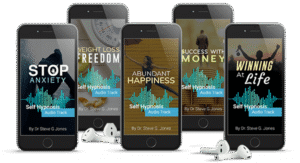
[Free Gift] Life-Changing Self Hypnosis Audio Track
What to Do When You Feel ‘Stuck’ in Life?

Feeling stuck in life is one of the most common yet most misunderstood experiences we go through. It can show up quietly, as a dull sense of dissatisfaction, or loudly, as anxiety, frustration, and self-doubt. You may feel like you are doing everything you are supposed to do, yet nothing seems to move forward. Your goals feel distant, your motivation feels drained, and your days start blending into each other. If this sounds familiar, you are not alone. Feeling stuck does not mean you are failing. More often, it is a sign that something within you is asking for attention, clarity, or change.

Understanding what it really means to feel stuck is the first step toward moving forward. Being stuck does not mean you have no options. It usually means you have too many thoughts, expectations, fears, or pressures pulling you in different directions. When your mind is overwhelmed, movement feels impossible. You may wait for clarity, confidence, or motivation to appear before taking action, but in reality, clarity often comes after you begin moving, not before.

One of the most important things to remember is that you do not need to have your entire life figured out to take the next step. Many people stay stuck because they believe they need a perfect plan. They want certainty about where they are going, how long it will take, and whether it will work. Life rarely offers that level of certainty. Waiting for it only delays progress. Instead of asking yourself, “What should I do with my life?” try asking, “What is the smallest step I can take right now to feel slightly better or more aligned?” Small steps create momentum, and momentum creates clarity.

Another reason people feel stuck is because they are living according to expectations that no longer fit them. These expectations may come from family, society, culture, or even from a past version of yourself. You might be pursuing goals that once made sense but no longer reflect who you are today. When your actions are disconnected from your values, life starts to feel heavy and directionless. Take time to reconnect with what truly matters to you now, not what mattered five or ten years ago. Ask yourself what gives you energy, what drains you, and what kind of life feels meaningful to you at this stage.

Fear also plays a powerful role in keeping people stuck. Fear of failure, fear of judgment, fear of making the wrong choice, or even fear of success can quietly paralyze you. Sometimes staying stuck feels safer than risking disappointment or change. The problem is that comfort zones can become emotional cages. Growth always requires discomfort, but discomfort does not mean danger. Learning to move forward while feeling afraid is a skill, and it gets easier with practice. You do not need to eliminate fear to take action. You only need to stop letting fear make your decisions.

Perfectionism is another hidden trap. When you believe that you must do things perfectly or not at all, you create unrealistic pressure that leads to inaction. Life is not built through perfect decisions but through repeated imperfect ones. Progress is messy, nonlinear, and full of adjustments. Give yourself permission to start before you feel ready. Done is better than perfect, especially when you are trying to get unstuck.

Your environment can also contribute to feeling stuck. If your days lack structure, stimulation, or inspiration, your mind can start to feel stagnant. Simple changes in your daily routine can create powerful shifts in how you feel. This might mean changing how you start your morning, spending less time on social media, moving your body regularly, or surrounding yourself with people who support your growth. Sometimes, external changes create the internal shift you have been waiting for.

It is also important to acknowledge your emotions instead of avoiding them. Feeling stuck often comes with feelings of sadness, anger, guilt, or shame. Many people try to suppress these emotions, hoping they will disappear on their own. In reality, unacknowledged emotions tend to grow stronger. Allow yourself to feel what you feel without judging it. Journaling, talking to someone you trust, or even sitting quietly with your thoughts can help you process what is happening beneath the surface. Emotional clarity often leads to practical clarity.

Taking responsibility for your life is another powerful step forward. Responsibility does not mean blaming yourself for everything that has gone wrong. It means recognizing that, regardless of past circumstances, you still have the ability to choose your next move. Even when options feel limited, you usually have more control than you think. Shifting from a mindset of helplessness to one of ownership can be uncomfortable, but it is incredibly empowering.

Sometimes, feeling stuck is a sign that you need rest, not action. Burnout can disguise itself as confusion or lack of direction. If you have been pushing yourself too hard for too long, your mind and body may be asking for a pause. Rest is not laziness. It is a necessary part of growth. Give yourself permission to slow down, recharge, and reset. From a rested place, decisions often feel clearer and more manageable.

Finally, remember that feeling stuck is not a permanent state. It is a temporary phase, even if it has lasted longer than you would like. Many meaningful transformations begin with a period of feeling lost. This phase often appears right before a breakthrough, because it forces you to question, reflect, and realign. Trust that this moment is part of your journey, not a sign that you are behind in life.

You do not need to know the entire path ahead. You only need to know what the next step is. That step might be small, uncertain, or imperfect, but it counts. Each step you take builds confidence, clarity, and momentum. Over time, those small steps can lead you to a life that feels more purposeful, fulfilling, and true to who you are.

[Free Gift] Life-Changing Self Hypnosis Audio Track

Why Feeling Like “Everything Is Just the Same” Could Be a Sign of a Spiritual Awakening

Have you ever looked around and thought, “Is this it?”
Do your days start blending together?
Does life feel like an endless loop — same conversations, same places, same emotions, same patterns?

At first glance, this experience might seem like boredom, burnout, or a lack of direction. But what if this strange sense of sameness is not a sign of something going wrong — but something deeper trying to emerge?

In this article, we’ll explore why the feeling that “everything is the same” can be a profound signal that you are at the edge of a spiritual awakening — and what to do next.

What Is a Spiritual Awakening?

A spiritual awakening isn’t necessarily about religion or rituals. It’s about waking up from the unconscious patterns we’ve lived in for years — or even decades.

It’s when you begin to:

  • Question the way things have always been
  • Feel a longing for deeper meaning
  • Experience discomfort with your current life, even if everything seems “fine” on the surface

In short: It’s a shift in consciousness. You begin to sense that there is more to life than meets the eye.

The Symptoms of Sameness

When people describe their lives as “stagnant” or “predictable,” they often experience:

  • Emotional numbness
  • Apathy or low motivation
  • A sense that days are repeating
  • Feeling disconnected from joy or excitement
  • A nagging internal voice saying, “This can’t be all there is.”

This monotony isn’t just a mood swing. It’s often the first crack in the illusion — the breakdown of the persona you’ve carefully constructed over years of “normal life.”

Why This Emptiness Is Important

Contrary to popular belief, spiritual awakenings rarely start with peace or bliss. They often begin with confusion, fatigue, and emotional flatness.

That sense of “sameness” can be a symptom of:

  • The death of old belief systems
  • The fading of egoic desires (status, appearance, approval)
  • A subtle rejection of surface-level living

This emptiness isn’t a void — it’s a space being cleared for something real. Something authentic.

From Numbness to Awareness

When the familiar no longer excites you and distractions no longer satisfy you, your awareness has started to shift.

You’re no longer hypnotized by routines or entertainment. You begin to sense:

  • How much of your life is lived on autopilot
  • How your choices have been shaped by fear or expectation
  • How your relationships might lack depth or presence

This new awareness can be uncomfortable — but it’s also deeply honest.

The Role of Disillusionment

Disillusionment literally means “freedom from illusion.”

When you no longer believe that external success, validation, or routine will fulfill you, it can feel like a crisis. But in reality, you are being invited to:

  • Let go of what no longer serves your soul
  • Redefine what meaning looks like
  • Return to the essence of who you are

This is the fertile ground where awakening takes root.

Signs You’re Waking Up

Not sure if you’re experiencing a spiritual awakening? Here are some subtle — and not-so-subtle — signs:

  • You feel alienated by conversations that once thrilled you
  • You crave solitude or deeper connection
  • You question your career, habits, and even your identity
  • You start valuing truth over comfort
  • You notice synchronicities and signs
  • You become aware of your own patterns and triggers

The sameness you once feared becomes a mirror reflecting your deeper longing — and your deeper truth.

How to Embrace the Awakening Process

Awakening isn’t a destination. It’s a process. And often, that process includes stillness, silence, and surrender.

Here’s how to move through it with grace:

1. Slow Down

The illusion of “busy = meaningful” starts to dissolve during awakening. Let it. Create space for rest, reflection, and nature.

2. Practice Presence

Even if everything feels the same, you are not the same. Begin noticing the small details — your breath, the rustle of leaves, the tension in your body.

3. Journal Your Awareness

Write about your numbness, your questions, your confusions. Let it out. Writing is a portal to your inner world.

4. Disconnect to Reconnect

Take breaks from screens, social media, or draining conversations. You don’t need more input — you need more inner connection.

5. Trust the Breakdown

What looks like a breakdown may actually be a breakthrough in disguise. The sameness you feel might be the cocoon phase before transformation.

Final Thoughts

If you’re feeling like everything is the same, don’t rush to fix it. Don’t force positivity. Don’t numb yourself with distractions.

Instead, listen to it.

This feeling may be your soul whispering:

“There’s more than this. And you’re ready to remember.”

The sameness is not a dead end. It’s a doorway.
And what lies beyond it is your most authentic self — waiting to be rediscovered.

[Free Gift] Life-Changing Self Hypnosis Audio Track

3 Signs You’re “Drifting” Through Your Own Life (And How to Stop)

Have you ever looked in the mirror and felt like a stranger to yourself?

You go through the motions — waking up, going to work, scrolling your phone, talking to people — but deep down, you feel like something’s missing. You’re not unhappy, but you’re not truly living either. You’re… existing.

That quiet restlessness?
That constant loop of monotony?
That subtle ache you can’t quite name?

It might be a sign that you’re drifting through your own life.

In this blog, we’ll explore what it means to be emotionally and mentally adrift, how to recognize the signs, and most importantly — how to reclaim your sense of direction, passion, and purpose.

🔍 What Does It Mean to “Drift” Through Life?

Drifting isn’t about being lazy or unmotivated. It’s when you live on autopilot — following routines, reacting to external demands, but not making intentional choices that align with your true self.

It’s like being on a boat with no paddle. You’re moving, but not in a direction you’ve chosen.

And the scary part? You can drift for years without realizing it — until one day, something shakes you awake.

⚠️ Sign #1: You’re Always Busy, But Nothing Feels Meaningful

You tick off to-do lists. You handle responsibilities. You keep yourself “productive.”
But if you were to stop and ask, “Why am I doing all of this?” — you might not have a real answer.

You’re not lazy — you’re just lost in the busyness trap.

Busy ≠ Fulfilled.
Activity without alignment leads to burnout, not growth.

If your calendar is full but your heart feels empty, you may be drifting — allowing routines and expectations to dictate your life instead of your values and dreams.

⚠️ Sign #2: You Can’t Remember the Last Time You Felt Truly Excited

When was the last time you felt genuinely alive?
Not just satisfied. Not just “fine.” But lit up by something?

One of the clearest signs of drifting is emotional numbness — a dullness that creeps in slowly. Life becomes a blur of sameness. Days bleed into each other. Joy feels like a distant memory.

You might find yourself avoiding deep thoughts, big dreams, or tough questions because they remind you of what you’ve lost.

And here’s the truth:

Drifting thrives in emotional silence.
If you don’t consciously seek what excites you, you’ll unconsciously settle for what numbs you.

⚠️ Sign #3: You Feel Disconnected from Who You Used to Be (Or Who You Want to Become)

You weren’t always like this.
There was a time when you had dreams, desires, and a sense of direction. Maybe you wanted to travel the world, write a book, start a business, help others, or simply feel free.

But somewhere along the way, life happened. Responsibilities piled up. Doubts crept in. You compromised once, then twice — and now, you barely recognize the person you’ve become.

This disconnection is a major red flag. You’re not living your life — you’re surviving it.

Ask yourself:
“Am I living in alignment with the person I want to become?”
If the answer is no, it’s time to re-center.

🔄 How to Stop Drifting and Start Living with Intention

Recognizing the drift is the first step. The next step is course correction. Here’s how to begin:

✅ 1. Create Stillness to Hear Yourself Again

Turn off the noise. Spend 10–15 minutes each day in silence — no phone, no distractions. Journal, walk, or just sit with your thoughts.

You can’t steer your life if you’re too busy to hear your own voice.

✅ 2. Reconnect with What Truly Matters

Make a list of moments that made you feel proud, joyful, or at peace. What were you doing? Who were you with? What values were being honored?

These clues point to what you’ve lost — and what you can reclaim.

✅ 3. Take One Aligned Action (Even If It’s Small)

Drifting ends the moment you act with purpose.
Whether it’s signing up for a class, calling an old friend, quitting a draining commitment, or writing that first blog post — do something that feels like you.

Progress isn’t about speed. It’s about direction.

💬 Your Life Deserves More Than Autopilot

You weren’t born to float through your days.
You weren’t meant to sleepwalk through your own story.

The good news is, you don’t need a massive overhaul to start changing direction. All it takes is a moment of clarity… and a decision to move with intention, not just momentum.

If you recognize yourself in any of these signs, don’t panic.
You’re not broken — you’re just being invited to wake up.

And the moment you decide to stop drifting, you’ve already begun the journey home.

🔗 Ready to go deeper?

👉 Facing burnout or feeling numb? See 6 Self‑Care Mistakes That Make You Feel Worse, Not Better — it shows common missteps and how to care for yourself intentionally.

[Free Gift] Life-Changing Self Hypnosis Audio Track