Have you ever asked yourself, “What am I living for? What do I truly want in this life?”
If your answer is “I don’t know,” you are not alone. Many people even adults with stable jobs struggle with this question every single day.
The issue isn’t that you “don’t have goals,” but that you haven’t truly understood yourself yet.
This article will help you understand why you feel this way, recognize your current mental state, and most importantly, find practical directions to move forward.
Why Don’t You Know What You Want in Life?
1. You’ve Been Living According to Others’ Expectations for Too Long
From a young age, you were taught to choose a “stable” major, pursue a “safe” job, and live according to social standards. As a result, you became used to following instructions instead of asking yourself what you really want.
Advice from adults especially parents is generally well-intentioned. However, their guidance is often limited by their own knowledge and life experiences. They believe their way is right and best, but in reality, each person’s circumstances and abilities are different. The world you are living in is not the same as the one your parents grew up in, and your capabilities may also differ from theirs.
At the same time, as someone with limited life experience, you may not know whether their advice is right or wrong. You may also hesitate to go against it out of fear of disappointing them. Only later in life, as you mature, do you begin to realize that some of their advice was right, while other parts may not have been suitable for you.
In today’s world, to live a fulfilling life and achieve meaningful success, people need to pursue what they truly want, what they love, and what they are naturally good at. However, due to pressure from family and the surrounding social environment, you may have chosen to live according to others’ expectations instead of your own desires.
2. You Haven’t Truly Experienced Enough Yet
Many people out there simply haven’t had the opportunity to experience more in life. Most grow up following the expectations and direction of others, dedicating all their time to those paths. Meanwhile, there are countless things in the world for us to try and explore but you can’t know what you like if you haven’t tried, failed, or faced real-life situations. Without experience, you don’t have enough “data” to make choices.
When someone lacks experience, they may assume that other things they haven’t tried could be better than what they currently have. Only through real experience can they develop an objective perspective.
In relationships, for example, you may not understand what your partner wants or how he thinks because you haven’t had enough relationships to compare, or you lack the knowledge to evaluate the situation especially if you’ve never learned about or explored male psychology. This can leave you feeling confused and anxious about how to behave.
I used to be very shy when talking to girls because I had never been taught how to interact with them properly. I didn’t understand value in relationships, and I hadn’t had much exposure to women. I wanted to make a good impression and attract the attention of the girl I liked, but I often felt confused and made mistakes in how I expressed myself. I even wished I could be like some guys who seemed naturally good at these things.
On the other hand, I also had the experience of being overweight. It wasn’t extreme I usually weighed around 60 kg, but at one point I went up to 70 kg. The real issue was belly fat, which made my stomach noticeably larger. I could clearly feel the discomfort when moving; I was no longer as agile and light as before. I also felt abdominal pressure and was diagnosed with mild fatty blood levels. That experience helped me define the kind of person I wanted to become and pushed me to control my diet and exercise in order to move toward that version of myself.
3. You’re Afraid of Making the Wrong Choice
Perhaps in the past, you made a decision that turned out to be a mistake or you fear losing something if you choose incorrectly.
Similarly, many people don’t actually “not know” what they want they do know, but they’re too afraid to choose. They fear failure, judgment, and wasted time, so instead of choosing something, they choose nothing at all.
The fear of making the wrong choice is an invisible barrier for many. Some people are stuck for years; others remain stuck for a lifetime. They choose to live as safely as possible, but the price they pay is a lack of fulfillment in life.
If you can remove this fear today, even if you continue to make choices and mistakes, those mistakes become valuable experiences. Without these experiences, it’s difficult to move forward. Just like someone who is afraid to walk will remain standing in the same place forever.
4. You’re Losing Connection with Yourself
A robot has no soul it only follows commands and pre-programmed instructions. If you no longer feel connected to your inner self or make decisions based on your own desires, your life is not much different from that of a robot simply following directions and living according to others’ expectations.
Is this you? Check for these signs: living purely out of habit, feeling emotionally numb, losing interest in everything, frequently feeling tired, or experiencing a sense of emptiness.
If your life feels like this, it means you are losing connection with yourself. You’re not lazy you’re lacking inner direction.
Is It a Problem If You Don’t Know What You Want in Life?
The answer is NO as long as you recognize this issue early. In fact, this is a normal stage of personal growth. It often happens when you begin to “wake up” from your old way of living.
I spent many years struggling to find a business path that truly suited me. I approached everything superficially until one day I realized what I genuinely wanted to pursue and committed to it seriously. I do feel some regret about the time I wasted, but in the end, I broke through that phase. My past failures helped me wake up and gain clarity about what I need to do in the present and future.
You can also start changing things in your life. The problem isn’t that you “don’t know” it’s that you’ve stayed stuck in that state for too long.
What Should You Do If You Don’t Know What You Want in Life?
Below is a clear, practical roadmap that you can start applying right away:
1. Stop Trying to Find Your “Big Passion” Immediately
A common mistake is thinking: “I must find my life’s passion.” Many people spend years searching for that one big passion and still can’t find it. The truth is, passion is not something you instantly discover it’s something you build over time.
If you don’t invest enough dedication, enthusiasm, time, and effort into something, it won’t become your passion.
In the past, I asked myself what I was good at. At that time, the answer felt like “nothing.” It made me feel sad and empty. But then I realized that I needed to seriously explore and commit to something only then could I become good at it. And only when I become good at something can I truly start to enjoy and love doing it.
I had knowledge about computers, the internet, programming, and building websites. I also had a basic understanding of personal development not exceptional, but it was my strongest advantage. I could work on these things independently without needing permission or facing legal barriers, as long as I had the skills. It could become a real business and meaningful work if I did it well.
I had a full-time job, but it wasn’t easy to turn it into a side job due to various limitations. Once I accepted that reality, I found a clearer direction. Starting an online business wasn’t easy at first, but it aligned with my strengths and lifestyle. I could work in the evenings, on weekends, from home with just my computer and I genuinely enjoy sharing my personal experiences with others.
You don’t need to worry if you don’t have an immediate answer. Start with smaller questions:
- What do you slightly enjoy?
- What makes you feel a little less bored?
- What skills or background do you already have from education or past work?
- What are your available resources time, energy, and health after your main job each day?
Then, combine these elements to find a common point that can form a direction suitable for you.
Even if you’re not good at anything or you didn’t enjoy your previous work you can still choose something new. The condition is that you must be willing to start from the beginning.
The key here is having a long-term plan not an overnight solution. Every change and choice you make may require you to start from zero, and it will take time to improve and get things on track.
Even when you already know something, there will always be new things to learn along the way. You need to invest time in learning and improving your skills to achieve the goals you initially set.
Start asking yourself and finding your own answers, just like I did.
2. Write Down What You DON’T Want
Each person has different abilities and characteristics. What works for one person may not work for another. For example, I don’t like drinking alcohol, while most of my colleagues enjoy gathering to drink. As a result, they build relationships and handle work in ways that are different from mine.
When you think about what you don’t want in your work or daily life, it becomes one of the fastest ways to gain clarity about what you should choose.
For instance, you may not want a restrictive job, a toxic environment, a dependent lifestyle, or the need to constantly prove yourself to others. Once you clearly understand what you don’t want, you’ve already made it halfway forward in your journey.
3. Try Many Things But Strategically
Many people feel like they don’t enjoy or aren’t capable of doing anything. If you want to discover what you love, you need to experience as many things as possible. However, this doesn’t mean trying things randomly.
Instead, build on your existing foundation. For example, if you have knowledge about motorcycle or car mechanics and want to start a business, you could try opening a repair garage. If you have a technical background and an interest in business, you might explore new skills like writing, business development, or design. You could also try freelancing, joining short-term projects, investing in stocks, or even working in real estate brokerage but before doing so, you should study, learn, or seek guidance from someone experienced.
If you try everything without any foundation or support, your chances of failure increase, and everything becomes more difficult. Repeated failure without direction can drain your motivation. That’s why your experiments should be grounded in some form of logic or preparation.
There is always a chance you’ll find a suitable path. Every experience becomes valuable data about yourself, helping you gain clearer insight over time.
4. Observe Your Own Emotions
Listening to yourself is extremely important and it requires careful attention. The signals you receive may be subtle and unclear at first, but if you’re going to commit your time to something long-term, you need to be thoughtful before making decisions.
We don’t always have unlimited time or opportunities to keep changing paths. At the early stages of experience, it’s also hard to fully recognize whether something truly suits you. If you quickly conclude that something isn’t right and move on too soon, you may never find what truly fits you.
After each experience, ask yourself:
- Do I feel interested?
- Do I want to do this again?
- Am I willing to become better at this?
Often, your answers will come through your emotions. Emotions act as a kind of “compass,” even if they aren’t always clear. Don’t rush or ignore them. Keep checking in with yourself. When your mind truly pays attention, listens, and compares your options more clearly, you’ll be able to make better decisions.
5. Accept the State of “Not Knowing Yet”
I don’t know how long I’ll stay in my current full-time job. I only know that it’s close to where I live, and it allows me to spend more time with my family. I don’t know if I’ll advance in this job soon, later, or maybe never but for now, that’s enough for me.
Moving up to higher management levels or deciding what comes next depends on many factors within the organization I work for. So I accept my current situation and focus on the present.
You don’t need to have a 5-year plan or know exactly what your future will look like. What matters is moving forward step by step, steadily and consistently.
6. Build Discipline Before Finding Passion
Even in love, people need time to understand and win each other over. There are always challenges along the way, and if someone lacks persistence, they may give up before finding true love.
Life and work are the same nothing is completely easy. There will always be obstacles. That’s why, although it may sound counterintuitive, a person without discipline will quit before they even have the chance to like something.
A disciplined person, on the other hand, can turn “dislike” into “skill,” and from “skill” into “passion.”
If you start something but feel unmotivated or lazy, and you wonder how to stay disciplined, remember this: you are searching for your life’s passion. Without passion, it’s harder to succeed and find true fulfillment. You are in the testing phase so you need to follow through in order to evaluate.
7. Reduce Consumption and Increase Action
Remember, you are in the process of experimenting to discover your passion. The best way to do that is by taking action.
If you’re only thinking, worrying, watching motivational videos, or reading self-development content without doing anything you’re not actually experimenting. And the more you consume without acting, the more confused you’ll become.
Follow a simple rule: 20% learning, 80% action.
Before trying something new, it’s important to learn and prepare but don’t spend all your time thinking and researching without acting. Otherwise, you may realize you’ve wasted a lot of time without truly trying anything.
What you’re studying might not even be right for you in the end. So invest a reasonable amount of time and energy into trying things. If you find that something isn’t suitable, you can quickly move on to another field and continue your process of discovery.
Signs You’re Starting to Move in the Right Direction
You may wonder: when do we know we’re on the right path? When do you realize you’ve found your life’s passion?
You don’t need a big “aha moment.” You just need to notice that you feel a little less lost, that there’s something making you want to keep trying, or that you’re starting to understand yourself more each day. Those are the real signs that you’re discovering your passion and moving in the right direction.
When I started receiving a few positive comments from readers on my social media posts, and the number of likes and followers gradually increased over time, it made me feel happy. I realized that I was creating value for others even if it was still small. That’s when I knew that sharing and contributing is my true passion.
A Truth You Need to Accept
No one is “born knowing exactly what they want.” Even successful people were once confused and made many mistakes along the way. The difference is they didn’t stop.
Jack Canfield started his career as a teacher and had no idea he would later become a millionaire, writing inspirational books and teaching success principles. Rockefeller, who once grew up in poverty and simply hoped to earn enough to survive, could not have known he would become an oil tycoon and part of one of the wealthiest families in history. Phạm Nhật Vượng started his entrepreneurial journey selling instant noodles and could not have predicted that he would later become a billionaire in real estate, tourism, and automobile manufacturing. Donald Trump, who was initially a real estate investor and businessman, also did not know he would one day run for President of the United States. And there are many others what they all have in common is that they never stopped.
If you’re asking yourself, “What should I do if I don’t know what I want in life?” remember this: you are not falling behind you are simply in the phase of discovering yourself, and that is completely normal.
You don’t need to compare yourself to others. Each person has their own abilities and passions. Some people are passionate about health, others about food, business, or investing. As for me, I’m passionate about sharing knowledge on life and personal development.
If you still haven’t found your passion, don’t wait until you have the answer before taking action take action to discover the answer.
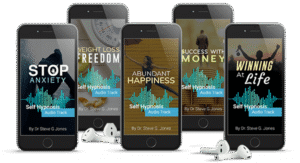
Don’t overlook the meaningful gift I’ve prepared for you below. It can help you overcome anxiety, feel happier, unlock your mindset, and achieve more in life simply by listening.
If you have any thoughts about this article, write them down and let me know in the comments section.
[Free Gift] Life-Changing Self Hypnosis Audio Track