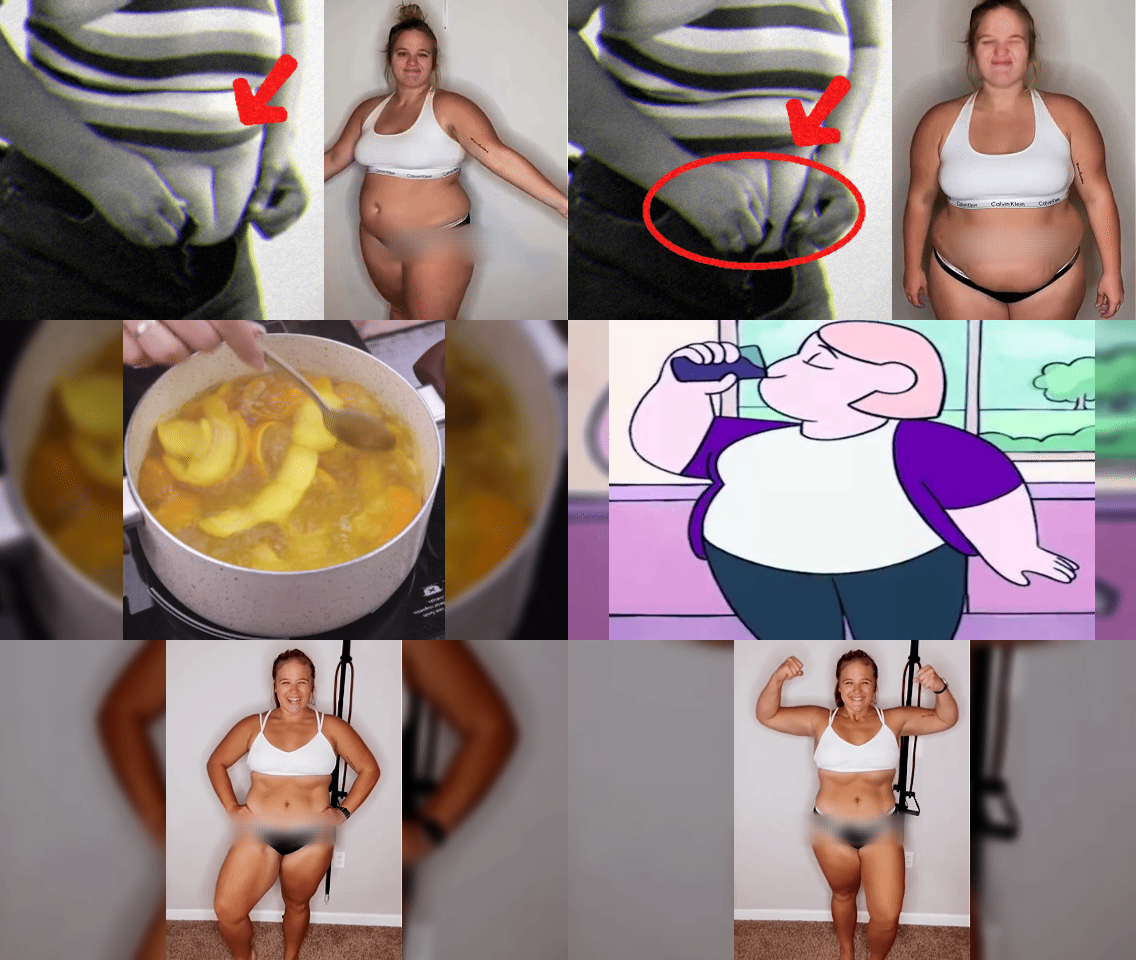
The Truth About Natural Fat Burners

If you’ve ever searched for ways to lose weight faster, you’ve probably come across the term “natural fat burners.” From green tea and coffee to apple cider vinegar and spicy foods, the internet is full of claims about substances that can supposedly melt fat away effortlessly.

But how much of this is actually true?

In this in-depth guide, we’ll break down the science behind natural fat burners, separate fact from fiction, and show you how to use them effectively—if at all—as part of a sustainable weight loss strategy.

What Are Natural Fat Burners?

Natural fat burners are foods, drinks, or compounds derived from natural sources that are believed to help your body burn fat more efficiently. They typically work through one or more of the following mechanisms:

  • Increasing metabolism (calorie burn)
  • Enhancing fat oxidation (using fat for energy)
  • Suppressing appetite
  • Improving energy levels

While these effects sound promising, the reality is more nuanced.

The Biggest Myth About Fat Burners

Let’s address the most important truth right away:

No natural fat burner can cause significant weight loss on its own.

There is no food, drink, or supplement that can override a poor diet or a sedentary lifestyle. Fat loss ultimately comes down to one fundamental principle:

You must burn more calories than you consume over time.

Natural fat burners may support this process slightly—but they are not a shortcut or a replacement for healthy habits.

How Natural Fat Burners Actually Work

To understand their real impact, let’s look at how these substances interact with your body.

1. Increasing Thermogenesis

Some natural compounds slightly raise your body temperature, which can increase calorie burn. This process is called thermogenesis.

However, the increase is usually small—often just 50–100 extra calories per day at most.

2. Boosting Fat Oxidation

Certain ingredients may encourage your body to use fat as fuel, especially during exercise. This can improve efficiency but doesn’t necessarily mean you’ll lose more body fat overall unless you’re in a calorie deficit.

3. Reducing Appetite

Some natural fat burners help you feel fuller for longer, making it easier to eat fewer calories without feeling deprived.

This is one of the more practical and useful effects.

4. Enhancing Energy Levels

Ingredients like caffeine can increase alertness and reduce fatigue, helping you stay active and burn more calories throughout the day.

Popular Natural Fat Burners: What the Science Says

Let’s take a closer look at some of the most common natural fat burners and evaluate their effectiveness.

Green Tea

Green tea is one of the most widely studied natural fat burners. It contains:

  • Catechins (especially EGCG)
  • Caffeine

These compounds may slightly increase metabolism and fat oxidation.

Reality:
Green tea can provide a small boost, but the effect is modest. Drinking it regularly may support weight loss, but it won’t create dramatic results on its own.

Coffee and Caffeine

Caffeine is a well-known stimulant that can:

  • Increase metabolic rate
  • Improve exercise performance
  • Enhance fat burning during workouts

Reality:
Caffeine can be effective in the short term, but your body builds tolerance over time, reducing its impact.

Apple Cider Vinegar

Often promoted as a weight loss miracle, apple cider vinegar is believed to:

  • Reduce appetite
  • Stabilize blood sugar
  • Improve digestion

Reality:
Some studies suggest mild appetite suppression, but the overall effect on fat loss is minimal.

Chili Peppers (Capsaicin)

Capsaicin, the compound that makes chili peppers spicy, may:

  • Increase thermogenesis
  • Reduce appetite slightly

Reality:
The calorie-burning effect is very small and not enough to significantly impact weight loss.

Protein-Rich Foods

While not usually labeled as “fat burners,” protein-rich foods are incredibly powerful for weight loss.

They:

  • Increase the thermic effect of food
  • Help preserve muscle mass
  • Reduce hunger

Reality:
Protein is one of the most effective nutritional tools for fat loss.

Fiber-Rich Foods

Foods high in fiber, such as vegetables, fruits, and whole grains, help:

  • Increase fullness
  • Slow digestion
  • Reduce calorie intake

Reality:
Fiber doesn’t burn fat directly, but it makes it easier to maintain a calorie deficit.

Why Natural Fat Burners Often Seem to Work

Many people report success with natural fat burners—but the reason isn’t always what they think.

Here’s what’s really happening:

  • They become more mindful of their diet
  • They increase water intake (especially with teas)
  • They feel more motivated and consistent
  • They may eat less due to appetite suppression

In other words, the behavior changes matter more than the fat burner itself.

The Danger of Relying on Fat Burners

One of the biggest risks is developing the wrong mindset.

When you believe a product or food is doing the work for you, you may:

  • Ignore calorie intake
  • Skip exercise
  • Expect unrealistic results
  • Feel frustrated when progress stalls

This can lead to cycles of disappointment and inconsistency.

What Actually Works for Fat Loss

If you want real, lasting results, focus on the fundamentals.

1. Calorie Balance

You don’t need extreme diets—just a consistent, moderate calorie deficit.

2. High-Protein Nutrition

Protein helps you stay full, maintain muscle, and burn more calories through digestion.

3. Strength Training

Building muscle supports your metabolism and improves body composition.

4. Daily Movement

Increasing your daily activity (walking, standing, moving) can significantly boost calorie burn.

5. Sleep and Recovery

Poor sleep disrupts hunger hormones and reduces energy levels, making fat loss harder.

6. Consistency Over Perfection

Long-term habits always beat short-term intensity.

How to Use Natural Fat Burners the Right Way

If you still want to include natural fat burners in your routine, here’s how to do it wisely:

  • Use them as support tools, not solutions
  • Combine them with a structured nutrition plan
  • Pay attention to how your body responds
  • Avoid overconsumption (especially caffeine)
  • Focus on sustainability

Think of natural fat burners as a small bonus, not the foundation of your strategy.

A Smarter Perspective on Fat Loss

The idea of “burning fat quickly” is appealing—but real transformation doesn’t happen overnight.

The truth is:

  • Fat loss is gradual
  • Your body adapts over time
  • Quick fixes rarely last

When you shift your focus from shortcuts to sustainable habits, everything changes.

Instead of asking, “What burns fat fastest?”
Start asking, “What can I do consistently for the next 6 months?”

That’s where real results come from.

Final Thoughts

Natural fat burners are not useless—but they are often misunderstood.

They can provide small benefits, such as slightly increased calorie burn or reduced appetite. However, their impact is minimal compared to the fundamentals of weight loss.

The real key to fat loss isn’t hidden in a tea, supplement, or spice. It’s found in your daily habits:

  • What you eat
  • How much you move
  • How well you recover
  • How consistent you are

When those are in place, natural fat burners can complement your efforts—but they’ll never replace them.

Focus on building a strong foundation first. That’s the truth most people overlook—and the one that actually works.

How Your Metabolism Really Works

When people talk about weight loss, one word comes up again and again: metabolism. It’s often blamed when progress is slow and praised when results come easily. But what exactly is metabolism—and more importantly, how does it really work?

If you’ve ever felt confused by conflicting advice about boosting metabolism, this guide will break it down in a clear, science-backed, and practical way. By the end, you’ll understand how your body uses energy, what actually affects your metabolic rate, and how to work with your metabolism—not against it—for sustainable weight loss.

What Is Metabolism?

Metabolism refers to all the chemical processes in your body that convert food into energy. This energy fuels everything you do—from breathing and thinking to walking and exercising.

Your metabolism is not just one thing. It consists of three main components:

1. Basal Metabolic Rate (BMR)

Your Basal Metabolic Rate is the number of calories your body needs to perform essential functions at rest, such as:

  • Breathing
  • Circulating blood
  • Regulating temperature
  • Supporting organ function

BMR accounts for about 60–75% of the total calories you burn daily. This means that even if you did nothing all day, your body would still burn a significant amount of energy.

2. Physical Activity

This includes all movement, from structured workouts to everyday tasks like walking, cleaning, or even fidgeting. It typically accounts for 15–30% of your daily calorie burn.

There are two key parts:

  • Exercise (EAT): Planned workouts
  • Non-Exercise Activity Thermogenesis (NEAT): Daily movement outside of workouts

Interestingly, NEAT can vary dramatically between individuals and plays a huge role in weight management.

3. Thermic Effect of Food (TEF)

This is the energy your body uses to digest, absorb, and process food. It makes up about 10% of your daily calorie expenditure.

Different macronutrients have different thermic effects:

  • Protein: 20–30%
  • Carbohydrates: 5–10%
  • Fats: 0–3%

This is one reason why higher-protein diets are often effective for weight loss.

The Truth About “Fast” vs. “Slow” Metabolism

Many people believe they have a “slow metabolism” and that this is the main reason they struggle with weight loss. While metabolism does vary between individuals, the difference is often smaller than people think.

Factors that influence your metabolic rate include:

  • Age: Metabolism gradually slows with age
  • Body size: Larger bodies burn more calories
  • Muscle mass: More muscle = higher calorie burn
  • Genetics: Plays a role, but not the whole story
  • Hormones: Thyroid function and other hormones matter

However, lifestyle factors—especially activity levels and eating habits—usually have a much greater impact than genetics alone.

How Metabolism Adapts During Weight Loss

One of the most misunderstood aspects of metabolism is its ability to adapt.

When you reduce calorie intake, your body responds by:

  • Burning fewer calories
  • Becoming more energy-efficient
  • Increasing hunger signals

This is known as metabolic adaptation or “adaptive thermogenesis.”

It’s not your body working against you—it’s your body trying to protect you.

The key takeaway:
Weight loss isn’t just about eating less. It’s about managing your metabolism intelligently so it doesn’t slow down more than necessary.

What Actually Boosts Your Metabolism?

Let’s separate myths from reality.

Myth: Certain foods dramatically boost metabolism

There is no “magic food” that significantly increases metabolism. Spicy foods, green tea, and caffeine may have small effects, but they are not game-changers.

Reality: These factors make a real difference
1. Building Muscle

Muscle tissue burns more calories than fat, even at rest. Increasing your muscle mass can slightly raise your BMR over time.

Strength training is one of the most effective long-term strategies for supporting metabolism.

2. Moving More Throughout the Day

NEAT is often underestimated. Small actions add up:

  • Taking the stairs
  • Walking more
  • Standing instead of sitting
  • Doing household chores

These can significantly increase daily calorie burn without feeling like “exercise.”

3. Eating Enough Protein

Protein helps in several ways:

  • Increases thermic effect of food
  • Supports muscle maintenance
  • Reduces hunger and cravings

A higher-protein diet can make weight loss easier and more sustainable.

4. Avoiding Extreme Calorie Restriction

Severely cutting calories may lead to faster short-term weight loss, but it often slows metabolism and increases the risk of regaining weight.

A moderate, consistent calorie deficit is more effective in the long run.

5. Getting Quality Sleep

Lack of sleep disrupts hormones that regulate hunger and metabolism, such as:

  • Ghrelin (increases hunger)
  • Leptin (signals fullness)

Poor sleep can lead to increased appetite and reduced energy expenditure.

6. Managing Stress

Chronic stress elevates cortisol levels, which can:

  • Increase fat storage
  • Trigger emotional eating
  • Disrupt metabolic balance

Managing stress is not just good for your mental health—it directly impacts your weight loss journey.

Why Weight Loss Plateaus Happen

At some point, many people hit a plateau where progress slows or stops.

This often happens because:

  • Your body weighs less and needs fewer calories
  • Your metabolism adapts to lower intake
  • Activity levels may decrease without noticing

To overcome a plateau, you may need to:

  • Adjust calorie intake slightly
  • Increase activity levels
  • Reassess portion sizes
  • Focus on consistency rather than perfection

Plateaus are not failures—they’re part of the process.

The Role of Hormones in Metabolism

Hormones act as messengers that regulate metabolism. Some key ones include:

  • Insulin: Controls blood sugar and fat storage
  • Thyroid hormones: Regulate metabolic rate
  • Cortisol: Influences stress and fat storage
  • Leptin and ghrelin: Control hunger and fullness

When these hormones are balanced, your metabolism functions more efficiently. Lifestyle habits like sleep, nutrition, and stress management play a major role in keeping them in check.

Sustainable Weight Loss: Working With Your Metabolism

The biggest mistake people make is trying to fight their metabolism instead of understanding it.

Sustainable weight loss comes from:

  • Creating a moderate calorie deficit
  • Prioritizing protein and whole foods
  • Staying physically active daily
  • Building muscle through strength training
  • Getting enough sleep and managing stress

This approach not only helps you lose weight but also maintain your results long-term.

A Healthier Perspective on Metabolism

Instead of seeing metabolism as something “broken” or “slow,” it’s more helpful to view it as a dynamic system that adapts to your environment and habits.

Your metabolism is always responding to:

  • How much you eat
  • How much you move
  • How well you sleep
  • How you manage stress

When you improve these areas, your metabolism adjusts accordingly.

Final Thoughts

Understanding how your metabolism really works removes a lot of frustration from weight loss.

It’s not about finding shortcuts or hacks—it’s about building habits that support your body’s natural processes.

Your metabolism is not your enemy. It’s your ally.

When you learn to work with it—by nourishing your body, staying active, and being consistent—you create a foundation for lasting, healthy weight loss.

And that’s where real transformation happens.

Progress Over Perfection: A Healthier Way to Grow

In a world that constantly pushes you to be better, faster, and more successful, it’s easy to fall into the trap of perfectionism. You set high standards, promise yourself that this time you’ll do everything right, and commit to becoming the “best version” of yourself overnight.

But somewhere along the way, perfection becomes paralyzing.

You overthink. You delay. You criticize yourself for not doing enough. And instead of moving forward, you stay stuck—waiting for the perfect moment, the perfect plan, or the perfect version of yourself to finally appear.

This is where the philosophy of progress over perfection changes everything.

It offers a healthier, more sustainable way to grow—one rooted not in pressure, but in consistency, self-awareness, and patience.

What Does “Progress Over Perfection” Really Mean?

At its core, progress over perfection means focusing on continuous improvement rather than flawless execution.

It’s the understanding that:

  • You don’t need to do everything perfectly to move forward
  • Small steps still count as real progress
  • Growth is messy, nonlinear, and deeply human

Instead of asking, “Did I do this perfectly?” you begin to ask:

  • “Did I move forward today?”
  • “Did I learn something?”
  • “Am I slightly better than yesterday?”

This shift may seem simple, but it fundamentally changes how you approach your goals—and how you treat yourself along the way.

The Hidden Cost of Perfectionism

Perfectionism often disguises itself as ambition. It tells you that high standards are the key to success. But in reality, it can quietly hold you back.

1. It Creates Fear of Failure

When you believe everything must be perfect, mistakes feel unacceptable. This leads to avoidance:

  • You delay starting
  • You abandon projects midway
  • You avoid challenges that might expose your imperfections
2. It Leads to Procrastination

Ironically, perfectionists often struggle with procrastination. Why? Because starting something imperfectly feels uncomfortable.

You wait until:

  • You feel ready
  • You have more time
  • You know more

But that moment rarely comes.

3. It Damages Self-Worth

Perfectionism ties your value to your performance. When things don’t go as planned, you don’t just feel disappointed—you feel inadequate.

Over time, this creates a cycle of:

  • Self-criticism
  • Burnout
  • Loss of motivation
4. It Slows Down Growth

Growth requires experimentation, mistakes, and learning. Perfectionism blocks all three.

You can’t improve if you’re afraid to try.

Why Progress Is the Real Path to Growth

Progress, unlike perfection, is grounded in reality. It accepts that:

  • You will make mistakes
  • You will have off days
  • You will not always feel motivated

And yet, you continue anyway.

Progress Builds Momentum

Every small action creates movement. And movement creates momentum.

Even tiny steps—reading one page, writing one paragraph, taking a short walk—signal to your brain that you are moving forward.

Progress Strengthens Confidence

Confidence doesn’t come from getting everything right. It comes from proving to yourself that you can keep going, even when things aren’t perfect.

Each step forward reinforces:
“I can do this.”

Progress Encourages Consistency

Perfection demands intensity. Progress rewards consistency.

And in the long run, consistency always wins.

Doing something imperfectly every day is far more powerful than doing something perfectly once in a while.

The Psychology Behind Letting Go of Perfection

Letting go of perfectionism isn’t about lowering your standards—it’s about changing your relationship with growth.

Accept That Imperfection Is Natural

You are human. Mistakes are not signs of failure—they are part of the process.

Every skill you admire in others was built through:

  • Repetition
  • Errors
  • Refinement
Redefine Success

Instead of defining success as “getting it right,” redefine it as:

  • Showing up
  • Making an effort
  • Learning something new

This shift reduces pressure and increases resilience.

Focus on Identity, Not Outcomes

Rather than chasing perfect results, focus on becoming the kind of person who:

  • Shows up consistently
  • Learns from setbacks
  • Keeps improving

When you focus on identity, progress becomes inevitable.

Practical Ways to Embrace Progress Over Perfection

Understanding the concept is one thing. Living it daily is another.

Here’s how you can apply it in your life.

1. Set “Minimum Viable Goals”

Instead of aiming for perfection, set goals that are small and achievable.

For example:

  • Write for 10 minutes instead of 2 hours
  • Exercise for 15 minutes instead of a full workout
  • Read 5 pages instead of finishing a chapter

These small wins build consistency and reduce resistance.

2. Use the “Start Before You’re Ready” Rule

You don’t need to feel confident to begin. Action creates clarity—not the other way around.

Start messy. Start uncertain. Just start.

3. Track Progress, Not Perfection

Keep a record of your efforts:

  • Days you showed up
  • Tasks you completed
  • Lessons you learned

This helps you see how far you’ve come, even if things aren’t perfect.

4. Celebrate Small Wins

Don’t wait for big achievements to feel proud.

Acknowledge:

  • Finishing a task
  • Staying consistent
  • Trying something new

Small wins build motivation and reinforce positive habits.

5. Practice Self-Compassion

Speak to yourself the way you would speak to a friend.

Instead of:
“I failed.”

Try:
“I’m learning.”

This shift reduces fear and encourages growth.

6. Limit Overthinking

Perfectionism thrives on overanalysis.

Set boundaries:

  • Give yourself time limits
  • Make decisions faster
  • Accept that not every choice needs to be perfect

Action beats overthinking every time.

Progress in Different Areas of Life

The beauty of this mindset is that it applies everywhere.

In Career

You don’t need to have everything figured out. Focus on:

  • Learning new skills
  • Taking small risks
  • Gaining experience

Growth happens through doing, not waiting.

In Health

You don’t need a perfect diet or workout plan.

Focus on:

  • Eating slightly better
  • Moving more
  • Building sustainable habits

Consistency matters more than intensity.

In Relationships

You don’t need to be perfect to connect with others.

Focus on:

  • Being present
  • Communicating honestly
  • Growing together

Authenticity beats perfection.

In Personal Growth

You don’t need to become a completely different person overnight.

Focus on:

  • Small daily improvements
  • Self-awareness
  • Patience

Transformation is gradual.

The Long-Term Impact of Choosing Progress

When you choose progress over perfection, something powerful happens.

You become:

  • More resilient in the face of setbacks
  • More consistent in your efforts
  • More confident in your abilities

You stop fearing mistakes and start using them as tools for growth.

Over time, these small, imperfect steps compound into meaningful change.

Not because you did everything right—but because you kept going.

A Gentle Reminder for Your Journey

There will be days when you feel like you’re not doing enough. Days when your progress feels slow or invisible.

On those days, remember this:

You don’t need to be perfect to be improving.

You don’t need to have it all figured out to move forward.

And you don’t need to rush your growth to make it meaningful.

Progress is quiet. It’s often invisible in the moment. But it is always working in your favor.

Final Thoughts: Choose Progress, Every Day

Perfection is an illusion that keeps you stuck. Progress is a reality that moves you forward.

If you want to grow in a healthier, more sustainable way:

  • Let go of unrealistic expectations
  • Focus on consistent effort
  • Be kind to yourself along the journey

Because in the end, it’s not the perfect moments that define your life—it’s the small, imperfect steps you took again and again.

And those steps are more than enough.

[Free Gift] Life-Changing Self Hypnosis Audio Track

What Is Thermogenesis and Why It Matters for Weight Loss

If you’ve ever tried to lose weight, you’ve probably heard phrases like “boost your metabolism” or “burn more calories.” But what does that actually mean at a biological level? One of the key processes behind calorie burning is thermogenesis—a powerful and often overlooked mechanism that directly impacts your ability to lose fat.

Understanding thermogenesis can completely change how you approach weight loss. Instead of focusing only on eating less, you begin to see how your body naturally burns energy throughout the day—and how you can enhance that process in a sustainable way.

In this comprehensive guide, we’ll break down what thermogenesis is, the different types, and how you can use it to support long-term fat loss.

What Is Thermogenesis?

Thermogenesis refers to the process by which your body produces heat. This heat production requires energy, which means your body is burning calories.

In simple terms, thermogenesis is one of the ways your body uses energy (calories) to keep you alive and functioning.

It plays a role in:

  • Maintaining body temperature
  • Digesting food
  • Supporting physical activity
  • Regulating metabolism

Every time your body generates heat, it’s using energy—and that energy expenditure contributes to your total daily calorie burn.

Why Thermogenesis Matters for Weight Loss

Weight loss ultimately depends on a calorie deficit. The more calories your body burns, the easier it becomes to create that deficit without extreme dieting.

Thermogenesis increases your total energy expenditure, which means:

  • You burn more calories even at rest
  • You don’t need to rely solely on cutting food intake
  • Your weight loss becomes more sustainable

Instead of constantly eating less, you can also focus on helping your body burn more.

The 4 Main Types of Thermogenesis

Not all calorie burning happens the same way. Thermogenesis can be divided into four key categories, each playing a unique role in your metabolism.

1. Basal Thermogenesis (Basal Metabolic Rate)

This is the energy your body uses at rest to keep you alive. It includes functions like:

  • Breathing
  • Circulation
  • Brain activity
  • Cell repair

Basal metabolic rate (BMR) accounts for 60–70% of your daily calorie burn, making it the largest contributor to thermogenesis.

2. Activity-Induced Thermogenesis

This includes all calories burned through movement, such as:

  • Exercise (running, lifting weights)
  • Daily activities (walking, cleaning, standing)

This category is often divided into:

  • Exercise Activity Thermogenesis (EAT)
  • Non-Exercise Activity Thermogenesis (NEAT)

NEAT is especially important because it includes small movements throughout the day that can significantly add up.

3. Diet-Induced Thermogenesis (Thermic Effect of Food)

Your body uses energy to digest, absorb, and process food. This is known as the thermic effect of food (TEF).

Different macronutrients require different amounts of energy to process:

  • Protein: highest thermic effect
  • Carbohydrates: moderate
  • Fat: lowest

This is one reason why high-protein diets are often effective for weight loss—they increase calorie burn during digestion.

4. Adaptive Thermogenesis

This is your body’s response to environmental changes, such as:

  • Cold exposure
  • Overfeeding or underfeeding

For example, when you diet aggressively, your body may reduce energy expenditure to conserve energy—a survival mechanism that can slow down weight loss.

How Thermogenesis Works in the Body

At the cellular level, thermogenesis occurs in the mitochondria. These structures convert nutrients into energy, and in the process, some energy is released as heat.

A special type of fat called brown adipose tissue (brown fat) plays a key role in thermogenesis. Unlike regular fat, brown fat burns calories to generate heat, especially in cold conditions.

While adults have less brown fat than infants, it still contributes to overall energy expenditure.

Factors That Influence Thermogenesis

Your body’s ability to generate heat and burn calories isn’t fixed. Several factors affect thermogenesis:

1. Muscle Mass

Muscle tissue burns more calories than fat, even at rest. The more muscle you have, the higher your basal thermogenesis.

2. Diet Composition

Eating more protein increases the thermic effect of food, leading to higher calorie burn.

3. Physical Activity

Both structured workouts and daily movement increase activity-induced thermogenesis.

4. Age

Metabolism tends to slow down with age, reducing thermogenesis if lifestyle habits remain unchanged.

5. Hormones

Hormones like thyroid hormones, insulin, and adrenaline regulate metabolic rate and heat production.

How to Increase Thermogenesis Naturally

You don’t need extreme methods to boost thermogenesis. Small, consistent habits can significantly improve your body’s calorie-burning ability.

1. Eat More Protein

Protein has the highest thermic effect among macronutrients. Including protein in every meal can increase calorie burn and improve satiety.

Examples include:

  • Eggs
  • Chicken
  • Fish
  • Greek yogurt
  • Legumes
2. Strength Training

Building muscle increases your resting metabolic rate, allowing you to burn more calories even when you’re not active.

Focus on:

  • Progressive overload
  • Compound movements
  • Consistency over intensity
3. Increase Daily Movement (NEAT)

Simple activities can make a big difference:

  • Walking more
  • Taking the stairs
  • Standing instead of sitting
  • Doing household chores

These small actions can collectively burn hundreds of extra calories per day.

4. Stay Active Throughout the Day

Long periods of inactivity reduce thermogenesis. Try to:

  • Take short movement breaks
  • Stretch regularly
  • Avoid sitting for hours without moving
5. Drink Cold Water

Your body uses energy to bring cold water up to body temperature, slightly increasing thermogenesis.

6. Get Enough Sleep

Sleep deprivation disrupts hormones that regulate metabolism, reducing your body’s ability to burn calories efficiently.

7. Consider Mild Cold Exposure

Exposure to cooler temperatures may activate brown fat and increase heat production. Even small changes, like lowering room temperature, can have an effect.

Thermogenesis vs. Fat Burning: What’s the Difference?

Thermogenesis and fat burning are closely related but not identical.

  • Thermogenesis: The process of generating heat (burning calories)
  • Fat burning: The process of using stored fat as energy

Thermogenesis contributes to overall calorie expenditure, which helps create the conditions for fat loss.

In other words:
Thermogenesis helps you burn calories → Calorie deficit leads to fat loss

Common Mistakes That Reduce Thermogenesis

Many people unknowingly slow down their metabolism by adopting unsustainable habits.

1. Extreme Dieting

Severely cutting calories can trigger adaptive thermogenesis, reducing your calorie burn.

2. Skipping Protein

Low protein intake reduces the thermic effect of food and makes it harder to maintain muscle.

3. Sedentary Lifestyle

Even with regular workouts, long hours of inactivity can reduce overall energy expenditure.

4. Poor Sleep and High Stress

Both negatively affect hormones that regulate metabolism and fat burning.

The Truth About “Metabolism Boosters”

Many products claim to boost thermogenesis dramatically, but most have minimal effects.

Some ingredients like caffeine or green tea extract may slightly increase calorie burn, but they are not substitutes for:

  • Proper nutrition
  • Regular exercise
  • Consistent habits

Sustainable fat loss always comes back to fundamentals.

Building a Thermogenesis-Friendly Lifestyle

If you want to use thermogenesis effectively for weight loss, focus on creating a lifestyle that supports natural calorie burning:

  • Eat balanced meals with sufficient protein
  • Stay physically active throughout the day
  • Build and maintain muscle
  • Prioritize sleep and recovery
  • Avoid extreme, unsustainable diets

These strategies not only improve thermogenesis but also support overall health and long-term weight management.

Final Thoughts: Work With Your Body, Not Against It

Thermogenesis is not a trick or shortcut—it’s a natural process your body uses every day. When you understand how it works, you gain a powerful advantage in your weight loss journey.

Instead of chasing quick fixes, you can focus on:

  • Increasing daily energy expenditure
  • Supporting your metabolism
  • Building sustainable habits

The goal isn’t just to lose weight—it’s to create a body that naturally burns energy efficiently.

When you align your lifestyle with the science of thermogenesis, weight loss becomes less of a struggle and more of a steady, achievable process.

The Science Behind Fat Burning: How Your Body Uses Stored Fat

When it comes to weight loss, few topics are as misunderstood as fat burning. Many people chase quick fixes, miracle supplements, or extreme diets without fully understanding how the body actually uses stored fat for energy. The truth is, fat loss is not magic—it’s biology. And once you understand the science behind it, everything becomes clearer, more manageable, and far more sustainable.

In this in-depth guide, we’ll explore how fat burning really works, what triggers your body to use stored fat, and how you can align your habits with your biology to lose weight effectively.

What Is Body Fat and Why Do We Store It?

Body fat, also known as adipose tissue, is your body’s energy reserve. When you consume more calories than your body needs for immediate use, the excess is stored primarily as fat. This is an evolutionary advantage—our ancestors relied on fat stores during times of food scarcity.

Fat isn’t just “extra weight.” It plays essential roles in:

  • Hormone regulation
  • Protecting organs
  • Insulating the body
  • Supporting cell function

However, when fat storage consistently exceeds fat usage, it leads to weight gain.

The Core Principle: Energy Balance

At the heart of fat loss lies a simple concept: energy balance.

  • Calorie surplus → weight gain
  • Calorie deficit → weight loss

A calorie deficit occurs when your body uses more energy than it receives from food. When this happens, your body turns to stored energy—primarily fat—to make up the difference.

But how exactly does your body access and use that stored fat?

The Fat-Burning Process Explained

Fat burning is a multi-step biological process. Here’s how it works:

1. Lipolysis: Breaking Down Stored Fat

Stored fat exists in the form of triglycerides. When your body needs energy, it initiates lipolysis, a process where triglycerides are broken down into:

  • Fatty acids
  • Glycerol

These components are then released into the bloodstream.

2. Transportation in the Bloodstream

Once broken down, fatty acids travel through the bloodstream to tissues that need energy, such as muscles.

3. Oxidation: Turning Fat Into Energy

Inside the cells, fatty acids enter the mitochondria—the “powerhouses” of your cells—where they undergo fat oxidation. This process converts fat into usable energy (ATP), which fuels your body’s activities.

4. Byproducts: Where Does the Fat Go?

A common myth is that fat “turns into muscle” or simply disappears. In reality:

  • Most fat is exhaled as carbon dioxide
  • The rest is lost as water through sweat, urine, and other bodily fluids

Yes, you literally breathe out fat.

Hormones That Control Fat Burning

Your body doesn’t burn fat randomly—it’s tightly regulated by hormones. Understanding these can help you optimize fat loss.

Insulin

Insulin is the hormone responsible for storing energy. When insulin levels are high (after eating, especially carbs), fat storage is promoted and fat burning is reduced.

Lower insulin levels (such as during fasting or between meals) make it easier for your body to access stored fat.

Glucagon

Glucagon works opposite to insulin. It signals the body to release stored energy, including fat.

Adrenaline and Noradrenaline

These hormones increase during exercise and stress, stimulating fat breakdown and increasing energy availability.

Cortisol

Known as the stress hormone, cortisol can either help or hinder fat loss depending on context. Chronic stress and high cortisol levels can lead to fat accumulation, especially around the abdomen.

What Triggers Your Body to Burn Fat?

Your body switches to fat burning when it needs energy and doesn’t have enough readily available fuel (like glucose). Here are the key triggers:

1. Calorie Deficit

This is the most important factor. Without a calorie deficit, fat loss won’t occur consistently.

2. Exercise

Physical activity increases energy demand. Different types of exercise influence fat burning in unique ways:

  • Cardio burns calories during the activity
  • Strength training builds muscle, increasing resting metabolism
3. Fasting or Time Between Meals

When you go several hours without eating, insulin levels drop, making fat more accessible as a fuel source.

4. Sleep Quality

Poor sleep disrupts hormones like insulin and cortisol, making fat loss more difficult.

The Role of Metabolism in Fat Loss

Your metabolism refers to all the chemical processes that keep your body alive, including burning calories.

It consists of:

  • Basal Metabolic Rate (BMR): Calories burned at rest
  • Physical Activity: Calories burned through movement
  • Thermic Effect of Food (TEF): Energy used to digest food

Improving metabolism doesn’t mean “speeding it up overnight.” Instead, it’s about optimizing these components through lifestyle habits.

How to Support a Healthy Metabolism
  • Build muscle through resistance training
  • Stay physically active throughout the day
  • Eat enough protein
  • Avoid extreme calorie restriction
Why Some People Struggle to Burn Fat

If fat loss feels difficult, it’s not always about willpower. Several factors can interfere with fat burning:

1. Chronic Calorie Surplus

Even small daily surpluses can lead to gradual fat gain over time.

2. Hormonal Imbalances

Conditions affecting insulin, thyroid hormones, or cortisol can impact fat metabolism.

3. Sedentary Lifestyle

Low activity levels reduce overall energy expenditure.

4. Poor Diet Quality

Highly processed foods can disrupt hunger signals and make it harder to maintain a calorie deficit.

5. Unrealistic Expectations

Fat loss is a slow process. Expecting rapid results often leads to frustration and inconsistency.

The Truth About “Fat-Burning” Foods and Supplements

You’ve probably heard of foods or supplements that “burn fat.” While some may slightly boost metabolism or increase calorie burn, their effects are minimal compared to the fundamentals.

There is no food that can override:

  • Excess calorie intake
  • Lack of activity
  • Poor sleep

Green tea, caffeine, and spicy foods may provide a small boost, but they are not magic solutions.

Sustainable Fat Loss: Aligning With Your Biology

The most effective fat loss strategies work with your body, not against it. Here’s how to apply the science in a practical way:

1. Create a Moderate Calorie Deficit

Aim for a sustainable deficit rather than extreme restriction. This helps preserve muscle and maintain energy levels.

2. Prioritize Protein Intake

Protein supports muscle maintenance and increases satiety, making it easier to stay in a calorie deficit.

3. Combine Strength Training and Cardio

This combination maximizes fat loss while preserving lean muscle.

4. Improve Sleep and Manage Stress

Quality sleep and stress management directly influence hormones that control fat storage and burning.

5. Stay Consistent

Fat loss is not about perfection—it’s about consistency over time.

How Long Does It Take to Burn Fat?

Fat loss is gradual. A realistic and sustainable rate is:

  • 0.5 to 1 kg (1–2 lbs) per week

Faster weight loss often includes water loss or muscle loss, not just fat.

The timeline depends on:

  • Starting body composition
  • Calorie deficit size
  • Activity level
  • Consistency
Common Myths About Fat Burning
Myth 1: You Can Target Fat Loss in Specific Areas

Spot reduction is a myth. Fat loss occurs throughout the body based on genetics and overall fat levels.

Myth 2: Sweating Means You’re Burning Fat

Sweat is your body cooling down—not a sign of fat loss.

Myth 3: Eating Fat Makes You Fat

Weight gain is caused by excess calories, not a specific macronutrient.

Myth 4: You Must Exercise to Burn Fat

While exercise helps, fat loss can occur through diet alone. However, combining both is more effective and healthier.

Final Thoughts: Master the Process, Not the Hype

Understanding the science behind fat burning empowers you to make smarter decisions. Instead of chasing trends, you can focus on what actually works:

  • Maintain a calorie deficit
  • Support your metabolism
  • Stay consistent with habits
  • Be patient with results

Fat loss is not about punishing your body—it’s about working with it. When you respect the biology behind it, you create a path that is not only effective but sustainable for life.