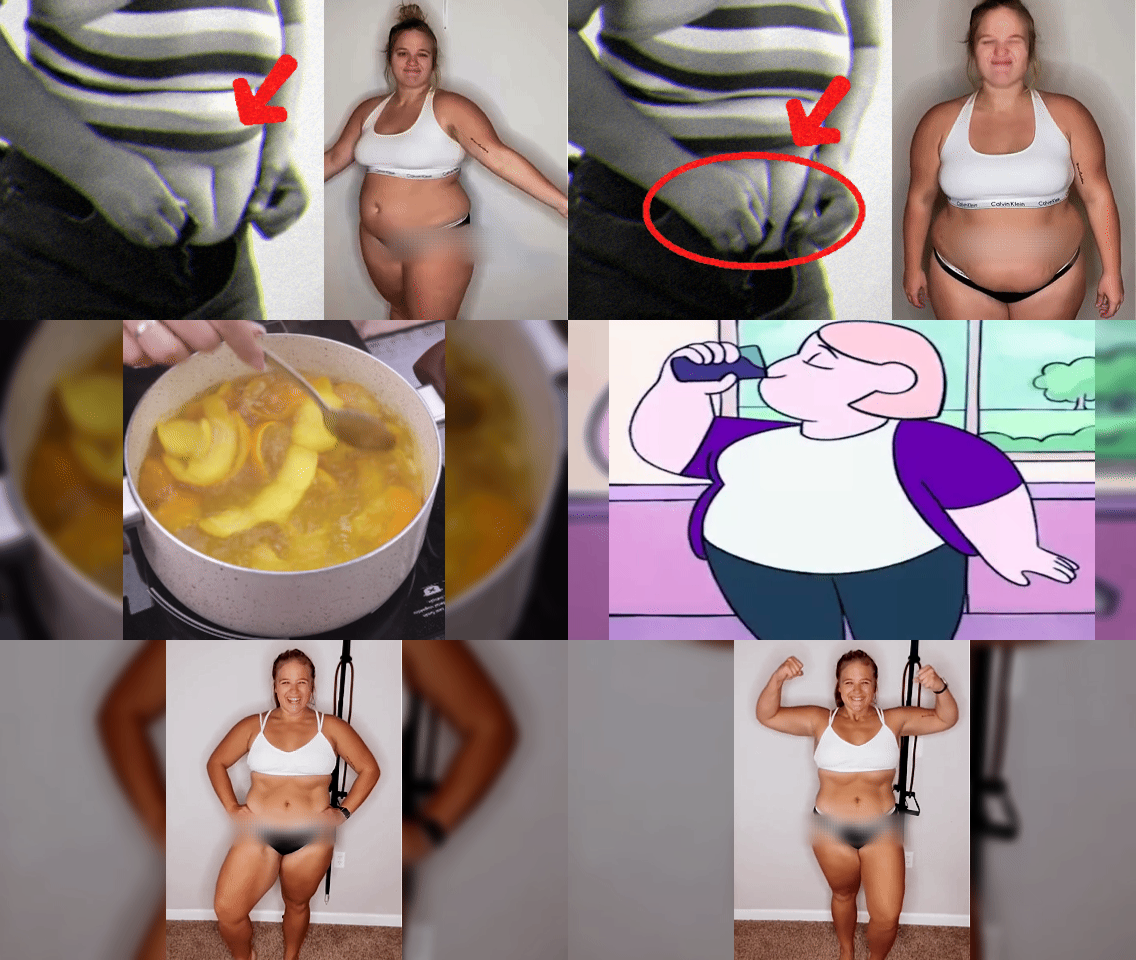
If you’ve been trying to lose weight but feel like your body is working against you, your metabolism might be the missing piece of the puzzle. Many people blame willpower, diet plans, or even genetics, but often the real issue is a sluggish metabolic rate.
Your metabolism controls how efficiently your body converts food into energy. When it slows down, everything from fat burning to energy levels takes a hit. Understanding the signs of a slow metabolism can help you identify what’s holding you back—and more importantly, what you can do about it.
This guide dives deep into 30 clear signs your metabolism may be slower than it should be, along with insights to help you regain control of your body and your weight loss journey.
What Is Metabolism and Why It Matters for Weight Loss
Metabolism refers to all the chemical processes that occur in your body to maintain life. This includes breathing, digestion, circulation, and especially how your body burns calories.
A fast metabolism burns more calories even at rest, while a slow metabolism burns fewer calories—making it easier to gain weight and harder to lose it.
If you constantly feel like you’re doing everything “right” but not seeing results, your metabolism could be the hidden barrier.
30 Signs Your Metabolism Is Slow
1. You Gain Weight Easily
Even small increases in calorie intake seem to lead to noticeable weight gain.
2. You Struggle to Lose Weight
Despite dieting and exercising, the scale barely moves.
3. You Feel Tired All the Time
Low energy levels are one of the most common signs of a sluggish metabolism.
4. You Often Feel Cold
If you’re frequently cold while others are comfortable, your body may not be generating enough heat due to slow calorie burning.
5. Dry Skin
Poor metabolic function can impact skin hydration and health.
6. Brittle Hair and Nails
Your body may not be efficiently delivering nutrients needed for healthy hair and nails.
7. Frequent Sugar Cravings
Your body may crave quick energy sources because it struggles to produce energy efficiently.
8. Brain Fog
Difficulty concentrating or thinking clearly can be linked to low energy production.
9. Low Motivation to Exercise
You may feel physically and mentally drained before you even begin a workout.
10. Digestive Issues
Slow metabolism often goes hand in hand with sluggish digestion.
11. Frequent Bloating
Your digestive system may be working slower than it should.
12. Constipation
Irregular bowel movements can indicate slow internal processes.
13. Hormonal Imbalances
Metabolism and hormones are deeply connected; one affects the other.
14. Low Body Temperature
A consistently low body temperature can signal reduced metabolic activity.
15. Difficulty Building Muscle
Your body struggles to synthesize protein effectively.
16. Loss of Muscle Mass
Even without dieting, you may notice decreased muscle tone.
17. Increased Fat Storage
Especially around the abdomen.
18. Mood Swings
Energy instability can impact emotional balance.
19. Poor Sleep Quality
Metabolic issues can disrupt sleep cycles.
20. Waking Up Tired
Even after a full night’s sleep, you feel exhausted.
21. Low Libido
Hormonal shifts caused by slow metabolism can affect sex drive.
22. Irregular Menstrual Cycles
For women, this can be a key signal of metabolic and hormonal imbalance.
23. Slow Heart Rate
Your body may be conserving energy.
24. Puffy Face or Fluid Retention
Water retention can be a subtle sign of metabolic inefficiency.
25. You Plateau Quickly
Weight loss progress stops early and becomes hard to restart.
26. You Skip Meals But Still Gain Weight
Your body adapts by slowing metabolism further to conserve energy.
27. You Feel Sluggish After Eating
Meals leave you feeling heavy instead of energized.
28. You Experience Frequent Headaches
Energy fluctuations can trigger headaches.
29. You Rely on Caffeine to Function
You need stimulants just to get through the day.
30. You Have a History of Yo-Yo Dieting
Repeated dieting can damage metabolic rate over time.
Why Your Metabolism Slows Down
Understanding the root causes is crucial for long-term weight loss success. Common factors include:
- Chronic dieting and calorie restriction
- Lack of physical activity
- Loss of muscle mass
- Poor sleep habits
- High stress levels
- Hormonal imbalances
- Aging
Many people unknowingly slow their metabolism by trying extreme diets or overtraining, which leads the body into survival mode.
How to Boost Your Metabolism Naturally
The good news is that your metabolism is not fixed. You can improve it with the right strategies.
1. Build Lean Muscle
Strength training is one of the most effective ways to increase metabolic rate because muscle burns more calories than fat.
2. Eat Enough Protein
Protein requires more energy to digest and helps preserve muscle mass.
3. Stop Under-Eating
Severely restricting calories can slow your metabolism even further.
4. Stay Hydrated
Water plays a key role in metabolic processes.
5. Prioritize Sleep
Aim for 7–9 hours of quality sleep each night.
6. Manage Stress
Chronic stress increases cortisol, which can slow metabolism and promote fat storage.
7. Move More Throughout the Day
Non-exercise activity (walking, standing, moving) can significantly impact calorie burn.
8. Add High-Intensity Workouts
Short bursts of intense exercise can boost metabolism even after your workout ends.
9. Avoid Crash Diets
Focus on sustainable, balanced eating instead of extreme restrictions.
10. Eat Regularly
Skipping meals can signal your body to conserve energy.
The Hidden Truth About Slow Metabolism
A slow metabolism is not a life sentence—it’s a signal. Your body is responding to your habits, environment, and lifestyle.
Instead of fighting your body, learn to work with it.
When you nourish it properly, move consistently, and give it time to recover, your metabolism can become your biggest ally in weight loss.
Final Thoughts
If you recognize several of these signs in yourself, it’s not a reason to feel discouraged—it’s a starting point. Awareness is the first step toward transformation.
Rather than chasing quick fixes, focus on rebuilding your metabolism step by step. Small, consistent changes will create lasting results, not just for weight loss, but for your overall health and energy.
Your body is designed to thrive. Sometimes, it just needs the right support to get there.
I didn’t expect this to make such a difference, but it actually explains a lot…
Before you get frustrated with your progress again,
watch this video — it might change your perspective completely.