
Why I Stopped Extreme Dieting and Focused on Metabolism

If you’ve ever felt trapped in a cycle of restrictive eating, short-lived results, and frustrating weight regain, you’re not alone. For years, I believed that the key to weight loss was simple: eat less, exercise more, and push harder than everyone else. I tried extreme dieting methods—cutting calories drastically, eliminating entire food groups, and chasing rapid results.

And yes, sometimes it worked… temporarily.

But eventually, my energy crashed. My cravings intensified. My progress stalled. And worst of all, I began to feel disconnected from my own body.

That’s when everything changed.

Instead of continuing to fight my body, I decided to understand it. I stopped extreme dieting and started focusing on something far more powerful and sustainable: my metabolism.

This shift didn’t just help me lose weight—it transformed the way I think about health, energy, and long-term success.

In this article, I’ll walk you through why extreme dieting often fails, how metabolism really works, and how you can reset your body to burn fat more efficiently—without starving yourself.

The Problem With Extreme Dieting

Extreme dieting is appealing because it promises fast results. Whether it’s a crash diet, very low-calorie plan, or cutting carbs to near zero, the idea is simple: create a large calorie deficit and watch the weight fall off.

But here’s the truth most people don’t realize:

Your body is not a machine. It’s a survival system.

When you drastically reduce your calorie intake, your body doesn’t celebrate—it panics.

What Happens When You Diet Too Hard

When you push your body into extreme restriction, several things occur:

  • Your metabolism slows down to conserve energy
  • Your hunger hormones increase, making you feel constantly hungry
  • Your energy levels drop, making workouts harder and less effective
  • Your body begins to break down muscle, not just fat
  • You become more likely to binge or overeat later

This is often called “metabolic adaptation,” and it’s your body’s way of protecting you from what it perceives as starvation.

The result? You hit a plateau—or worse, regain the weight you lost.

Why Metabolism Matters More Than Calories Alone

Calories do matter. But they’re only part of the equation.

Your metabolism determines how your body uses those calories—whether they’re burned for energy or stored as fat.

A healthy metabolism means:

  • You burn more calories at rest
  • You have stable energy throughout the day
  • Your body efficiently uses nutrients
  • You experience fewer cravings and energy crashes

When I shifted my focus from “eating less” to “supporting my metabolism,” everything changed.

Instead of constantly fighting hunger, I started working with my body—and that made all the difference.

The Turning Point: Listening to My Body

I remember the moment clearly. I was eating very little, exercising intensely, and still not seeing results. I was tired, irritable, and frustrated.

That’s when I realized:

This isn’t sustainable.

Weight loss shouldn’t feel like punishment. It should feel like progress.

So I began to ask a different question—not “How can I eat less?” but “How can I help my body work better?”

That shift in mindset led me to rebuild my approach from the ground up.

How I Rebuilt My Metabolism

Improving metabolism isn’t about hacks or shortcuts. It’s about consistent habits that support your body’s natural processes.

Here’s what made the biggest difference for me.

1. I Stopped Undereating

This was the hardest step mentally—but the most important.

Instead of severely restricting calories, I started eating enough to fuel my body properly. This doesn’t mean overeating—it means finding a balanced intake that supports energy, recovery, and fat loss.

When you consistently undereat, your body slows down. When you nourish it properly, it begins to trust you again.

2. I Prioritized Protein

Protein plays a critical role in metabolism. It helps:

  • Build and maintain muscle
  • Increase satiety (keeping you full longer)
  • Boost the thermic effect of food (calories burned during digestion)

Adding more protein to my meals helped reduce cravings and made my body more efficient at burning calories.

3. I Started Strength Training

Cardio has its place, but strength training is a game-changer for metabolism.

Muscle is metabolically active tissue. The more muscle you have, the more calories you burn—even at rest.

Instead of focusing only on burning calories during workouts, I started focusing on building a body that burns more calories all day long.

4. I Improved My Sleep

Sleep is one of the most underrated factors in weight loss.

Poor sleep disrupts hormones that regulate hunger and metabolism, leading to increased cravings and reduced energy.

Once I started prioritizing 7–8 hours of quality sleep, I noticed:

  • Better appetite control
  • More energy for workouts
  • Improved recovery
5. I Managed Stress

Chronic stress can slow metabolism and increase fat storage—especially around the belly.

By incorporating simple stress-management techniques like walking, journaling, or deep breathing, I noticed a significant improvement in how my body responded.

6. I Became Consistent Instead of Extreme

This was the biggest mindset shift of all.

Instead of going “all in” for a few weeks and burning out, I focused on small, sustainable habits I could maintain long-term.

Consistency beats intensity every time.

The Results: More Than Just Weight Loss

When I stopped extreme dieting and focused on metabolism, the results went beyond the scale.

  • I had more energy throughout the day
  • My workouts became stronger and more effective
  • My cravings decreased significantly
  • I felt more in control of my eating habits
  • The weight I lost stayed off

Most importantly, I felt healthier—physically and mentally.

Common Myths About Metabolism

Let’s clear up a few misconceptions that might be holding you back.

Myth 1: “My metabolism is broken”

Your metabolism can adapt, but it’s not permanently broken. With the right habits, you can improve it over time.

Myth 2: “Eating less is always better”

Eating too little can actually slow your progress by reducing metabolic rate and increasing hunger.

Myth 3: “Cardio is the best way to lose weight”

While cardio burns calories, strength training builds a metabolism that burns more calories long-term.

How You Can Start Today

You don’t need to overhaul your life overnight. Start with small, meaningful changes:

  • Eat balanced meals with protein, healthy fats, and carbs
  • Avoid extreme calorie restriction
  • Add 2–3 strength training sessions per week
  • Prioritize sleep and recovery
  • Stay consistent, even when progress feels slow

Remember, sustainable weight loss is not about doing everything perfectly—it’s about doing the right things consistently.

Final Thoughts: Work With Your Body, Not Against It

Extreme dieting promises quick results, but often leads to long-term frustration.

When you shift your focus to metabolism, you’re no longer fighting your body—you’re supporting it.

And that’s where real, lasting change happens.

If you’ve been stuck in a cycle of dieting and disappointment, consider this your permission to try a different approach.

Fuel your body. Strengthen it. Support it.

Because when your metabolism works for you, everything else becomes easier.

And for the first time, weight loss stops feeling like a battle—and starts feeling like progress.

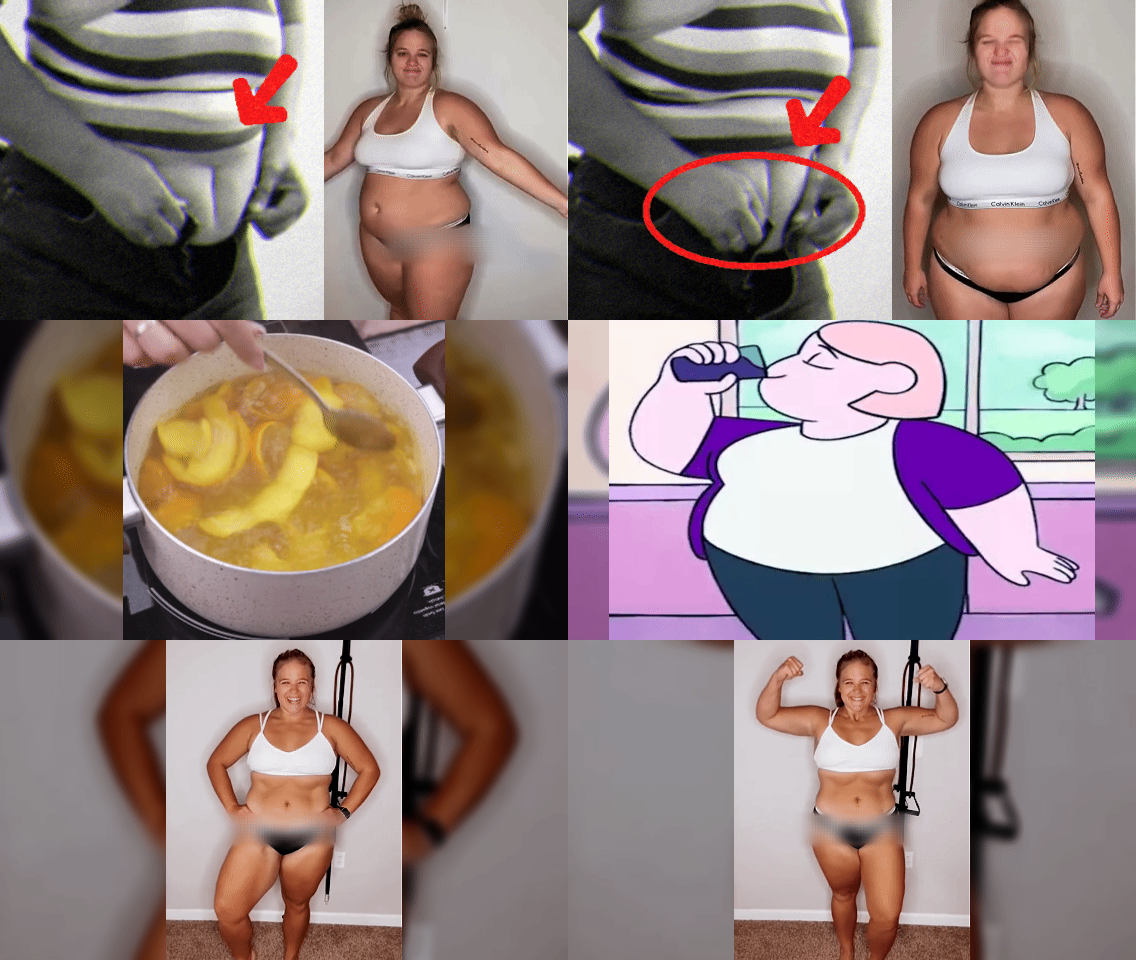
I didn’t expect this to make such a difference, but it actually explains a lot…

Want a faster, more natural way to support your fat-burning process?
Watch this quick video to see how it works.
The Gut-Liver Connection: What Most Health Blogs Don’t Tell You

Most people think of the liver as the body’s primary detox organ—and they’re right. But few realize that the liver has a powerful partner working quietly beside it: the gut. These two organs are deeply connected, communicating constantly through what scientists call the gut-liver axis. When this communication breaks down, it can lead to fatigue, weight gain, skin issues, inflammation, and even chronic diseases.

What most health blogs don’t tell you is that you can’t truly heal your liver without healing your gut first—and vice versa. If you’ve been struggling with digestive discomfort, low energy, or slow metabolism despite eating “clean,” your gut-liver connection may be the missing piece.

In this comprehensive guide, we’ll explore the hidden science behind the gut-liver connection, how imbalance in one organ affects the other, and the most effective natural ways to restore harmony between them for better digestion, detoxification, and energy.

Understanding the Gut-Liver Axis

The gut and the liver are not separate systems—they form an integrated network. The gut processes everything you consume, while the liver filters, stores, and transforms the nutrients and compounds that pass through.

The two organs are physically connected through the portal vein, a direct pathway that delivers nutrients, toxins, and bacterial metabolites from the intestines straight to the liver. This means whatever happens in your gut—whether beneficial or harmful—immediately impacts your liver.

Here’s how the gut-liver axis works:

  1. The Gut Digests and Absorbs Nutrients
    When you eat, your gut breaks down food and absorbs nutrients, but it also deals with bacteria, waste products, and toxins.
  2. The Liver Filters What the Gut Sends
    Everything absorbed by your intestines travels through the portal vein to the liver. The liver then decides what to store, detoxify, or eliminate.
  3. The Liver Sends Bile Back to the Gut
    The liver produces bile, stored in the gallbladder, and released into the intestines to help digest fats and remove toxins.

This two-way communication forms a continuous feedback loop. When one side becomes dysfunctional, the other quickly follows.

What Happens When the Gut-Liver Connection Breaks Down

When your gut microbiome—the collection of trillions of bacteria in your intestines—becomes unbalanced (a condition known as dysbiosis), it can lead to a leaky gut and trigger inflammation that directly harms the liver.

Here’s how it unfolds:

  • Leaky Gut Syndrome: A damaged intestinal lining allows toxins, undigested food, and bacteria to enter the bloodstream.
  • Liver Overload: These harmful particles travel through the portal vein to the liver, forcing it to work overtime to filter them out.
  • Inflammation Cascade: The immune system reacts to this overload, creating systemic inflammation that damages both gut and liver cells.
  • Fatty Liver Development: Chronic inflammation and poor detoxification promote fat buildup in the liver, which impairs metabolism and leads to fatigue or weight gain.

This cycle can turn into a self-perpetuating loop: a toxic gut stresses the liver, and a sluggish liver fails to support gut repair.

The Hidden Symptoms of a Disrupted Gut-Liver Axis

Because the gut and liver influence multiple systems in your body, their dysfunction can manifest in many subtle ways that people often ignore.

Common signs include:

  • Persistent bloating or indigestion
  • Sugar cravings and unstable appetite
  • Unexplained fatigue or brain fog
  • Acne, eczema, or dull skin tone
  • Mood swings, irritability, or mild depression
  • Trouble losing weight or belly fat accumulation
  • Sensitivity to alcohol or certain foods
  • Waking up between 1–3 a.m. (liver detox time)

If you recognize several of these symptoms, it’s a strong sign that your gut-liver connection may be compromised.

Why Most Health Programs Miss This Link

Many diet and detox programs focus only on one part of the equation. Some emphasize gut cleansing through probiotics or fiber, while others focus on liver detox juices or supplements. However, treating one without the other often leads to frustration or relapse.

For example:

  • If you detox your liver but ignore your gut, toxins and bacteria will continue leaking into your bloodstream, reburdening the liver.
  • If you heal your gut but ignore your liver, toxins will remain trapped in the body, blocking your progress and causing recurring inflammation.

True, long-term wellness happens only when both systems are supported together.

The Science-Backed Benefits of Restoring Gut-Liver Balance

When you nurture both your gut and liver, you unlock a range of benefits that go far beyond digestion or detoxification:

  1. Boosted Metabolism – The liver can burn fat more efficiently when it isn’t overloaded with gut-derived toxins.
  2. Better Digestion and Nutrient Absorption – Healthy gut bacteria break down food effectively, ensuring the liver receives clean, usable nutrients.
  3. Stable Energy Levels – The body produces consistent energy when glucose regulation and fat metabolism improve.
  4. Reduced Inflammation – A balanced gut microbiome lowers systemic inflammation, protecting liver and brain health.
  5. Clearer Skin and Sharper Mind – Toxin reduction improves skin clarity, mood, and focus.
  6. Improved Hormone Balance – Both organs regulate estrogen, cortisol, and thyroid hormones essential for energy and mood.

Natural Ways to Heal the Gut-Liver Axis

Supporting your gut and liver doesn’t require extreme detox programs. Gentle, consistent lifestyle shifts and targeted nutrition can naturally restore balance.

1. Eat Gut-Liver Friendly Foods
Focus on foods that support both organs simultaneously:

  • Fermented foods: Yogurt, kefir, sauerkraut, kimchi—help balance gut bacteria.
  • Fiber-rich vegetables: Broccoli, asparagus, leafy greens—feed good gut microbes and help detoxify the liver.
  • Healthy fats: Avocados, olive oil, nuts—reduce inflammation and improve bile flow.
  • Bitter foods: Dandelion greens, arugula, and artichokes stimulate bile production.
  • Antioxidant-rich foods: Blueberries, beets, and turmeric protect both gut lining and liver cells.

2. Limit Liver Stressors
Avoid alcohol, refined sugars, processed oils, and unnecessary medications whenever possible. These substances overwork the liver and disrupt gut bacteria.

3. Stay Hydrated
Water is essential for both digestion and detoxification. Herbal teas such as milk thistle, ginger, or peppermint can further support liver and gut health.

4. Manage Stress and Sleep Well
Chronic stress alters the gut microbiome and suppresses liver function. Aim for 7–8 hours of quality sleep and incorporate stress-reducing habits like meditation or deep breathing.

5. Use Targeted Supplements Wisely
If your diet alone isn’t enough, certain supplements can help:

  • Probiotics and prebiotics – Rebuild healthy gut bacteria.
  • Milk thistle and dandelion root – Support liver regeneration.
  • Glutamine and zinc carnosine – Repair intestinal lining.
  • Turmeric and omega-3 fatty acids – Reduce inflammation and oxidative stress.

6. Move Your Body Regularly
Exercise improves circulation, encourages bowel movement, and promotes toxin elimination through sweat. Even moderate daily activity enhances the gut-liver connection.

What Happens When You Heal Both

When your gut and liver start functioning in harmony, your body enters a new level of vitality. You’ll notice lighter digestion, reduced bloating, improved energy, and better mental clarity. Your skin may glow, your sleep deepens, and your mood stabilizes.

Over time, you’ll also find it easier to maintain a healthy weight without strict dieting. The synergy between a clean liver and balanced gut microbiome allows your metabolism to run efficiently and effortlessly.

The Bottom Line

Your gut and liver are inseparable partners in health. Focusing on just one while neglecting the other is like cleaning half of your engine—it may work for a while, but true performance comes only when both are tuned together.

Healing your gut-liver axis is not about quick fixes or extreme detoxes; it’s about restoring balance. Feed your gut the right foods, protect your liver from overload, manage your stress, and your body will naturally return to a state of energy, clarity, and strength.

If you’ve tried countless diets or detoxes and still don’t feel your best, look deeper—the secret to sustainable health might be hidden in the gut-liver connection.