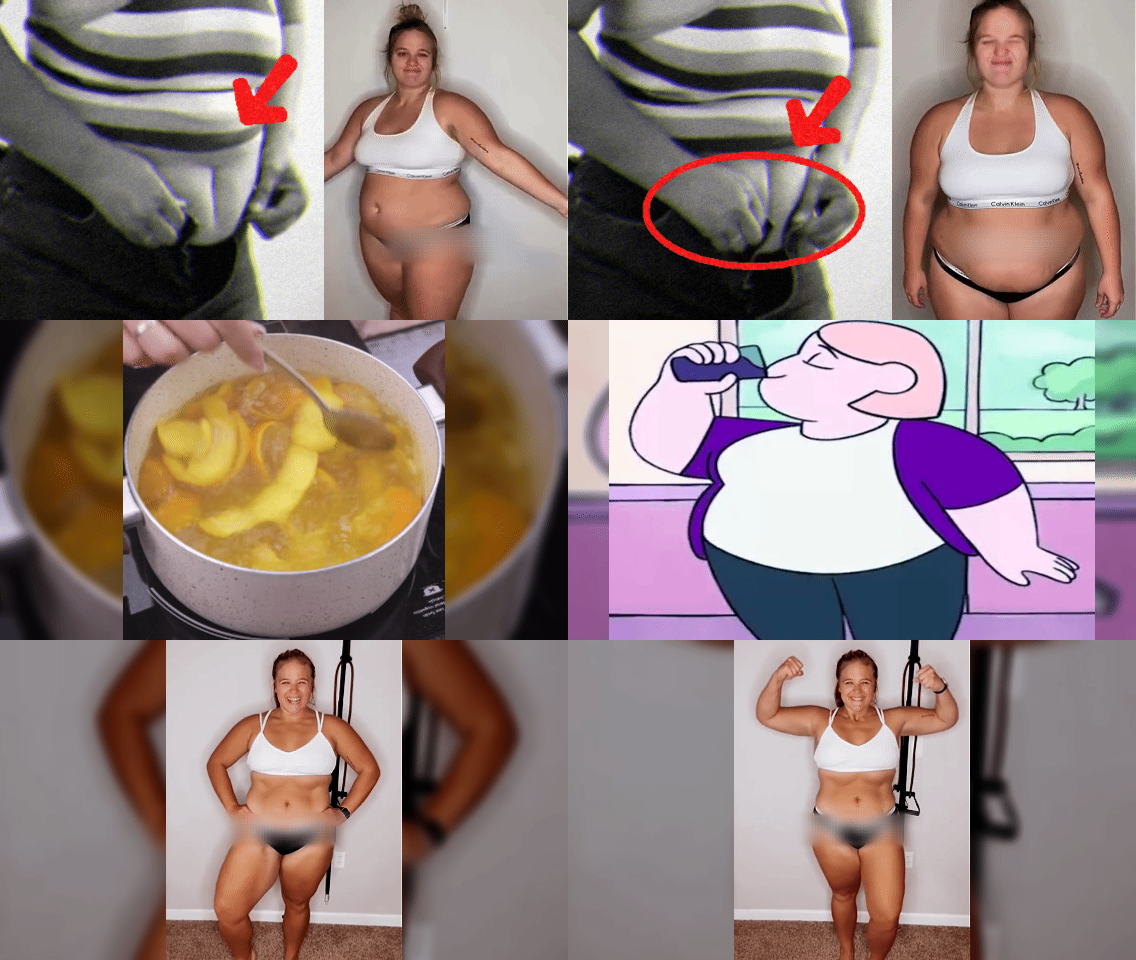
What Happened When I Focused on Fixing My Metabolism

For years, I thought my weight loss struggles came down to one simple issue: I wasn’t trying hard enough.

So I tried harder.

I ate less. I exercised more. I pushed through hunger, fatigue, and frustration. And for a while, it worked—until it didn’t. My progress slowed, then stalled completely. The same effort that once helped me lose weight suddenly stopped producing results.

That’s when I realized something most people overlook:

It wasn’t just about calories anymore. It was about my metabolism.

When I shifted my focus from “losing weight fast” to “fixing my metabolism,” everything changed—not overnight, but in a way that was sustainable, freeing, and surprisingly effective.

In this article, I’ll share exactly what happened when I focused on improving my metabolism, the mistakes I made before, and the small but powerful changes that helped me finally break through stubborn fat.

What Does “Fixing Your Metabolism” Actually Mean?

Let’s clear something up first.

Your metabolism isn’t broken in the way social media often suggests. It’s adaptive.

Your body constantly adjusts to your environment, especially when it comes to food and activity. When you consistently under-eat or overtrain, your body responds by:

  • Slowing down energy expenditure
  • Increasing hunger hormones
  • Reducing non-essential functions

This is often called “metabolic adaptation.”

So when I say I focused on “fixing my metabolism,” what I really mean is this:

I started working with my body instead of against it.

The Turning Point: Why What I Was Doing Stopped Working

Before making any changes, I had fallen into a common trap:

  • Eating too few calories
  • Doing excessive cardio
  • Ignoring sleep and stress
  • Constantly feeling tired and hungry

At first, I lost weight. But over time:

  • My energy dropped
  • My workouts felt harder
  • My cravings increased
  • The scale stopped moving

I was stuck in a cycle where doing more gave me less.

That’s when I decided to try a completely different approach.

1. I Started Eating More (Yes, Really)

This was the most counterintuitive—and most important—change.

Instead of continuing to cut calories, I gradually increased my food intake, especially from nutrient-dense sources.

At first, it felt uncomfortable.

I was afraid I would gain weight. But here’s what actually happened:

  • My energy levels improved
  • My workouts became stronger
  • My cravings decreased
  • My mood stabilized

Over time, my body began to feel “safe” again, which is crucial for efficient fat burning.

This doesn’t mean overeating—it means eating enough to support your body.

2. I Reduced Excessive Cardio

I used to believe that more cardio meant faster fat loss.

So I did long sessions almost every day.

The problem?

Too much cardio, especially when combined with low calories, can increase stress hormones like cortisol. This can lead to:

  • Fat retention (especially around the belly)
  • Muscle loss
  • Increased hunger

When I reduced my cardio and focused on quality over quantity, I noticed:

  • Less fatigue
  • Better recovery
  • Improved consistency

Instead of exhausting my body, I started supporting it.

3. I Prioritized Strength Training

One of the most powerful ways to support your metabolism is by building muscle.

Muscle is metabolically active, meaning it helps your body burn more calories—even at rest.

When I started lifting weights consistently:

  • My body became more toned
  • I burned more calories without extra effort
  • My metabolism felt more “responsive”

I didn’t need complicated routines.

Just 3–4 sessions per week focusing on basic movements made a huge difference.

4. I Focused on Protein and Balanced Meals

Another key shift was how I structured my meals.

Instead of random eating or extreme restriction, I focused on balance:

  • Protein for muscle and satiety
  • Carbohydrates for energy
  • Healthy fats for hormones

Protein became a priority.

Not only did it help me feel full, but it also supported muscle growth and recovery.

This made it easier to maintain a healthy calorie balance without feeling deprived.

5. I Took Sleep Seriously

Sleep used to be optional for me.

I thought I could sacrifice it and still lose weight.

I was wrong.

When I started improving my sleep:

  • My hunger became more manageable
  • My energy increased
  • My workouts improved
  • My cravings decreased

Sleep directly impacts hormones like ghrelin and leptin, which control hunger and fullness.

Fixing my sleep helped fix my metabolism more than any diet ever did.

6. I Managed Stress Better

Chronic stress can quietly sabotage fat loss.

When your body is under constant stress, it prioritizes survival—not fat burning.

I didn’t eliminate stress completely, but I became more aware of it.

Small changes helped:

  • Taking short breaks during the day
  • Spending time outdoors
  • Practicing mindfulness or journaling

These habits reduced the constant pressure I was putting on my body.

7. I Stopped Chasing Quick Results

One of the biggest mindset shifts was letting go of urgency.

Before, I wanted fast results. I wanted the scale to drop every week.

But focusing on metabolism required patience.

And surprisingly, that patience led to better results.

Instead of extreme fluctuations, I experienced:

  • Steady, sustainable fat loss
  • Less rebound weight gain
  • More consistency over time

It wasn’t dramatic—but it was real.

8. My Body Started Responding Again

After weeks of focusing on these changes, something incredible happened:

My body started responding again.

  • The scale began to move (slowly, but steadily)
  • My clothes fit better
  • I felt stronger and more confident
  • Fat loss felt easier, not forced

It was like my body had been waiting for me to stop fighting it.

9. I Gained More Than I Lost

Ironically, by focusing on fat loss in a smarter way, I gained so much more:

  • Better energy
  • Improved mental clarity
  • A healthier relationship with food
  • Confidence in my routine

Weight loss became just one part of a much bigger transformation.

10. The Biggest Lesson I Learned

If there’s one thing this journey taught me, it’s this:

Your body is not the enemy.

When you constantly restrict, punish, and push yourself to extremes, your body pushes back.

But when you support it—when you give it enough food, rest, and movement—it starts working with you.

That’s when real change happens.

Practical Steps to Start Fixing Your Metabolism

If you’re feeling stuck, here are simple steps you can start with:

  • Gradually increase your calorie intake if you’ve been under-eating
  • Focus on strength training 2–4 times per week
  • Reduce excessive cardio
  • Prioritize protein in every meal
  • Improve your sleep quality
  • Manage stress in small, consistent ways

You don’t need to do everything at once.

Start small. Stay consistent.

Final Thoughts: It’s Not About Doing More—It’s About Doing Better

Fixing your metabolism isn’t about hacks or shortcuts.

It’s about creating an environment where your body feels safe, supported, and energized.

When that happens, fat loss becomes a natural outcome—not a constant battle.

So if you’ve been stuck despite your efforts, maybe the answer isn’t to try harder.

Maybe it’s time to try differently.

Because sometimes, the breakthrough you’re looking for isn’t in doing more…

It’s in finally doing what your body needed all along.

The Small Changes That Helped Me Lose Stubborn Fat

If you’ve ever felt like your body is holding onto fat no matter what you do, you’re not alone. Stubborn fat—especially around the belly, thighs, and hips—can feel impossible to lose. I used to believe I needed extreme diets, intense workouts, or some secret formula to finally see results.

But the truth is much simpler—and far more sustainable.

It wasn’t one dramatic change that transformed my body. It was a series of small, consistent habits that gradually shifted how my body burned fat. These changes didn’t just help me lose weight—they helped me keep it off without feeling deprived or exhausted.

In this article, I’ll walk you through the exact small changes that helped me lose stubborn fat, so you can apply them to your own journey in a realistic, sustainable way.

Why Stubborn Fat Is So Hard to Lose

Before diving into the changes, it’s important to understand why stubborn fat exists.

Your body is designed for survival, not aesthetics. When you try to lose weight too quickly or restrict calories too much, your body fights back by:

  • Slowing down your metabolism
  • Increasing hunger hormones
  • Holding onto fat stores (especially in “stubborn” areas)

This is why extreme diets often fail—and why small, consistent changes work better over time.

1. I Stopped Trying to Be Perfect

One of the biggest mindset shifts I made was letting go of perfection.

I used to think I had to eat “clean” 100% of the time or follow a strict plan. The moment I slipped, I felt like I had failed—and often gave up completely.

Instead, I adopted a simple rule: aim for consistency, not perfection.

  • If I ate well 80% of the time, that was enough
  • If I missed a workout, I didn’t quit—I just continued the next day
  • If I had a “bad” meal, I didn’t try to “punish” myself

This removed the all-or-nothing mindset that was holding me back.

2. I Started Walking Every Day

You don’t need intense workouts to lose fat. In fact, one of the most powerful changes I made was simply walking more.

Walking is underrated because it’s easy—but that’s exactly why it works.

  • It burns calories without stressing your body
  • It doesn’t increase hunger as much as intense exercise
  • It’s sustainable long-term

I started with 6,000 steps a day and gradually increased to 8,000–10,000.

This alone made a noticeable difference in my fat loss, especially when combined with better eating habits.

3. I Focused on Protein First

Instead of obsessing over calories, I shifted my focus to protein.

Protein is essential for fat loss because it:

  • Keeps you full longer
  • Helps preserve muscle while losing weight
  • Boosts metabolism through digestion

At each meal, I asked myself one simple question: “Where is my protein coming from?”

Some easy options I relied on:

  • Eggs or Greek yogurt for breakfast
  • Chicken, fish, or tofu for lunch and dinner
  • Protein-rich snacks like nuts or yogurt

This small shift naturally reduced my calorie intake without feeling restrictive.

4. I Improved My Sleep (Without Realizing How Important It Was)

Sleep was something I used to ignore.

But once I started prioritizing it, everything changed.

Lack of sleep affects fat loss more than most people realize:

  • It increases cravings for sugar and junk food
  • It disrupts hormones that regulate hunger
  • It lowers energy levels, making exercise harder

I didn’t aim for perfection—just improvement.

  • Going to bed 30–60 minutes earlier
  • Reducing screen time before sleep
  • Keeping a consistent sleep schedule

Better sleep made fat loss feel easier, not harder.

5. I Drank More Water (And Less Liquid Calories)

This sounds simple, but it had a huge impact.

I used to consume more calories than I realized through:

  • Sugary drinks
  • Coffee with cream and sugar
  • Juices and soft drinks

Replacing these with water helped me:

  • Reduce unnecessary calories
  • Improve digestion
  • Feel more full throughout the day

A helpful habit was drinking a glass of water before meals. It sounds small—but it adds up.

6. I Stopped “Eating Healthy” and Started Eating Smart

One of the biggest mistakes I made was assuming all “healthy” foods would help me lose weight.

In reality, many healthy foods are still high in calories:

  • Nuts
  • Avocados
  • Smoothies
  • Granola

Instead of avoiding these, I became more mindful of portions.

I also focused on foods that gave me the most volume for fewer calories:

  • Vegetables
  • Lean proteins
  • Whole foods

This helped me stay full while still being in a calorie deficit.

7. I Added Strength Training (Slowly)

I used to rely only on cardio. But adding strength training changed my body composition significantly.

Building muscle helps:

  • Increase metabolism
  • Improve body shape and tone
  • Burn more calories at rest

I didn’t jump into intense workouts. I started with:

  • 2–3 sessions per week
  • Basic movements like squats, push-ups, and dumbbell exercises

Over time, this helped reduce stubborn fat while making my body look leaner and stronger.

8. I Became More Aware of Mindless Eating

A surprising source of extra calories was mindless eating.

  • Snacking while watching TV
  • Eating out of boredom
  • Finishing food just because it was there

Instead of eliminating snacks, I became more intentional:

  • Asking, “Am I actually hungry?”
  • Eating without distractions
  • Slowing down and enjoying meals

This awareness alone reduced my calorie intake without strict dieting.

9. I Learned to Be Patient

This might be the hardest change of all.

Stubborn fat doesn’t disappear overnight. It often takes weeks—or months—of consistent effort.

But here’s what I realized:

If you focus on small, sustainable habits, results are inevitable.

Instead of chasing quick results, I focused on:

  • Building habits I could maintain for life
  • Tracking progress beyond the scale (energy, confidence, strength)
  • Celebrating small wins

Fat loss became a byproduct of a healthier lifestyle—not a constant struggle.

10. I Simplified Everything

In the past, I overcomplicated weight loss.

I tried:

  • Complex diet plans
  • Strict rules
  • Overly intense routines

What finally worked was simplifying everything:

  • Eat mostly whole foods
  • Move your body daily
  • Prioritize sleep and recovery
  • Stay consistent

That’s it.

No extremes. No shortcuts. Just small changes done consistently.

Final Thoughts: Small Changes Create Big Results

If you’re struggling to lose stubborn fat, you don’t need to overhaul your entire life.

You don’t need the perfect diet or the perfect workout plan.

What you need are small, realistic changes that you can stick to every day.

Because in the end, fat loss isn’t about what you do occasionally—it’s about what you do consistently.

Start with one or two habits from this list. Build momentum. Then add more over time.

That’s how real, lasting transformation happens.

And once you experience it, you’ll realize something powerful:

You were never stuck—you just needed a better approach.

How To Get Over An Ex

Breakups can feel like emotional earthquakes. One moment, your life feels stable and certain—and the next, everything shifts. Whether the relationship lasted months or years, letting go of someone you once loved deeply is never easy.

If you’re here, you’re probably asking yourself: How do I move on? Why does it still hurt? When will I feel okay again?

The truth is, getting over an ex is not about forgetting them overnight or pretending the relationship never mattered. It’s about healing, rebuilding your sense of self, and learning how to move forward with clarity and strength.

In this comprehensive guide, you’ll discover practical, emotional, and psychological strategies to help you truly get over an ex—and create space for a healthier future.

Why It’s So Hard to Get Over an Ex

Before you try to “fix” your feelings, it’s important to understand them.

Breakups hurt because they involve more than just losing a person. You’re also losing:

  • Shared memories
  • Future plans
  • Emotional security
  • Daily routines
  • A part of your identity

Your brain processes heartbreak in a similar way to physical pain. That’s why it can feel so intense and overwhelming.

Understanding this can help you be more compassionate with yourself.

The Biggest Mistake People Make After a Breakup

Many people try to rush the healing process.

They distract themselves, jump into new relationships, or force themselves to “move on” quickly. But unresolved emotions don’t disappear—they stay buried and resurface later.

Healing is not about speed. It’s about depth.

Step 1: Allow Yourself to Feel Everything

The first step to getting over an ex is to stop avoiding your emotions.

You may feel:

  • Sadness
  • Anger
  • Confusion
  • Loneliness
  • Regret

All of these are normal.

Instead of suppressing them:

  • Journal your thoughts
  • Talk to someone you trust
  • Sit with your emotions without judgment

Feeling your emotions fully is what allows them to pass.

Step 2: Cut Off or Limit Contact

One of the most powerful steps you can take is creating distance.

Staying in constant contact with your ex can:

  • Reopen emotional wounds
  • Give false hope
  • Delay your healing

Consider:

  • Muting or unfollowing them on social media
  • Avoiding unnecessary conversations
  • Setting clear boundaries

This is not about being cold—it’s about protecting your peace.

Step 3: Stop Idealizing the Relationship

After a breakup, it’s easy to remember only the good moments.

But no relationship is perfect.

Remind yourself:

  • Why the relationship ended
  • What didn’t work
  • How you truly felt during difficult times

This helps you see the relationship more realistically instead of emotionally.

Step 4: Rebuild Your Identity

When you’re in a relationship, your identity often becomes intertwined with your partner.

After a breakup, it’s time to reconnect with yourself.

Ask yourself:

  • Who am I outside of this relationship?
  • What do I enjoy?
  • What do I want for my future?

Start doing things that are just for you:

  • Explore new hobbies
  • Reconnect with friends
  • Focus on personal goals

This is your opportunity to rediscover yourself.

Step 5: Create New Routines

Your daily life likely changed after the breakup.

Instead of dwelling on what’s missing, build new routines:

  • Morning walks
  • Gym sessions
  • Reading or learning
  • Trying new activities

New habits help shift your focus and create a sense of progress.

Step 6: Let Go of “What If” Thoughts

“What if I had done things differently?”

“What if we get back together?”

These thoughts can trap you in the past.

The truth is:

  • The relationship ended for a reason
  • You did the best you could with what you knew
  • You cannot change the past

Letting go of “what if” allows you to move forward.

Step 7: Focus on Growth, Not Just Healing

Breakups are painful—but they can also be transformative.

Ask yourself:

  • What did this relationship teach me?
  • What patterns do I want to change?
  • What kind of partner do I want to be in the future?

Growth turns pain into power.

Step 8: Take Care of Your Mental and Physical Health

Heartbreak affects your entire well-being.

Support your recovery by:

  • Getting enough sleep
  • Eating nutritious food
  • Exercising regularly
  • Practicing mindfulness

When your body feels better, your mind follows.

Step 9: Don’t Rush Into Another Relationship

It can be tempting to fill the emotional void quickly.

But jumping into a new relationship too soon can:

  • Carry unresolved baggage
  • Create unhealthy patterns
  • Delay true healing

Take time to be okay on your own first.

Step 10: Be Patient With Yourself

Healing is not linear.

Some days you’ll feel strong. Other days, the pain may return unexpectedly.

This doesn’t mean you’re not making progress.

It means you’re human.

Give yourself time.

Signs You’re Finally Getting Over Your Ex

As you heal, you’ll start to notice changes:

  • You think about them less often
  • The memories feel less painful
  • You feel more focused on your own life
  • You no longer feel the urge to reach out
  • You start feeling excited about the future again

These are signs that you’re moving forward.

Turning Heartbreak Into a New Beginning

Getting over an ex is not just about letting go—it’s about starting again.

This is your chance to:

  • Build a stronger relationship with yourself
  • Set healthier standards
  • Create a life that truly fulfills you

The end of one relationship can be the beginning of something better.

Final Thoughts: You Will Be Okay

Right now, it may feel like the pain will never fully go away.

But it will.

Not because you forget, but because you grow.

One day, you’ll look back and realize:

  • You became stronger
  • You learned more about yourself
  • You discovered what you truly deserve

And most importantly—you moved on.

Take it one day at a time. Be kind to yourself. And trust that healing is already happening, even if you can’t see it yet.

You’re not just getting over your ex.

You’re becoming someone new.

What if you’ve been doing everything right… but missing the one thing that truly matters?

Inside these 3 FREE reports, you’ll discover powerful psychological insights that most people never learn – yet they change everything in love and attraction.

✨ Don’t just hope for better results. Create them.

👉 Get instant access now.

How To Understanding Guys

If you’ve ever found yourself thinking, “Why is he acting like this?” or “Why can’t I understand what he’s feeling?”, you’re not alone. Understanding men can feel confusing, especially when communication styles, emotional expression, and expectations don’t always align.

But here’s the truth: most misunderstandings in relationships don’t come from a lack of love—they come from a lack of understanding.

This guide will help you decode male behavior, improve communication, and build a stronger, more emotionally connected relationship. Whether you’re dating, in a relationship, or trying to reconnect with someone, learning how to understand guys can transform the way you experience love.

Why Understanding Men Feels So Difficult

Many women feel frustrated trying to understand men—not because men are complicated, but because they often express themselves differently.

Here are a few key reasons why the disconnect happens:

  • Men are often taught to suppress emotions from a young age
  • They tend to communicate more directly and less emotionally
  • They may process feelings internally instead of talking them out
  • They value independence and space differently

When you expect someone to communicate like you do, it creates confusion. But when you understand their natural tendencies, things start to make sense.

How Men Typically Think About Relationships

To truly understand guys, you need to understand how they view relationships on a deeper level.

1. Respect Matters as Much as Love

For many men, feeling respected is just as important—if not more important—than feeling loved.

Respect can look like:

  • Trusting their decisions
  • Appreciating their efforts
  • Avoiding unnecessary criticism

When a man feels respected, he is more likely to open up emotionally and invest in the relationship.

2. They Show Love Through Actions

Men may not always express love through words, but they often show it through what they do.

Examples include:

  • Helping you solve problems
  • Being present when you need support
  • Taking responsibility and providing stability

If you’re only looking for verbal reassurance, you might miss the ways he’s already showing he cares.

3. They Need Space to Process

When something is wrong, many men don’t immediately talk about it. Instead, they withdraw to think.

This doesn’t mean:

  • He doesn’t care
  • He’s losing interest
  • He’s shutting you out permanently

It usually means he’s processing internally and will return when he’s ready.

Understanding this can prevent unnecessary conflict.

Common Misinterpretations That Cause Conflict

Many relationship issues come from misreading behavior.

Let’s clear up a few common misunderstandings.

“He’s Quiet, So He Must Be Upset”

Not always. Silence doesn’t always mean something is wrong. Sometimes, he’s just comfortable or focused.

“He Doesn’t Talk About Feelings, So He Doesn’t Have Them”

Men feel deeply—but may not express emotions in the same way.

“He Needs Space, So He’s Losing Interest”

Space is often how men maintain emotional balance, not a sign of disconnection.

“He Didn’t Say What I Wanted to Hear”

Men may not always say the perfect words—but that doesn’t mean they don’t care.

How to Communicate With Men Effectively

Communication is the bridge between confusion and connection.

Here’s how to improve it.

1. Be Clear and Direct

Instead of expecting him to guess how you feel, express it clearly.

For example:

  • Instead of: “You never care about me”
  • Try: “I feel more valued when we spend quality time together”

Clarity reduces misunderstandings.

2. Avoid Emotional Overload

If you bring up too many issues at once, he may shut down.

Focus on:

  • One issue at a time
  • Calm, respectful tone
  • Solutions instead of blame

This keeps conversations productive.

3. Appreciate His Efforts

Men respond strongly to appreciation.

Even small acknowledgments can:

  • Build emotional safety
  • Encourage positive behavior
  • Strengthen the bond

When he feels valued, he invests more.

4. Give Him Time to Open Up

If he’s not ready to talk, don’t force it.

Instead:

  • Create a safe, non-judgmental space
  • Let him come to you
  • Listen without interrupting

Patience builds trust.

Understanding Male Emotional Triggers

To build a deeper connection, it helps to understand what affects men emotionally.

1. Feeling Disrespected

Criticism, sarcasm, or dismissiveness can make him withdraw.

2. Feeling Unappreciated

If his efforts go unnoticed, he may feel discouraged.

3. Feeling Controlled

Men value autonomy. Feeling controlled can push them away.

4. Fear of Failure

Many men tie their self-worth to success. Support during difficult times is crucial.

What Men Secretly Want in a Relationship

While every individual is different, many men share similar emotional needs.

They want:

  • Peace, not constant conflict
  • Support, not pressure
  • Respect, not criticism
  • Acceptance, not constant change

When these needs are met, men are more likely to be emotionally available and committed.

How to Build a Strong Emotional Connection

Understanding is just the beginning. Connection is built through consistent actions.

1. Create Emotional Safety

Let him know he can be himself without judgment.

2. Balance Independence and Togetherness

Healthy relationships allow both partners to have space and connection.

3. Focus on Positive Interactions

Not every conversation has to be serious. Laughter and lightness matter.

4. Be His Partner, Not His Opponent

Approach challenges as a team—not as two people against each other.

Signs You Truly Understand Him

You’ll know you’re on the right track when:

  • You react with curiosity instead of assumptions
  • You feel less confused by his behavior
  • Communication becomes easier and calmer
  • He opens up more over time
  • The relationship feels more peaceful and stable

Understanding leads to connection—and connection leads to lasting love.

Final Thoughts: Understanding Creates Stronger Love

Learning how to understand guys isn’t about changing who you are. It’s about expanding your perspective so you can connect more deeply.

When you stop expecting him to think and communicate exactly like you—and start understanding how he naturally operates—you create space for a stronger, healthier relationship.

Love becomes easier when understanding replaces confusion.

So instead of asking, “Why is he like this?”

Start asking, “How can I understand him better?”

That simple shift can change everything.

What if you’ve been doing everything right… but missing the one thing that truly matters?

Inside these 3 FREE reports, you’ll discover powerful psychological insights that most people never learn – yet they change everything in love and attraction.

✨ Don’t just hope for better results. Create them.

👉 Get instant access now.

Personal Growth Should Feel Supportive, Not Exhausting

In a world that constantly pushes you to do more, be more, and achieve more, personal growth can start to feel like a never-ending race. You read the books, follow the routines, set the goals—and yet, instead of feeling empowered, you feel overwhelmed, drained, and quietly discouraged.

If that sounds familiar, here’s a truth that might change everything:

Personal growth should feel supportive, not exhausting.

Growth is not meant to break you. It’s meant to build you—gently, steadily, and sustainably. In this article, we’ll explore why modern self-improvement often leads to burnout, what true personal development should feel like, and how to create a growth journey that actually supports your life instead of consuming it.

The Hidden Problem with Modern Personal Development

Personal development has become a powerful industry—and while it offers valuable tools, it also carries an unspoken pressure: you are never enough as you are.

You’re told to:

  • Wake up earlier
  • Hustle harder
  • Optimize every minute
  • Eliminate all “bad habits”
  • Constantly improve yourself

At first, it feels motivating. But over time, it becomes exhausting.

The “Always Improving” Trap

When growth turns into a constant need to fix yourself, it creates a subtle but harmful mindset:

  • You feel guilty when you rest
  • You judge yourself for not doing enough
  • You lose appreciation for how far you’ve come

Instead of becoming more fulfilled, you become more disconnected from yourself.

That’s not growth. That’s pressure disguised as progress.

What Personal Growth Should Actually Feel Like

True personal growth doesn’t feel like a constant uphill battle. It feels like support.

Here’s what supportive growth looks like:

1. It Gives You Energy (Not Just Takes It)

After engaging in real growth activities—like journaling, learning, or reflecting—you should feel:

  • Clearer
  • Lighter
  • More grounded

Not drained and overwhelmed.

2. It Respects Your Current Season of Life

Growth is not one-size-fits-all. What works for someone else may not work for you right now.

Supportive growth adapts to:

  • Your energy levels
  • Your responsibilities
  • Your emotional state
3. It Allows Room for Imperfection

You don’t have to get everything right.

You don’t have to:

  • Stick to every habit perfectly
  • Always feel motivated
  • Make progress every single day

Growth includes setbacks. And that’s okay.

4. It Feels Like Self-Respect, Not Self-Rejection

You’re not growing because you hate who you are.

You’re growing because you care about yourself.

That shift in intention changes everything.

Why Growth Feels Exhausting for So Many People

If personal growth feels tiring instead of uplifting, there are deeper reasons behind it.

You’re Trying to Do Too Much at Once

It’s easy to fall into the trap of changing everything overnight:

  • New morning routine
  • New diet
  • New workout plan
  • New mindset practices

But your brain and body need time to adapt.

Trying to do too much leads to burnout—not transformation.

You’re Motivated by Fear, Not Alignment

If your growth is driven by thoughts like:

  • “I’m not good enough”
  • “I’m falling behind”
  • “I need to prove myself”

Then your journey will feel heavy.

Fear can push you forward—but it cannot sustain you.

You’re Ignoring Your Emotional Needs

Personal development often focuses on productivity and discipline—but neglects emotional well-being.

If you’re constantly pushing yourself without processing your emotions, you’ll feel exhausted no matter how “productive” you are.

You’re Comparing Your Journey to Others

Social media makes it easy to believe that everyone else is doing more, achieving more, and growing faster.

But comparison steals your sense of progress and replaces it with pressure.

How to Make Personal Growth Feel Supportive Again

If you’re tired of feeling overwhelmed, it’s time to redefine your approach.

Here’s how to build a growth journey that actually supports you.

1. Focus on Less, But Better

Instead of trying to improve every area of your life at once, choose 1–2 key areas.

Ask yourself:

  • What matters most to me right now?
  • What change would make the biggest positive impact?

Then focus your energy there.

Clarity reduces overwhelm.

2. Redefine What Progress Looks Like

Progress doesn’t have to be dramatic to be meaningful.

Small wins matter:

  • Showing up even when you don’t feel like it
  • Choosing a better response in a difficult moment
  • Taking one step forward instead of ten

When you start recognizing small progress, growth becomes more encouraging.

3. Build Gentle, Sustainable Habits

Instead of forcing extreme routines, create habits that feel manageable.

For example:

  • 5 minutes of journaling instead of 30
  • A short walk instead of an intense workout
  • Reading a few pages instead of finishing a book quickly

Consistency matters more than intensity.

4. Listen to Your Energy, Not Just Your Goals

Some days you’ll feel motivated. Other days you won’t.

Supportive growth means adjusting without quitting:

  • High energy day → do more
  • Low energy day → do less, but still show up

This creates balance instead of burnout.

5. Create Space for Rest Without Guilt

Rest is not a reward. It’s a requirement.

When you allow yourself to rest:

  • Your mind resets
  • Your body recovers
  • Your motivation returns naturally

Growth happens during recovery, not just effort.

6. Practice Self-Compassion

You will have off days. You will make mistakes.

Instead of criticizing yourself, try:

  • Understanding why it happened
  • Learning from it
  • Moving forward without judgment

Self-compassion keeps you consistent. Self-criticism makes you quit.

7. Align Growth with Your Values

Not all growth is meaningful.

Ask yourself:

  • Why do I want this change?
  • Does this align with who I truly want to become?

When your goals are aligned with your values, growth feels purposeful—not forced.

The Shift That Changes Everything

The biggest transformation happens when you stop asking:

“What do I need to fix about myself?”

And start asking:

“How can I support myself better?”

This shift moves you from pressure to partnership—with yourself.

Signs You’re Growing in a Healthy Way

You know your personal development journey is supportive when:

  • You feel more at peace with yourself
  • You’re less reactive and more aware
  • You recover faster from setbacks
  • You trust your own pace
  • You feel motivated without forcing it

Growth becomes something you experience, not something you chase.

Final Thoughts: Growth Should Feel Like Coming Home to Yourself

Personal growth is not about becoming someone else.

It’s about becoming more of who you already are—without the pressure, without the exhaustion, and without the constant feeling that you’re falling behind.

You don’t need to rush.

You don’t need to prove anything.

You don’t need to exhaust yourself to grow.

Let your journey be supportive.
Let it be sustainable.
Let it feel like something you can actually live with—not something you have to survive.

Because the best version of you isn’t built through pressure.

It’s built through patience, self-respect, and consistency.

And that kind of growth doesn’t just change your life—it transforms how you experience it.

[Free Gift] Life-Changing Self Hypnosis Audio Track