
5 Signs You’re Living in Alignment with Inner Success

In a world that constantly measures success by visibility, status, and external achievement, many people quietly wonder: What if I’m doing everything “right,” yet still feel empty? Or the opposite—What if my life doesn’t look impressive, but I feel deeply at peace? This is where the concept of inner success becomes essential.

Inner success is not loud. It doesn’t always come with applause, milestones, or public recognition. Instead, it shows up as calm clarity, self-respect, and a sense of alignment between who you are and how you live. For people on a personal development journey, learning to recognize inner success can be transformative. It shifts the focus from chasing validation to building a life that feels honest, grounded, and sustainable.

Below are five powerful signs you’re living in alignment with inner success—and why each one matters more than any external achievement.

1. You No Longer Feel the Need to Show Off

One of the clearest signs of inner success is the absence of the urge to prove yourself. When you’re aligned internally, your sense of worth doesn’t depend on being seen, praised, or admired.

This doesn’t mean you hide your achievements or downplay your growth. It means your motivation has changed. You act because something feels meaningful, not because you want others to notice. You may still share parts of your life, but the emotional charge behind it is different. There’s no anxiety about whether people will be impressed.

Personal development often begins with self-improvement, but inner success emerges when self-approval replaces external validation. You stop asking, “Do they see me?” and start asking, “Does this feel true to me?”

This quiet confidence is not indifference; it’s self-trust. When you no longer need to show off, your energy returns to what truly matters—learning, creating, resting, and growing at your own pace.

2. You’ve Stopped Constantly Comparing Yourself to Others

Comparison is one of the greatest sources of inner conflict. In the early stages of personal growth, comparison can feel motivating, but over time it becomes draining and distorting.

Living in alignment with inner success means recognizing that someone else’s path has nothing to do with yours. You may still notice where you stand in the world, but you’re no longer measuring your worth against someone else’s timeline, income, relationships, or lifestyle.

This shift is profound. It creates emotional freedom. Instead of asking, “Am I ahead or behind?” you begin asking, “Am I becoming more honest, more grounded, more myself?”

Inner success allows you to admire others without feeling diminished. You can celebrate someone else’s progress without secretly questioning your own. This is a sign that your self-esteem is rooted internally rather than borrowed from comparison.

When comparison fades, gratitude and focus naturally increase—two pillars of long-term personal development.

3. You Have a Clear Sense of Purpose, Even If the Path Is Uncertain

Many people believe purpose must be a specific job title, a grand mission, or a perfectly defined life plan. In reality, inner success often brings clarity of direction without certainty of outcome.

You may not know exactly where your journey will lead, but you know why you’re walking it. Your decisions are guided by values, not fear or social pressure. You understand what matters to you, and that understanding shapes how you spend your time, energy, and attention.

A clear sense of purpose doesn’t eliminate doubt, but it anchors you during uncertainty. When challenges arise, you don’t immediately question your entire life. Instead, you adjust while staying aligned with your deeper intentions.

For those seeking advice on personal development, this is a crucial distinction. Purpose is not about having all the answers. It’s about having an internal compass that keeps you oriented, even when the road changes.

4. You Feel “Enough” Without Having Everything

Perhaps the most radical sign of inner success is contentment without completion. You still have goals. You still want to grow. But you no longer believe your worth is postponed until you reach some future milestone.

You can sit with your life as it is and feel a sense of “enoughness.” This doesn’t come from settling; it comes from acceptance. You recognize that you are already worthy of rest, joy, and self-respect, even while you’re becoming more.

This mindset transforms how you pursue growth. Instead of striving from a place of lack—I’m not enough yet—you grow from a place of wholeness—I’m enough, and I choose to expand.

Inner success teaches you that fulfillment is not a finish line. It’s a relationship with the present moment. When you feel enough without having everything, peace becomes accessible now, not someday.

5. You Live Your Personal Values Every Day, Even in Small Ways

Values are easy to talk about and harder to live. Inner success is revealed not in grand gestures, but in daily alignment between beliefs and behavior.

You may choose honesty over convenience, rest over overwork, boundaries over people-pleasing, or authenticity over approval. These choices are often quiet and invisible to others, but they build deep self-respect.

Living by your values doesn’t mean being perfect. It means being willing to notice when you’re out of alignment and gently course-correct. This self-awareness is a cornerstone of personal development.

When your actions reflect your values, life feels less fragmented. You don’t feel like one person in public and another in private. There’s a sense of integration—of being the same person across different areas of your life.

This consistency creates inner peace, which is one of the most reliable indicators of true success.

Why Inner Success Matters More Than External Achievement

External success can be motivating and meaningful, but without inner alignment, it often comes at a cost: burnout, anxiety, emptiness, or disconnection from self. Inner success, on the other hand, creates a foundation that supports both personal growth and external achievement.

When you’re aligned internally, your goals become healthier, your relationships more honest, and your progress more sustainable. You’re no longer chasing success to feel worthy; you’re building a life that feels worthy to live.

For anyone seeking advice on personal development, this shift is life-changing. It reframes success as something you cultivate, not something you win.

Final Thoughts

Living in alignment with inner success doesn’t mean your life will look perfect or problem-free. It means you are at peace with who you are becoming. It means your self-worth is no longer fragile, your direction feels meaningful, and your growth is guided by values rather than validation.

If you recognize yourself in these five signs, take a moment to acknowledge it. Inner success is often quiet—and easily overlooked in a noisy world—but it is one of the most powerful achievements a person can experience.

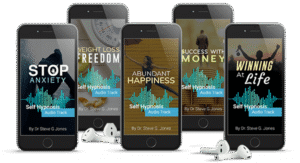
[Free Gift] Life-Changing Self Hypnosis Audio Track
Redefining Success — From ‘Having to Have’ to ‘Getting to Be’

For generations, success has been defined by accumulation. More money. A better title. A bigger house. A more impressive résumé. From an early age, many of us are taught—directly or indirectly—that success is something external we must chase, acquire, and display. It becomes a checklist of “having”: having status, having stability, having approval, having proof that our lives are worthwhile.

Yet despite reaching many of these milestones, a quiet dissatisfaction often remains. People achieve what they once dreamed of and still feel restless, disconnected, or strangely empty. This raises an uncomfortable but necessary question: What if success has been defined incorrectly all along?

Redefining success from “having to have” to “getting to be” is not about lowering standards or rejecting ambition. It is about shifting the center of gravity of your life—from external validation to internal alignment. It is about becoming someone, not just owning something.

The Problem with a “Having-Based” Definition of Success

A success model based on having is fragile. It depends on circumstances that can change at any moment: markets crash, careers stall, relationships end, health declines. When your sense of worth is attached to what you own or achieve, your identity becomes unstable.

This model also creates a constant state of lack. No matter how much you have, there is always someone with more. Someone more accomplished, more admired, more comfortable. The finish line keeps moving, and fulfillment is always postponed to the next achievement.

Another hidden cost of “having-based” success is self-abandonment. People often sacrifice their values, well-being, creativity, and relationships to maintain an image of success. They tolerate burnout, stay in misaligned careers, or silence their needs because walking away would mean “losing” something they worked hard to obtain.

Over time, success becomes a performance rather than a lived experience.

What “Getting to Be” Really Means

“Getting to be” shifts success from possession to presence. Instead of asking, “What do I need to have to feel successful?” the question becomes, “Who do I get to be while living this life?”

This perspective emphasizes identity, values, and daily experience. Success becomes less about outcomes and more about integrity—whether your actions reflect what truly matters to you.

Getting to be successful might look like:

  • Getting to be calm instead of constantly anxious
  • Getting to be honest instead of chronically people-pleasing
  • Getting to be creative instead of merely productive
  • Getting to be emotionally available instead of perpetually busy
  • Getting to be at peace with yourself rather than impressive to others

This does not mean external achievements lose all value. It means they are no longer the primary source of meaning. They become byproducts of a life lived intentionally, not the justification for living it.

The Role of Values in Redefining Success

Values are the foundation of a “getting to be” definition of success. When you are clear about your values, success becomes measurable in ways that are deeply personal and surprisingly simple.

If you value freedom, success may mean having autonomy over your time, even if it comes with less prestige.
If you value connection, success may mean nurturing a few honest relationships rather than a wide social network.
If you value growth, success may mean choosing learning and curiosity over comfort and certainty.

Living in alignment with your values creates a quiet confidence that external validation cannot replace. You may still pursue goals, but they no longer feel like proof of your worth. They feel like expressions of who you are.

Why Many People Fear This Shift

Redefining success can feel unsettling because it removes familiar measuring sticks. Titles, income, and achievements offer clear comparisons. Being aligned, fulfilled, or authentic feels harder to quantify—and therefore riskier.

There is also social pressure. Choosing “getting to be” over “having to have” can look like underachievement from the outside. Others may not understand why you turned down a promotion, changed careers, simplified your lifestyle, or slowed your pace.

This fear is not a sign that the new definition is wrong. It is a sign that it challenges deeply ingrained conditioning. When you step away from conventional success metrics, you are forced to trust your own inner compass rather than external applause.

The Daily Experience of a “Getting to Be” Life

One of the most powerful shifts that occurs when you redefine success is how your days feel. Success is no longer a distant destination you reach someday. It becomes something you experience repeatedly, in small but meaningful ways.

You wake up knowing why you do what you do.
You make decisions that feel coherent rather than conflicted.
You experience fewer internal battles between who you are and who you think you should be.
You recover more quickly from setbacks because your identity is not tied to a single outcome.

This kind of success is quieter, but it is also more sustainable. It does not require constant proving. It allows room for rest, reflection, and evolution.

Letting Go of the Old Narrative

Redefining success often involves grieving an old story. You may need to let go of dreams that were never truly yours, expectations inherited from family or culture, or identities built around survival rather than choice.

This process can feel like failure at first. But what you are actually doing is shedding a version of success that kept you striving but never satisfied. You are choosing honesty over illusion.

Letting go does not mean you stop caring. It means you start caring about the right things.

Creating Your Own Definition of Success

A personalized definition of success is not created overnight. It emerges through reflection, experimentation, and self-trust.

Helpful questions include:

  • When do I feel most like myself?
  • What drains me even when it looks impressive on paper?
  • What would I choose if no one were watching or judging?
  • What kind of person do I want to be in ordinary moments, not just big milestones?

Your answers may change over time—and that is part of the process. A living definition of success evolves as you do.

Success as an Ongoing Practice, Not a Final Achievement

Perhaps the most liberating aspect of redefining success is realizing that it is not something you reach and then keep forever. It is a practice. A series of choices made again and again.

Some days, success may mean courage. Other days, it may mean rest. Sometimes it looks like persistence; other times, it looks like letting go.

When success becomes about “getting to be,” you stop postponing your life until certain conditions are met. You begin to live it now, imperfectly but authentically.

In a world that constantly tells you to acquire more, choosing to become more aligned, more present, and more yourself is a radical act. And for many, it is the truest form of success they will ever know.

[Free Gift] Life-Changing Self Hypnosis Audio Track

Does Growing Up Mean Accepting More Injustice?

For many people on a personal development journey, adulthood brings an unsettling realization. As you grow older, you begin to notice injustice everywhere. In families, workplaces, relationships, and society at large, unfairness no longer feels like an abstract concept. It becomes personal. It touches your time, your labor, your emotions, and your dignity.

And slowly, often without consciously choosing it, you may start accepting it.

This raises a difficult question that rarely appears in self-help conversations: does growing up mean accepting more injustice? Or is something else happening beneath the surface?

If you are seeking advice on personal development, emotional maturity, and self-respect, this question matters. Because the way you answer it shapes how you live, what you tolerate, and who you become.

The Subtle Shift Between Awareness and Resignation

As children, we are often encouraged to speak up when something is unfair. Injustice feels clear and unacceptable. There is a natural instinct to protest, to question, to resist.

As adults, that instinct often dulls. Not because injustice disappears, but because the consequences of challenging it become heavier. Speaking up may risk your job, your reputation, your sense of belonging, or your safety. Over time, many people learn to adapt instead of confront.

This adaptation is often mislabeled as maturity.

Personal development culture sometimes reinforces this idea by framing emotional growth as calm acceptance. Phrases like “choose your battles” or “that’s just how the world works” are offered as wisdom. While discernment is important, it can quietly slide into resignation.

The difference between wisdom and surrender is subtle, but it matters.

Why Injustice Feels More Visible as You Grow

One reason injustice feels more present in adulthood is that you are exposed to systems, not just individuals. You encounter power dynamics at work, gender expectations in relationships, generational patterns in families, and structural inequalities in society.

Growing up expands your awareness. You see how effort is not always rewarded, how kindness is not always returned, and how honesty does not always protect you.

This increased awareness can feel disillusioning. You may start to believe that fairness is naïve and that accepting injustice is simply part of being realistic.

But awareness does not require acceptance. Seeing clearly does not mean you must comply.

The Emotional Cost of Accepting Injustice

When you repeatedly accept unfair treatment, it does not disappear. It accumulates.

You may tell yourself that you are being patient, understanding, or flexible. But inside, something tightens. Resentment grows quietly. Your energy drops. Your sense of self becomes smaller.

Many people seeking personal development support describe feeling emotionally tired without knowing why. Often, the root is chronic self-betrayal. You have learned to endure what should have been challenged.

Accepting injustice teaches your nervous system that your needs are less important than stability. Over time, this can lead to anxiety, numbness, or burnout.

True emotional maturity does not require this sacrifice.

The Difference Between Acceptance and Discernment

Personal growth does involve learning what you can and cannot control. You cannot fix every unfair system. You cannot force every person to act with integrity. Discernment is knowing where your energy is most effective.

But acceptance is not the same as silence.

Discernment says, “I see this clearly, and I will respond in a way that protects my values and my well-being.”
Resignation says, “This is unfair, but there is nothing I can do, so I will endure it.”

One preserves your dignity. The other slowly erodes it.

Growing up does not mean tolerating more injustice. It means choosing more intentionally how you respond to it.

Why Society Rewards Quiet Endurance

In many cultures, especially those that emphasize harmony, obedience, or sacrifice, quiet endurance is praised. People who complain are labeled difficult. People who challenge unfairness are seen as disruptive.

From a young age, many adults are conditioned to believe that enduring injustice is a sign of strength. But often, it is simply compliance dressed up as virtue.

Personal development requires unlearning this conditioning. Strength is not measured by how much you can tolerate. It is measured by how aligned you remain with your values under pressure.

When You Start Calling Things What They Are

A powerful moment in personal growth is when you stop minimizing unfairness. When you stop saying, “It’s not that bad,” or “Others have it worse,” and start naming your experience honestly.

This does not mean becoming bitter or reactive. It means refusing to gaslight yourself.

Calling injustice by its name is an act of self-respect. It validates your emotional reality. It creates clarity instead of confusion.

Many people fear that acknowledging injustice will make them angry or unhappy. In reality, suppressed awareness does more damage than honest recognition.

Awareness creates choice. Suppression removes it.

Personal Development Is Not About Becoming Passive

There is a misconception that personal development is about becoming endlessly calm, unbothered, and accepting. But emotional growth does not mean becoming indifferent to harm.

It means developing the capacity to respond with clarity rather than chaos.

Sometimes growth looks like setting boundaries. Sometimes it looks like leaving an environment that repeatedly disrespects you. Sometimes it looks like speaking up, even when your voice shakes.

And sometimes it looks like acknowledging that a situation is unjust and choosing not to internalize it as a personal failure.

Maturity does not flatten your moral compass. It sharpens it.

Choosing Yourself in an Unfair World

You may not be able to eliminate injustice from your life, but you can decide how much of it you absorb.

Personal development involves learning to choose yourself without becoming hardened. To protect your values without losing compassion. To accept reality without surrendering your agency.

You can understand why injustice exists without normalizing it. You can adapt strategically without abandoning your sense of right and wrong.

Growing up does not mean accepting more injustice. It means becoming more aware of it, and more intentional about how you engage with it.

The Quiet Power of Refusing to Normalize Unfairness

Sometimes the most powerful form of resistance is internal. It is the refusal to let unfairness define your worth. It is the choice to stop excusing behavior that harms you. It is the decision to leave spaces where your humanity is consistently compromised.

Personal development is not a journey toward numbness. It is a journey toward integrity.

You are allowed to grow without becoming smaller. You are allowed to mature without becoming silent. You are allowed to see the world clearly and still choose dignity.

If growing up means anything, it means learning how to live truthfully in an imperfect world without losing yourself in the process.

[Free Gift] Life-Changing Self Hypnosis Audio Track

When You Start Saying “No” and People Begin to Pull Away

There comes a quiet but powerful moment in personal development when you start saying “no.” Not the dramatic kind. Not the angry kind. But the calm, grounded no that comes from self-respect. And often, almost unexpectedly, people begin to pull away.

For many individuals on a personal growth journey, this moment can feel confusing and painful. You’re doing what self-help books, therapists, and mentors have encouraged. You’re setting boundaries. You’re honoring your energy. You’re choosing yourself. So why does it feel like you’re losing people in the process?

This article explores why people pull away when you start saying no, what it reveals about your relationships, and how to navigate this phase without shrinking back into old patterns. If you’re seeking advice on personal development, emotional boundaries, and self-worth, this experience is not a sign you’re doing something wrong. In many cases, it’s proof that you’re changing in meaningful ways.

Why Saying “No” Is a Turning Point in Personal Growth

For people who are used to over-giving, people-pleasing, or avoiding conflict, saying no is not a small act. It represents a shift in identity. You move from living reactively to living intentionally. You stop measuring your worth by how useful or agreeable you are. You begin to recognize your needs as valid.

Personal development often starts internally, but its impact is relational. When you change how you show up, the dynamics around you change as well. Saying no disrupts familiar patterns. It challenges unspoken agreements. And not everyone is prepared for that.

Many people associate kindness with compliance. They confuse availability with love. When you say yes to everything, others rarely question it. When you start saying no, it forces a recalibration.

Why People Pull Away When You Set Boundaries

People pulling away is not always about you becoming cold or distant. Often, it’s about others losing access to a version of you that benefited them.

Some people were comfortable with you when you were always accommodating. When you prioritized their needs over your own. When you were easy to rely on, easy to lean on, easy to take from. Your boundaries remove that convenience.

Others may feel threatened by your growth. When you begin to say no, it can reflect back to them areas where they lack boundaries themselves. This can create discomfort, guilt, or defensiveness.

There are also people who simply don’t know how to relate to a more self-assured version of you. They bonded with you through shared struggle, shared sacrifice, or shared dysfunction. When those dynamics change, the relationship may no longer feel familiar or safe to them.

This does not automatically make them bad people. But it does reveal which relationships were conditional.

The Difference Between Healthy Distance and Loss

One of the most important lessons in personal development is learning to distinguish between loss and alignment.

When someone pulls away because you start saying no, it can feel like rejection. But not all distance is abandonment. Sometimes it is a natural consequence of growth.

Healthy relationships can adjust. They may need time, conversations, and mutual effort, but they do not collapse simply because you assert yourself. Unhealthy or one-sided relationships often cannot survive boundaries because they were built on imbalance.

What you may be experiencing is not people leaving you, but relationships sorting themselves out.

The Emotional Grief of Outgrowing People

Even when growth is positive, it can still be painful. There is real grief in realizing that some connections were only sustainable when you were smaller, quieter, or more self-sacrificing.

Personal development is often portrayed as empowering and uplifting, but it also includes periods of loneliness. When you stop over-functioning in relationships, there may be a gap before healthier connections enter your life.

This is the space where many people are tempted to abandon their boundaries. The discomfort of being misunderstood can feel heavier than the exhaustion of over-giving. But returning to old patterns comes at a cost: resentment, burnout, and loss of self.

Grief does not mean regret. You can miss people and still recognize that the relationship no longer fits the person you are becoming.

What Saying “No” Teaches You About Self-Worth

At its core, the ability to say no is tied to self-worth. When you believe your time, energy, and emotional capacity matter, you begin to protect them.

If people pulling away triggers intense guilt or fear, it may reveal old beliefs such as:

  • My value comes from being needed
  • If I disappoint others, I will be abandoned
  • I must earn love through sacrifice

Personal development involves gently questioning these beliefs. You are allowed to rest. You are allowed to decline. You are allowed to change.

Saying no is not selfish. It is an act of honesty. It prevents silent resentment and emotional withdrawal. It allows relationships to be based on choice rather than obligation.

How to Respond When People React Poorly to Your Boundaries

Not everyone will respond gracefully when you start asserting yourself. Some may push back. Others may guilt-trip, withdraw affection, or accuse you of changing.

You do not need to over-explain your boundaries to make them valid. Clear, calm communication is enough. Repeated justification often comes from self-doubt rather than necessity.

Pay attention to actions more than words. Someone who respects you may feel disappointed, but they will adjust. Someone who only valued your compliance may escalate their behavior or disengage entirely.

Neither response requires you to abandon your growth.

Instead, focus on consistency. Boundaries are not about controlling others’ reactions. They are about maintaining alignment with yourself regardless of those reactions.

The Loneliness Phase in Personal Development

Many people on a personal development journey encounter a phase where their social circle shrinks. Old friendships feel misaligned. Family dynamics become strained. Romantic patterns shift.

This phase can feel isolating, but it is often temporary. You are no longer who you were, but you are not yet surrounded by people who fully meet you where you are.

Use this time to strengthen your relationship with yourself. Build routines that support your mental health. Explore interests that were previously neglected. Develop self-trust.

Loneliness is not a sign that you are failing. It is often a sign that you are transitioning.

Making Space for Healthier Relationships

When you stop saying yes to what drains you, you create space for what nourishes you. This applies to relationships as much as it does to work, habits, and commitments.

Healthy relationships do not require you to abandon yourself. They allow room for disagreement. They respect limits. They do not punish you for having needs.

As your boundaries become clearer, you may attract people who value mutual respect, emotional maturity, and honest communication. These connections may feel quieter at first, but they are often more stable and fulfilling.

Personal development is not about keeping everyone in your life. It is about building a life that reflects who you truly are.

Trusting the Process of Becoming

When people pull away after you start saying no, it can feel like a test. A test of whether you will return to who you were or continue becoming who you are meant to be.

Growth often requires tolerating misunderstanding. It requires choosing long-term self-respect over short-term approval. It requires faith that alignment matters more than familiarity.

You are not responsible for maintaining relationships that only function when you abandon yourself.

Saying no is not the end of connection. It is the beginning of more honest ones.

If you are in this phase, remind yourself: you are not losing people because you are doing something wrong. You are learning to live with integrity. And that will always change who stays.

[Free Gift] Life-Changing Self Hypnosis Audio Track

Letting Go Isn’t Always Healing: The Relationships You Leave but Still Grieve

In the world of personal development, letting go is often portrayed as the final, triumphant step toward healing. You release what no longer serves you, walk away from unhealthy relationships, choose yourself, and feel instantly lighter. But for many people, the reality is far more complicated. You can leave a relationship that was wrong for you and still grieve it deeply. You can know you made the right decision and still feel an ache that doesn’t go away easily.

If you’ve ever wondered why walking away didn’t bring the peace you expected, you’re not weak, and you’re not regressing. You’re experiencing a truth about emotional healing that personal growth culture doesn’t always acknowledge: letting go and healing are not the same thing.

This article explores why some relationships continue to hurt even after you leave them, what grief really means in the context of personal growth, and how to honor your healing without forcing emotional closure before you’re ready.

The Oversimplified Narrative of Letting Go

Personal development advice often simplifies emotional pain into clean, manageable steps. Identify the problem. Set boundaries. Let go. Move on.

While boundaries and self-respect are essential, emotional attachment doesn’t dissolve on command. Humans don’t bond only to what is healthy. We bond to familiarity, to hope, to potential, to shared history, and to the versions of ourselves that existed inside those relationships.

When people say, “If it was right to leave, you wouldn’t still miss it,” they misunderstand how grief works. Grief doesn’t measure whether something was good for you. It measures how much it mattered.

Why You Grieve Relationships You Chose to Leave

Grieving a relationship you ended can feel confusing, even shameful. You may tell yourself you should be over it by now because you were the one who walked away. But there are deeper reasons why grief lingers.

You’re Grieving What Never Fully Existed

Many relationships end not because they were entirely bad, but because they never became what you hoped they would be. You may grieve the potential, the future you imagined, or the version of the person you believed they could be.

This type of grief is especially painful because it’s invisible. You’re mourning something that was never concrete, which makes it harder to explain or validate, even to yourself.

You’re Grieving the Parts of Yourself That Showed Up

Relationships change us. In some, you may have been more open, more hopeful, more vulnerable than you’ve ever been. Leaving the relationship can feel like losing access to those parts of yourself.

You’re not just grieving the person. You’re grieving who you were when you believed in that connection.

You’re Grieving the Time and Emotional Investment

Time carries emotional weight. Even when a relationship was misaligned, the energy, effort, and care you invested were real.

Letting go doesn’t erase that investment. Grief often arises from acknowledging that something you gave so much to could not continue.

You’re Grieving the Safety of Familiar Pain

This is one of the hardest truths to accept. Even unhealthy relationships can feel emotionally safe because they’re predictable. The pain you know can feel less frightening than the uncertainty of being alone.

Leaving removes that familiarity, and grief rushes in where certainty once lived.

Why “Closure” Is Often a Misleading Goal

Many people chase closure, believing it will end their grief. They seek final conversations, explanations, apologies, or moments of understanding.

But closure is rarely something another person gives you. Often, the relationship ended precisely because the other person could not offer clarity, accountability, or emotional safety.

Waiting for closure can keep you emotionally tied to someone who is no longer capable of participating in your healing.

Healing doesn’t always look like resolution. Sometimes it looks like acceptance without answers.

The Difference Between Letting Go and Healing

Letting go is a behavioral decision. Healing is an emotional process.

You can stop contact, remove yourself from a harmful dynamic, and still carry unresolved feelings. That doesn’t mean letting go failed. It means healing takes longer than separation.

Healing involves:

  • Allowing sadness without interpreting it as a mistake
  • Making space for anger without acting on it
  • Accepting that love and harm can coexist in memory
  • Understanding that emotional bonds don’t disappear instantly

Trying to force healing often prolongs suffering. Emotions move when they are acknowledged, not when they are dismissed.

Why Grief Is a Sign of Emotional Health, Not Weakness

Grief reflects your capacity for attachment, empathy, and depth. It means you cared, you invested, you showed up.

Suppressing grief in the name of strength often leads to emotional numbness, resentment, or repeated patterns. Allowing grief, on the other hand, creates space for integration and self-trust.

You can be emotionally strong and still miss someone who was not good for you.

These two truths are not in conflict.

How to Grieve Without Going Back

One of the biggest fears people have is that allowing themselves to grieve will pull them back into the relationship. But grief does not require reversal.

You can honor your feelings without reopening the door.

Here’s how.

Separate Emotion from Action

Feeling love, longing, or sadness does not mean you should reconnect. Emotions are internal experiences, not instructions.

Remind yourself that you can feel deeply and still choose differently.

Write the Story You Didn’t Get to Live

Journaling can help you process unfinished emotional narratives. Write about the future you imagined, the conversations that never happened, the version of the relationship you hoped for.

This allows the grief to surface without seeking it from the other person.

Let the Grief Change You, Not Define You

Grief is not something to “get over.” It’s something that reshapes you.

Ask yourself:

  • What did this relationship teach me about my needs?
  • What patterns am I now more aware of?
  • How has this loss clarified my values?

Growth doesn’t require minimizing the pain. It requires learning from it.

Be Patient with the Nonlinear Process

Some days you’ll feel peace. Other days, the sadness will return without warning.

This doesn’t mean you’re moving backward. Healing is cyclical, not linear.

Each wave of grief often carries less intensity than the last, even if it feels just as emotional in the moment.

When Letting Go Finally Feels Lighter

Over time, grief softens. Not because the relationship stops mattering, but because it finds its place in your story instead of dominating it.

You may notice:

  • You think of them without emotional collapse
  • The urge to explain yourself fades
  • The lessons feel clearer than the loss
  • You trust yourself more, not less

This is healing. Quiet, gradual, and deeply personal.

Final Thoughts

Letting go isn’t always healing, and healing isn’t always immediate. You can leave a relationship for all the right reasons and still grieve what it meant, what it promised, and what it changed in you.

Grief does not mean you should go back. It means you are human.

The goal of personal growth is not emotional erasure. It’s emotional integration.

And sometimes, the most honest form of healing is allowing yourself to miss what you had, without forgetting why you left.

[Free Gift] Life-Changing Self Hypnosis Audio Track