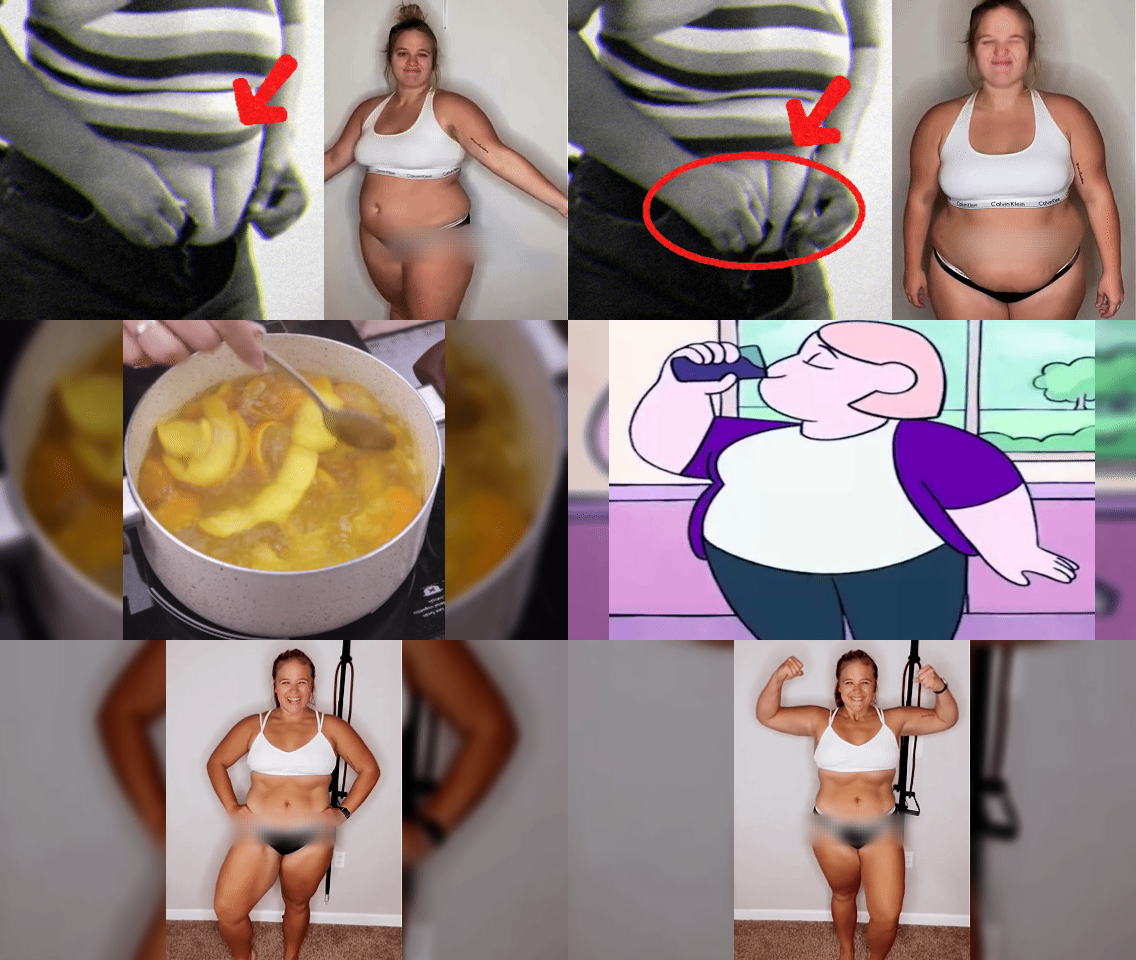
If you’ve ever felt trapped in a cycle of restrictive eating, short-lived results, and frustrating weight regain, you’re not alone. For years, I believed that the key to weight loss was simple: eat less, exercise more, and push harder than everyone else. I tried extreme dieting methods—cutting calories drastically, eliminating entire food groups, and chasing rapid results.
And yes, sometimes it worked… temporarily.
But eventually, my energy crashed. My cravings intensified. My progress stalled. And worst of all, I began to feel disconnected from my own body.
That’s when everything changed.
Instead of continuing to fight my body, I decided to understand it. I stopped extreme dieting and started focusing on something far more powerful and sustainable: my metabolism.
This shift didn’t just help me lose weight—it transformed the way I think about health, energy, and long-term success.
In this article, I’ll walk you through why extreme dieting often fails, how metabolism really works, and how you can reset your body to burn fat more efficiently—without starving yourself.
The Problem With Extreme Dieting
Extreme dieting is appealing because it promises fast results. Whether it’s a crash diet, very low-calorie plan, or cutting carbs to near zero, the idea is simple: create a large calorie deficit and watch the weight fall off.
But here’s the truth most people don’t realize:
Your body is not a machine. It’s a survival system.
When you drastically reduce your calorie intake, your body doesn’t celebrate—it panics.
What Happens When You Diet Too Hard
When you push your body into extreme restriction, several things occur:
- Your metabolism slows down to conserve energy
- Your hunger hormones increase, making you feel constantly hungry
- Your energy levels drop, making workouts harder and less effective
- Your body begins to break down muscle, not just fat
- You become more likely to binge or overeat later
This is often called “metabolic adaptation,” and it’s your body’s way of protecting you from what it perceives as starvation.
The result? You hit a plateau—or worse, regain the weight you lost.
Why Metabolism Matters More Than Calories Alone
Calories do matter. But they’re only part of the equation.
Your metabolism determines how your body uses those calories—whether they’re burned for energy or stored as fat.
A healthy metabolism means:
- You burn more calories at rest
- You have stable energy throughout the day
- Your body efficiently uses nutrients
- You experience fewer cravings and energy crashes
When I shifted my focus from “eating less” to “supporting my metabolism,” everything changed.
Instead of constantly fighting hunger, I started working with my body—and that made all the difference.
The Turning Point: Listening to My Body
I remember the moment clearly. I was eating very little, exercising intensely, and still not seeing results. I was tired, irritable, and frustrated.
That’s when I realized:
This isn’t sustainable.
Weight loss shouldn’t feel like punishment. It should feel like progress.
So I began to ask a different question—not “How can I eat less?” but “How can I help my body work better?”
That shift in mindset led me to rebuild my approach from the ground up.
How I Rebuilt My Metabolism
Improving metabolism isn’t about hacks or shortcuts. It’s about consistent habits that support your body’s natural processes.
Here’s what made the biggest difference for me.
1. I Stopped Undereating
This was the hardest step mentally—but the most important.
Instead of severely restricting calories, I started eating enough to fuel my body properly. This doesn’t mean overeating—it means finding a balanced intake that supports energy, recovery, and fat loss.
When you consistently undereat, your body slows down. When you nourish it properly, it begins to trust you again.
2. I Prioritized Protein
Protein plays a critical role in metabolism. It helps:
- Build and maintain muscle
- Increase satiety (keeping you full longer)
- Boost the thermic effect of food (calories burned during digestion)
Adding more protein to my meals helped reduce cravings and made my body more efficient at burning calories.
3. I Started Strength Training
Cardio has its place, but strength training is a game-changer for metabolism.
Muscle is metabolically active tissue. The more muscle you have, the more calories you burn—even at rest.
Instead of focusing only on burning calories during workouts, I started focusing on building a body that burns more calories all day long.
4. I Improved My Sleep
Sleep is one of the most underrated factors in weight loss.
Poor sleep disrupts hormones that regulate hunger and metabolism, leading to increased cravings and reduced energy.
Once I started prioritizing 7–8 hours of quality sleep, I noticed:
- Better appetite control
- More energy for workouts
- Improved recovery
5. I Managed Stress
Chronic stress can slow metabolism and increase fat storage—especially around the belly.
By incorporating simple stress-management techniques like walking, journaling, or deep breathing, I noticed a significant improvement in how my body responded.
6. I Became Consistent Instead of Extreme
This was the biggest mindset shift of all.
Instead of going “all in” for a few weeks and burning out, I focused on small, sustainable habits I could maintain long-term.
Consistency beats intensity every time.
The Results: More Than Just Weight Loss
When I stopped extreme dieting and focused on metabolism, the results went beyond the scale.
- I had more energy throughout the day
- My workouts became stronger and more effective
- My cravings decreased significantly
- I felt more in control of my eating habits
- The weight I lost stayed off
Most importantly, I felt healthier—physically and mentally.
Common Myths About Metabolism
Let’s clear up a few misconceptions that might be holding you back.
Myth 1: “My metabolism is broken”
Your metabolism can adapt, but it’s not permanently broken. With the right habits, you can improve it over time.
Myth 2: “Eating less is always better”
Eating too little can actually slow your progress by reducing metabolic rate and increasing hunger.
Myth 3: “Cardio is the best way to lose weight”
While cardio burns calories, strength training builds a metabolism that burns more calories long-term.
How You Can Start Today
You don’t need to overhaul your life overnight. Start with small, meaningful changes:
- Eat balanced meals with protein, healthy fats, and carbs
- Avoid extreme calorie restriction
- Add 2–3 strength training sessions per week
- Prioritize sleep and recovery
- Stay consistent, even when progress feels slow
Remember, sustainable weight loss is not about doing everything perfectly—it’s about doing the right things consistently.
Final Thoughts: Work With Your Body, Not Against It
Extreme dieting promises quick results, but often leads to long-term frustration.
When you shift your focus to metabolism, you’re no longer fighting your body—you’re supporting it.
And that’s where real, lasting change happens.
If you’ve been stuck in a cycle of dieting and disappointment, consider this your permission to try a different approach.
Fuel your body. Strengthen it. Support it.
Because when your metabolism works for you, everything else becomes easier.
And for the first time, weight loss stops feeling like a battle—and starts feeling like progress.
I didn’t expect this to make such a difference, but it actually explains a lot…
Want a faster, more natural way to support your fat-burning process?
Watch this quick video to see how it works.