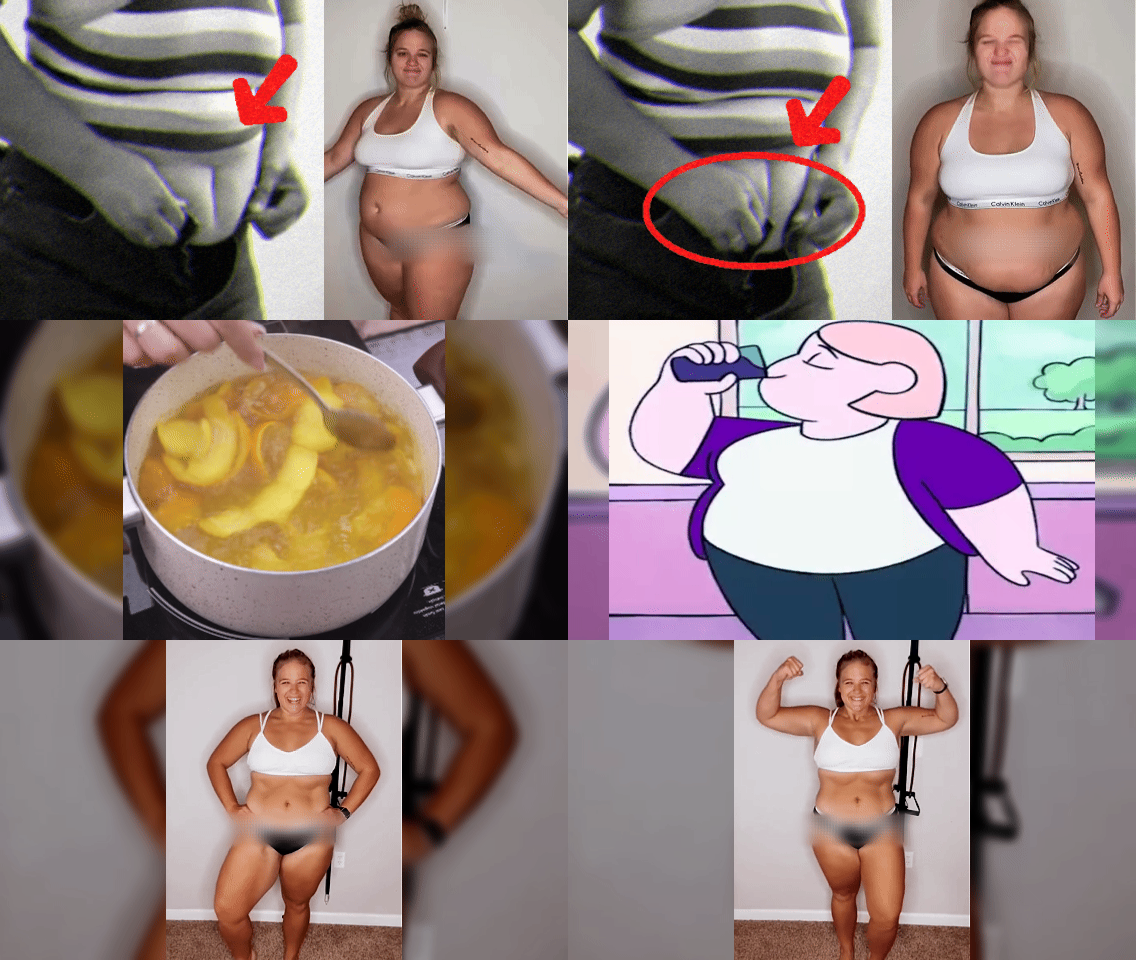
If you’ve ever felt stuck in your weight loss journey—doing everything “right” but seeing no change on the scale—you are not alone. I’ve been there. Weeks turned into months where my weight refused to budge, my motivation dipped, and frustration took over. This is the story of how I finally broke through my weight loss plateau—and more importantly, how you can too.
This isn’t about gimmicks, extreme diets, or punishing workout routines. It’s about understanding what your body is really doing and making smart, sustainable adjustments that actually work.
What Is a Weight Loss Plateau?
A weight loss plateau happens when your body stops losing weight despite maintaining the same diet and exercise routine that previously worked. At first, weight loss tends to be faster due to water loss and initial calorie deficits. But over time, your body adapts.
Your metabolism slows. Your body becomes more efficient. And suddenly, what once worked stops working.
This is not failure. This is biology.
Understanding this changed everything for me.
The Moment I Realized Something Had to Change
I remember stepping on the scale after weeks of discipline—clean eating, consistent workouts—and seeing the same number staring back at me.
At first, I blamed myself.
“Maybe I’m not trying hard enough.”
But the truth was, I was doing too much of the wrong things and not enough of what actually mattered.
That realization became the turning point.
The Biggest Mistakes That Kept Me Stuck
Before I share what worked, let me be honest about what didn’t.
1. Eating Too Little
I thought cutting calories aggressively would speed things up. Instead, it backfired. My energy dropped, my workouts suffered, and my metabolism slowed down.
Your body is smart. When you under-eat for too long, it holds onto fat as a survival mechanism.
2. Doing Too Much Cardio
Endless cardio sessions left me exhausted but didn’t produce results anymore. While cardio is useful, relying on it alone can lead to muscle loss—and less muscle means a slower metabolism.
3. Ignoring Strength Training
I underestimated the power of building muscle. This was a huge mistake. Muscle burns more calories, even at rest.
4. Not Tracking Progress Properly
I relied only on the scale. But weight fluctuates due to water, hormones, and other factors. I wasn’t seeing the full picture.
The Breakthrough: What Actually Worked
Everything changed when I shifted my approach from “doing more” to “doing smarter.”
1. I Increased My Calories (Strategically)
Yes, you read that right.
Instead of eating less, I slowly increased my calorie intake to support my metabolism. This is often called “reverse dieting.”
Within weeks, my energy improved, my workouts got stronger, and eventually, the weight started moving again.
2. I Prioritized Protein
Protein became the foundation of my diet.
It helped me:
- Stay full longer
- Preserve muscle mass
- Boost metabolism through digestion
I made sure every meal included a solid protein source.
3. I Focused on Strength Training
This was the game-changer.
Instead of spending hours on cardio, I shifted to lifting weights 3–4 times per week. Building muscle transformed my body composition and increased my resting calorie burn.
4. I Reduced Stress and Improved Sleep
This part is often overlooked.
High stress and poor sleep increase cortisol levels, which can lead to fat retention—especially around the belly.
Once I started prioritizing 7–8 hours of quality sleep and managing stress, my body responded much better.
5. I Added Strategic Cardio (Not Excessive)
I didn’t eliminate cardio—I used it wisely.
Short, effective sessions like:
- Walking daily
- Occasional HIIT workouts
This supported fat loss without burning me out.
6. I Tracked More Than Just Weight
I started paying attention to:
- Measurements
- Progress photos
- Strength levels
- How my clothes fit
Even when the scale didn’t move, my body was changing.
The Mental Shift That Made the Difference
Breaking through my plateau wasn’t just physical—it was mental.
I stopped chasing quick results and started focusing on consistency.
I accepted that progress is not linear.
Some weeks you lose weight. Some weeks you don’t. But if you stay consistent, the trend will move in the right direction.
Practical Tips to Break Your Weight Loss Plateau
If you’re currently stuck, here’s what I recommend:
Reassess Your Calories
You might need to:
- Eat slightly more to reset your metabolism
- Or create a small, sustainable deficit
Avoid extremes.
Increase Protein Intake
Aim for a high-protein diet to support fat loss and muscle retention.
Lift Weights
Strength training is essential. Focus on progressive overload—gradually increasing weights or reps.
Move More Daily
Simple activities like walking can make a big difference without stressing your body.
Improve Sleep and Reduce Stress
Don’t underestimate their impact on fat loss.
Be Patient
Your body needs time to adapt. Give it that time.
Why Plateaus Are Actually a Good Sign
Here’s something most people don’t realize:
A plateau often means your body has successfully adapted to your previous routine.
That’s not failure—that’s progress.
It means you’re ready for the next level.
Final Thoughts: You’re Closer Than You Think
Breaking through a weight loss plateau is not about working harder—it’s about working smarter and listening to your body.
The moment I stopped fighting my body and started understanding it, everything changed.
If you’re stuck right now, don’t give up.
Adjust your strategy. Stay consistent. Trust the process.
Your breakthrough is coming.
I didn’t expect this to make such a difference, but it actually explains a lot…
There’s a simple reason why most people struggle to burn fat…
Watch this short video to discover what’s really going on.